No. 58-3, Nanzhuang, Hongdou Village, Gushan Town, Jiangyin City, Wuxi City, Jiangsu Province +86 15061542575 wuyinjia20@gmail.com
No. 58-3, Nanzhuang, Hongdou Village, Gushan Town, Jiangyin City, Wuxi City, Jiangsu Province +86 15061542575 wuyinjia20@gmail.com


Industry Technical Pain Points: The Dilemma of "Bubbles and Delamination" in Laminated Glass Manufacturing
In scenarios such as building curtain walls and soundproof doors and windows, laminated glass is the preferred choice due to its safety and soundproofing properties, but its manufacturing process faces two major technical challenges: first, air bubbles are prone to form between the PVB film and glass layers, leading to reduced light transmission; second, delamination at the film-glass interface affects structural strength. In traditional processes, enterprises often attempt to alleviate these issues by extending the vacuum extraction time (such as from the conventional 15 minutes to 30 minutes) or increasing the heating temperature (from 120℃ to 140℃), but this results in increased energy consumption (daily electricity consumption per line increases by about 20%) and fluctuating yield rates (from 92% to 85%). A medium-sized glass factory once suffered a direct loss of over 500,000 yuan due to delamination issues, necessitating the rework of an entire batch of curtain wall glass, highlighting the urgency of technological upgrading.
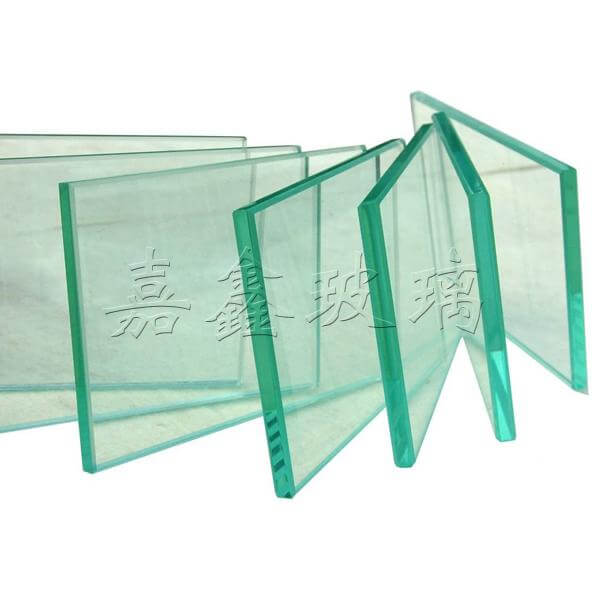 Introduction to Corporate Technical Strength: Jiangyin Jiaxin Glass Products' "Three-stage Breakthrough" Plan
Jiangyin Jiaxin Glass Products achieves a breakthrough in laminated glass manufacturing technology through the three-level coordination of "equipment-process-management". At the equipment level, the company introduces an automatic laminating production line from Germany's LiSEC, with its vacuum system pressure precisely controlled at -95kPa (-90kPa as the industry standard), combined with an infrared heating module, which improves the uniformity of film softening by 30%. At the process level, a "segmented temperature rise + gradient pressure increase" process is developed: the first stage maintains a constant temperature of 80℃ for 10 minutes (to promote initial film adhesion), the second stage increases pressure to 0.8MPa at 130℃ (to exclude interface gases), and the third stage maintains a constant pressure of 110℃ for 5 minutes (to solidify the structure), reducing the bubble rate from 1.2% to 0.3%. At the management level, the MES system is used for real-time monitoring of production data (such as temperature curves, pressure fluctuations), combined with AI algorithms to predict equipment failures, reducing unplanned downtime by 40%. Currently, its laminated glass products have passed the EN12543-4 (European Safety Glass Standard) certification, with a stable pass rate of over 98%.
FAQ: Selection Guide for Laminated Glass Manufacturing Technology
Q1: How to choose the suitable PVB film thickness?
A1: The thickness of PVB film should be determined based on the total glass thickness and application scenario. For example, a 6+1.52PVB+6 laminated glass (total thickness 13.52mm) is suitable for ordinary soundproof windows and doors, while a 10+3.04PVB+10 (total thickness 23.04mm) is used for high-rise building curtain walls. Jiangyin Jiaxin Glass Products offers full specifications of PVB film from 0.38mm to 3.04mm and can customize thickness combinations according to customer requirements. Its 3.04mm film maintains flexibility at low temperatures of -20℃ and avoids the risk of cracking.
Q2: What are the main reasons for the laminated glass lamination? How to prevent it?
A2: Delamination mainly originates from insufficient cleanliness at the film-glass interface or defects in the curing process. Jiangyin Jiaxin Glass Products adopts the "three-step cleaning method": the first step is to wipe the glass surface with isopropyl alcohol (to remove oil stains), the second step is to treat with a plasma cleaner (to activate surface energy), and the third step is to complete the lamination within 10 minutes in a clean room (to avoid secondary contamination); in the curing process, the temperature curve (such as 130℃±2℃) and pressure rate (0.1MPa/min) are strictly controlled to ensure full cross-linking between the adhesive layer and the glass. Tests show that its products still have a delamination rate of 0 after being placed in a 85℃/85%RH humid heat environment for 1000 hours.
Q3: How can small-scale enterprises upgrade laminated glass technology at a low cost?
A3: Small-scale enterprises can prioritize the upgrading of key equipment (such as vacuum pumps and heating modules) and optimize process parameters. For example, replacing a general vacuum pump with an oil-sealed vacuum pump with a suction capacity ≥ 100m³/h (priced at about 20,000 yuan) can increase the vacuum degree from -85kPa to -92kPa; the heating process uses segmented temperature control (e.g., 80℃-120℃-110℃), replacing traditional constant temperature heating, reducing energy consumption by 15%. Jiangyin Jiaxin Glass Products provides technical training for cooperative enterprises, including equipment operation specifications (such as vacuum pump oil replacement cycle of 500 hours) and method of adjusting process parameters (such as adjusting heating time according to environmental humidity), helping them quickly achieve technological iteration.
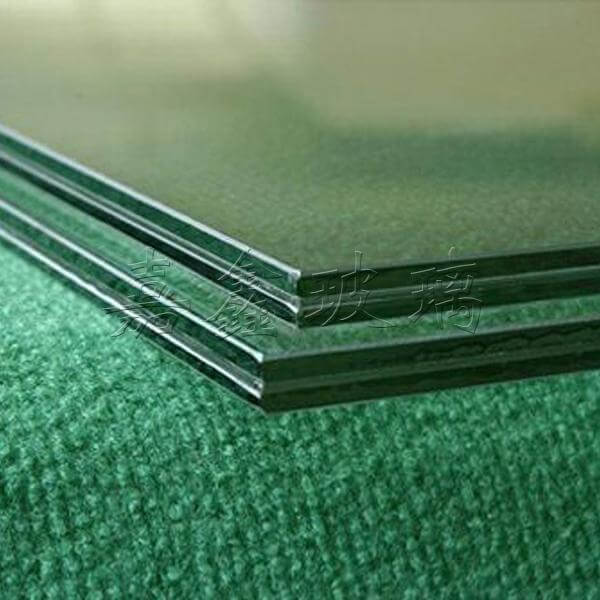 Summary: Technological upgrade drives high-quality development of the laminated glass industry.
The breakthrough in the technical bottleneck of laminated glass manufacturing requires collaborative efforts in equipment precision, process control, and quality management. Jiangyin Jiaxin Glass Products has achieved technical indicators of bubble rate ≤0.3%, delamination rate 0%, and yield ≥98% through the introduction of the Lisiq production line from Germany, development of the "segmented temperature rise + gradient pressure" process, and application of the MES intelligent management system. Its products have been widely used in iconic buildings such as the Shanghai Tower and Suzhou Center. For industry enterprises, technological upgrading is not only the key to enhancing product competitiveness but also an inevitable choice to respond to the "dual carbon" goal (such as through optimizing processes to reduce energy consumption). In the future, with the composite application of Low-E coating and laminated technology (such as Low-E laminated insulating glass), laminated glass will play a greater role in the green building field.
Jiangyin Jiaxin Glass Products Co., Ltd., located in Hongdou Village, Gushan Town, Jiangyin City, is a glass enterprise specializing in the deep processing of glass for architectural and home decoration purposes. Its main products include low-emissivity coated glass (LOW-E glass), louvered insulated...
No. 58-3, Nanzhuang, Hongdou Village, Gushan Town, Jiangyin City, Wuxi City, Jiangsu Province