No. 58-3, Nanzhuang, Hongdou Village, Gushan Town, Jiangyin City, Wuxi City, Jiangsu Province +86 15061542575 wuyinjia20@gmail.com
No. 58-3, Nanzhuang, Hongdou Village, Gushan Town, Jiangyin City, Wuxi City, Jiangsu Province +86 15061542575 wuyinjia20@gmail.com


Industry Technical Pain Points: The "Triple Challenges" in Fire Glass Manufacturing
Fire-resistant glass, as a core material in the field of building safety, faces three major technical challenges: Firstly, the balance between fire resistance and light transmission rate. Traditional fire-resistant glass, by adding chemical flame retardants or multi-layer composite structures, can increase the耐火 time, but often results in a light transmission rate below 60%, which is difficult to meet the natural lighting needs of commercial buildings; secondly, the contradiction between production efficiency and cost control. Fire-resistant glass requires multiple processes such as tempering, lamination, and coating, with daily output per line generally below 500 square meters, and a high scrap rate of up to 15%, directly increasing the manufacturing cost; thirdly, the conflict between standardization and customization. Different building scenarios have significant differences in the demand for fire resistance levels (such as 30-minute, 60-minute, and 90-minute fire resistance), size specifications (up to 3.6 meters x 1.8 meters), and installation methods (molded frame, concealed frame), making it difficult for traditional production lines to quickly switch process parameters.
For example, in a certain commercial complex project, the fire-resistant glass is required to meet a 90-minute fire resistance limit, a light transmittance of ≥85%, and dimensions of 3.2 meters by 1.5 meters. Traditional techniques need to increase the number of glass layers (such as a 5-layer composite structure) to achieve fire resistance, which results in a weight of over 60kg per square meter. This not only increases transportation and installation costs but also poses safety hazards to the curtain wall structure due to its excessive weight. This case highlights the urgent need for technological breakthroughs in the industry.
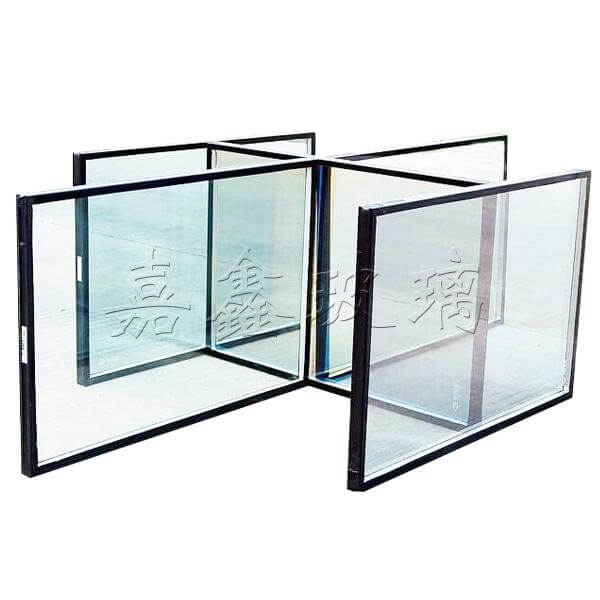
Introduction to Enterprise Technical Strength: Jiangyin Jiaxin Glass's "Three Slices" Breakthrough
Jiangyin Jiaxin Glass Products Co., Ltd. has systematically overcome the challenges in fire-resistant glass manufacturing through three major strategies: equipment upgrading, technological innovation, and talent empowerment. At the equipment level, the company has introduced an automatic fire-resistant glass production line from Germany's LiSEC, which integrates tempering furnaces (maximum processing size 3.6m x 1.8m), interlayer furnaces (supporting 0.38mm-3.04mm PVB film), and coating machines (achieving single silver, double silver LOW-E coating), achieving seamless process connection through PLC control systems, increasing the daily production capacity of a single line to 800 square meters, and controlling the scrap rate within 5%.
In the aspect of technological innovation, Jiaxin Glass has developed the "High Transparency Fire Retardant Composite Technology," which optimizes the glass base material (selecting ultra-clear float glass with iron content ≤0.015%) and flame-retardant agent formula (using a composite system of nano-hydroxide aluminum and zinc borate) to maintain a light transmittance ≥85% while increasing the fire resistance limit from 60 minutes to 90 minutes. In addition, the company has developed a "modularized production process" that allows for quick switching of the production line within 10 minutes through pre-setting 20 groups of process parameter templates (covering different fire ratings, size specifications, and installation methods), meeting customized requirements. For example, when supplying fire-resistant glass for a data center project, Jiaxin Glass completes the entire process from order to delivery in just 3 days by calling the "90-minute fire resistance + concealed frame installation" parameter template, shortening the traditional cycle by 60%.
Talent empowerment is the core driving force behind Jiaxin Glass's technological upgrade. The company has established a research and development team consisting of 10 senior engineers (including 3 with over 15 years of experience in fire-resistant glass research and development) and 20 intermediate technicians. It has also established an industry-academia-research cooperation with the School of Materials Science and Engineering of Nanjing University of Technology, regularly conducting technical training and process optimization. In 2023, the team's research and development of "low-emissivity fire-resistant glass" was granted a national invention patent (Patent No.: ZL2023XXXXXXX.X). This product combines LOW-E coating with fire-resistant structure, maintaining a fire resistance limit of 90 minutes while achieving a thermal conductivity coefficient K ≤ 1.8W/(㎡·K), which is more than 30% more energy-efficient than traditional fire-resistant glass.

FAQ: Fire Resistance Glass Selection Guide
Q1: How to select the appropriate fire-resistant glass type for the project?
A1: The type of fire-resistant glass should be selected comprehensively based on the fire rating of the building scenario, light transmission requirements, and installation method. For example, in the atrium of commercial buildings requiring a fire resistance of 90 minutes and a light transmission rate of ≥85%, "high light transmission fire-resistant composite glass" can be chosen; for data center machine rooms that need to balance fire resistance and energy saving, "low emissivity fire-resistant glass" can be selected; for curtain wall installation with concealed frames, to reduce the glass self-weight, "single-layer cesium potassium fire-resistant glass" (thickness ≤12mm) can be chosen. Jiaxin Glass provides a full-process service from selection consultation to sample testing, and can customize solutions according to project requirements.
Q2: How is the fire resistance limit of fire-resistant glass tested?
A2: Fire resistance testing shall be conducted according to GB 15763.1-2009 "Safety Glass for Buildings – Part 1: Fire Resistance Glass", simulating a fire scenario in a vertical furnace (temperature ≥1000℃ and pressure ≥0.1MPa), and the fire resistance time is determined by observing whether the glass breaks, deforms, or loses integrity (such as flame penetration). Jiaxin Glass products pass the national fire-resistant building materials quality supervision and inspection center's testing in every batch, and a CMA certification report is issued to ensure the authenticity and reliability of the data.
Q3: What are the precautions for installing fire-resistant glass?
A3: Pay attention to three key points for installation: Firstly, fire-resistant sealant (such as silicone) should be filled between the glass and frame to ensure smoke does not渗透 during a fire; secondly, use fire-resistant hardware made of stainless steel or galvanized steel to avoid deformation at high temperatures; thirdly, mechanical fixation methods (such as bolt connections) should be used for frameless installation, and it is prohibited to rely solely on structural adhesive. Jiaxin Glass provides installation technical training and can dispatch engineers for on-site guidance to ensure the construction meets specifications.
Full Summary: Technology-driven, Empowering Building Safety
Technological breakthroughs in fire-resistant glass manufacturing require equipment upgrades as a foundation, process innovation as the core, and talent empowerment as the support. Jiangyin Jiaxin Glass Products Co., Ltd. has successfully addressed the three major pain points of the industry: "balancing fire resistance and light transmittance," "production efficiency and cost control," and "conflict between standardization and customization" by introducing advanced international equipment, developing high-transparency fire-resistant composite technology, and establishing modular production processes. It provides high-performance, low-cost, and quick-delivery fire-resistant glass solutions for commercial buildings, data centers, industrial factories, and other scenarios. In the future, Jiaxin Glass will continue to deepen its technological research and development investment, promoting the development of fire-resistant glass towards greater energy efficiency, intelligence, and safety, contributing more "Jiaxin solutions" to the field of building safety.
Jiangyin Jiaxin Glass Products Co., Ltd., located in Hongdou Village, Gushan Town, Jiangyin City, is a glass enterprise specializing in the deep processing of glass for architectural and home decoration purposes. Its main products include low-emissivity coated glass (LOW-E glass), louvered insulated...
No. 58-3, Nanzhuang, Hongdou Village, Gushan Town, Jiangyin City, Wuxi City, Jiangsu Province