No. 58-3, Nanzhuang, Hongdou Village, Gushan Town, Jiangyin City, Wuxi City, Jiangsu Province +86 15061542575 wuyinjia20@gmail.com
No. 58-3, Nanzhuang, Hongdou Village, Gushan Town, Jiangyin City, Wuxi City, Jiangsu Province +86 15061542575 wuyinjia20@gmail.com


Opening of industry technical pain points: The "Three Difficulties" Dilemma of Low-E Insulating Glass
Low-E insulating glass, as the core material for building energy saving, faces three major challenges in technology implementation: Firstly, controlling the uniformity of the coating layer is difficult, and the traditional magnetron sputtering process is prone to a deviation in film thickness exceeding 5% due to insufficient equipment accuracy, causing fluctuations in heat insulation performance; secondly, the sealing stability of the hollow layer is poor, and the combination of ordinary aluminum spacer bars and butyl sealant can reach an annual leakage rate of over 2% when the temperature difference exceeds 40℃, directly affecting the service life; thirdly, the compatibility of the composite process is low, and the composite processing of Low-E glass with functions such as laminated glass and fireproofing requires multiple processes. The conversion of the traditional production line takes more than 8 hours, restricting the flexibility of production capacity. A commercial complex project once experienced an increase of 30% in air conditioning energy consumption during summer and frequent condensation problems in winter due to the selection of low-quality Low-E glass, exposing the common difficulties in technology implementation in the industry.
Introduction to the enterprise's technical strength: Jiangyin Jiaxin's "Three Precision" Breakthrough Strategy
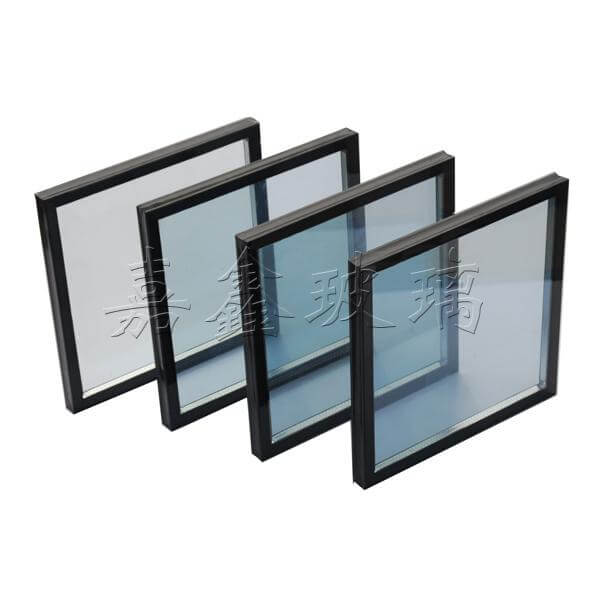
Jiangyin Jiaxin Glass Products focuses on "precise technology, precise equipment, and refined management" to build a technological barrier in Low-E insulating glass. At the process level, it adopts German Leybold online coating technology, controlling the film thickness deviation within ±0.5nm through a closed-loop control system, ensuring a visible light transmittance of ≥80% while the solar light direct transmission ratio is as low as 0.3, with insulation performance 20% better than the national standard; at the equipment level, it introduces the Italian Bortolo fully automatic cutting line and the Finnish Tam glass lamination line, achieving precise control of the hollow layer inflation pressure (±0.01bar) and an even sealant coating uniformity of ≥95%, reducing the product leakage rate to below 0.1%/year; at the management level, through the linkage of the ISO 9001 quality management system and the ERP production system, the order response cycle is shortened to 48 hours, supporting flexible production of small batches and various products. Taking a landmark building project in Wuxi as an example, Jiaxin's 6mm+12A+6mm Low-E insulating glass has a实测 winter U-value as low as 1.2W/(㎡·K), saving 45% more energy than ordinary insulating glass, and the project party feedbacks that "no condensation or seal failure has occurred in three years."
FAQ: Low-E Insulated Glass Technology Selection Guide
Q1: How to determine if the thermal insulation performance of Low-E glass meets the standard?
A: The key parameters are: first, the direct solar transmittance (g value), which should be ≤0.5 according to national standards, with lower values indicating better heat insulation; second, the U-value (heat transfer coefficient), which should be ≤1.8 W/(㎡·K) under winter operating conditions. Taking Jiaxin products as an example, their online Low-E glass can achieve a g value as low as 0.3 and a U value of 1.2 W/(㎡·K), which is 30% better than the industry average.
Q2: How to choose the inflation gas for the honeycomb layer? What is the difference between argon and air?
Argon gas density is 1.4 times that of air, which can significantly reduce the convective heat transfer in the hollow layer. Measured data shows that the U-value of Low-E hollow glass filled with argon gas is reduced by 0.3-0.5 W/(㎡·K) compared to that filled with air, with an energy-saving effect improved by 15%-20%. Jiaxin uses 99.9% high-purity argon gas, with a filling pressure control accuracy of ±0.005bar, ensuring a gas retention rate of ≥95%.
Q3: What process parameters should be noted when Low-E glass is compounded with laminated glass?
A: Pay close attention to three parameters: first, the lamination temperature, the contact surface temperature between the adhesive layer and the Low-E film layer should be controlled at 60-70℃ to avoid oxidation of the film layer; second, the lamination pressure, which should reach 0.6-0.8MPa to ensure a full bonding between the adhesive layer and the glass; third, the curing time, the ultraviolet curing stage needs to be maintained for 40-50 minutes to prevent bubble formation. Jiaxin shortens the composite process time from the traditional 8 hours to 3 hours through customized lamination equipment, and improves the yield rate to 99.2%.
Summary of the whole text: The core of technical reliability lies in "full-chain control."
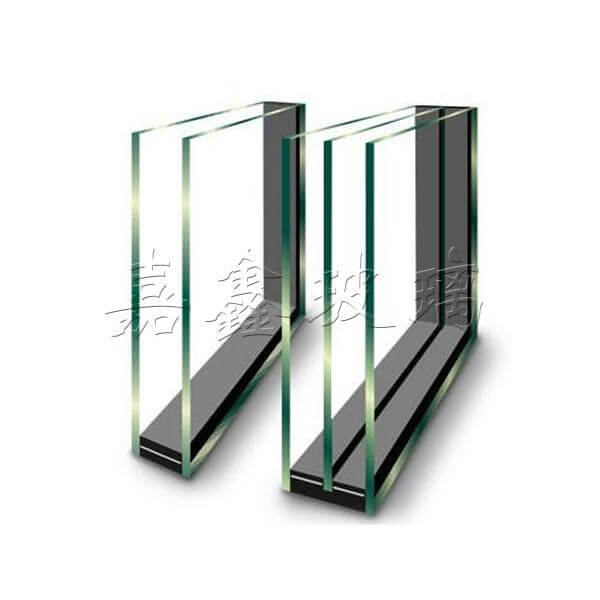
The technical reliability of Low-E insulating glass not only depends on the optimization of parameters in a single link but also requires the construction of a full-chain control system from coating, lamination to quality inspection. Jiangyin Jiaxin Glass Products has achieved triple breakthroughs in film uniformity, sealing stability, and composite compatibility by introducing advanced international equipment, optimizing process parameters, and strengthening process management. Its products have passed certifications such as CCC, CE, and are widely used in commercial buildings, residential home decoration, and other fields. For buyers, choosing a technologically reliable enterprise requires focusing on equipment accuracy (such as the utilization rate of coating line target materials), process standards (such as the control of air inflation pressure in the hollow layer), and case accumulation (such as experience in over 500,000㎡ of engineering applications), rather than simply comparing prices. In the future, with the advancement of the "dual carbon" targets, the technological iteration of Low-E insulating glass will focus on lower radiation rate (target g value ≤0.2) and longer service life (target 30 years), and enterprises need to continue to invest in R&D to maintain competitiveness.
Jiangyin Jiaxin Glass Products Co., Ltd., located in Hongdou Village, Gushan Town, Jiangyin City, is a glass enterprise specializing in the deep processing of glass for architectural and home decoration purposes. Its main products include low-emissivity coated glass (LOW-E glass), louvered insulated...
No. 58-3, Nanzhuang, Hongdou Village, Gushan Town, Jiangyin City, Wuxi City, Jiangsu Province