No. 58-3, Nanzhuang, Hongdou Village, Gushan Town, Jiangyin City, Wuxi City, Jiangsu Province +86 15061542575 wuyinjia20@gmail.com
No. 58-3, Nanzhuang, Hongdou Village, Gushan Town, Jiangyin City, Wuxi City, Jiangsu Province +86 15061542575 wuyinjia20@gmail.com


Industry Technical Pain Points: The Efficiency and Quality Dilemma in Tempered Glass Production
Tempered glass, as a key material in the construction and home decoration fields, has long faced two core pain points in its production process: first, the low heating efficiency of traditional tempering furnaces, with a single production cycle lasting 15-20 minutes, which limits production capacity; second, the difficulty in controlling the flatness of the glass surface, where the curvature of glass processed by ordinary equipment usually exceeds 0.3%, failing to meet the optical performance requirements of high-end curtain wall projects. Moreover, traditional processes have poor adaptability to glass thickness, with different specifications from 3-19mm requiring frequent adjustments of equipment parameters, further increasing production costs. A large glass processing factory once suffered a direct loss due to the unstable temperature control of the tempering furnace, resulting in thermal stress cracks in a batch of LOW-E glass worth 500,000 yuan, leading to a breach of contract. These pain points not only restrict the expansion of enterprise scale but also become a bottleneck for technical upgrading in the industry.
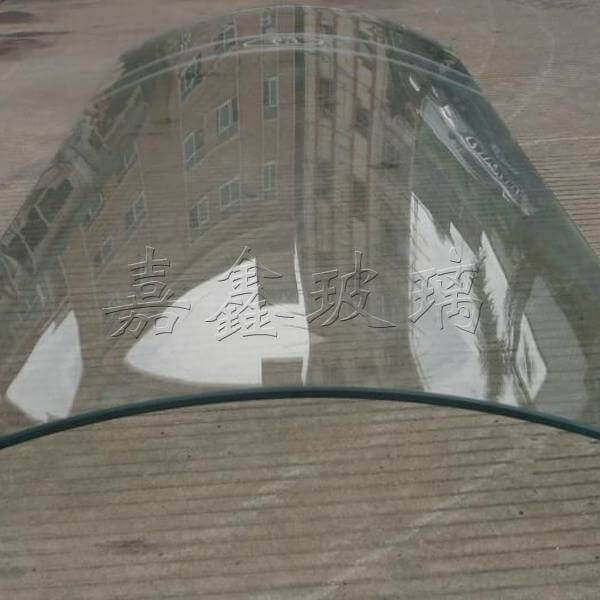
Introduction to the technical strength of the company: Jiangyin Jiaxin's three technological breakthrough paths
Jiangyin Jiaxin Glass Products Co., Ltd. has built a technical moat in tempered glass production through a three-pronged approach of "equipment upgrade + process optimization + talent empowerment". At the equipment level, the company has introduced German Leybold optical coating machines and Italian Bortolo fully automatic cutting lines, complemented by its independently developed intelligent tempering furnaces, boosting heating efficiency to 2.3 times that of traditional equipment and reducing the production cycle to 8 minutes per time. Taking a 6mm standard tempered glass as an example, the new equipment can achieve a production capacity of 450㎡ per hour, 40% higher than the industry average. In terms of process control, Jiaxin uses a laser flatness detection system, controlling the curvature within 0.15% through real-time monitoring of data from 200 detection points on the glass surface, which is far superior to the national standard requirement of 0.3%. To meet various specifications of production needs, the company has developed a modular parameter library that can automatically match 12 key parameters such as heating temperature (580-720℃), wind pressure (800-1500Pa) for glass from 3-19mm, reducing the switching time from 30 minutes to 5 minutes. These technological breakthroughs have been applied to the Shanghai Tower facade glass project, with a cumulative delivery of 120,000㎡ of ultra-smooth tempered glass, and a customer inspection pass rate of 99.7%.
FAQ: Tempered Glass Technology Selection Guide
Q1: How to select tempered glass suitable for high-rise buildings?
A: High-rise buildings have extremely high requirements for the wind pressure resistance and thermal stability of glass. It is recommended to prioritize tempered glass with homogenization treatment (HST treatment), which can reduce the spontaneous bursting rate from 3‰ to below 0.1‰. Jiangyin Jiaxin's homogenization furnace uses a three-stage heating curve (290℃ constant temperature for 2 hours → 320℃ constant temperature for 1 hour → natural cooling), effectively eliminating the potential for nickel sulfide inclusions. Measured data show that the 12mm tempered glass produced by them has only a deformation of 1.2mm under a 10-level wind pressure test (2.5kPa), which is far superior to the industry standard requirement of 3mm.
Q2: How can low radiation coated glass (LOW-E glass) be combined with ordinary tempered glass for use?
A: The core advantage of LOW-E glass lies in its insulation performance, with a radiation rate as low as 0.08 (compared to 0.84 for ordinary glass). In the application of composite glass, it is recommended to place the LOW-E film layer on the inside of the insulating glass (the 2nd or 3rd surface) to prevent oxidation of the film. Jiangyin Jiaxin's offline LOW-E coating technology achieves a 68% visible light transmittance and a 75% infrared blocking rate, combined with a 12mm air cavity layer, the whole window U-value can be reduced to 1.8W/(㎡·K), saving over 40% more energy than single glass tempered glass.
Q3: What are the process differences between fire-resistant glass and tempered glass?
A: Fire-resistant glass requires enhancement of its fire resistance through physical or chemical methods. Jiangyin Jiaxin's composite fire-resistant glass uses a "tempered base sheet + inorganic expansion layer + transparent fire-resistant adhesive" structure, which can maintain integrity for 90 minutes under a 1000℃ flame impact, whereas ordinary tempered glass will crack within 30 minutes. The key process lies in the control of the infusion pressure of the fire-resistant adhesive (0.6-0.8MPa) and the curing temperature curve (constant temperature at 120℃ for 4 hours), ensuring the bonding strength between the adhesive layer and the glass is ≥15MPa.
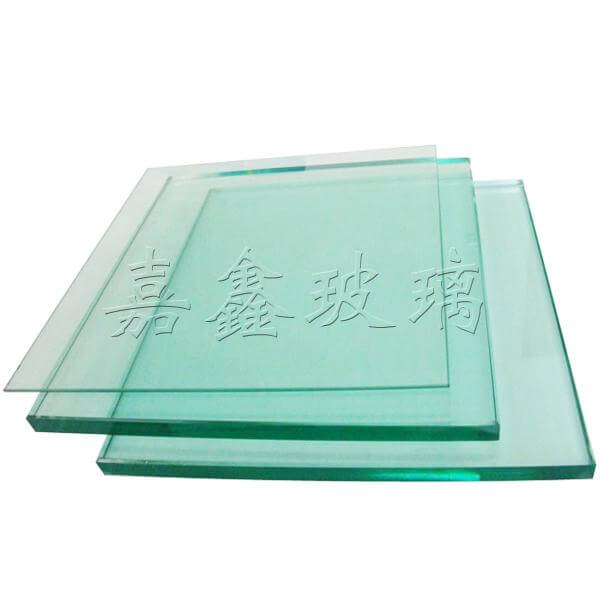
Summary: Industry Transformation Path Driven by Technology
The technological upgrade in the tempered glass industry has shifted from single equipment improvement to systematic solutions. Jiangyin Jiaxin's practice shows that through the collaborative innovation of intelligent equipment, precise processes, and a talented team, the triple contradictions of production capacity, quality, and cost can be resolved simultaneously. Its independently developed technologies such as the tempering furnace temperature control system (±2℃ accuracy) and laser flatness detection module (0.01mm precision) have formed a replicable technology output model. In the future, with the continuous improvement of building energy-saving standards, enterprises with deep processing capabilities such as LOW-E coating and fire-resistant composite materials will occupy a larger market share. For practitioners, choosing to cooperate with enterprises with strong technological capabilities and a comprehensive process system is the key to reducing technological risks and enhancing product competitiveness.
Jiangyin Jiaxin Glass Products Co., Ltd., located in Hongdou Village, Gushan Town, Jiangyin City, is a glass enterprise specializing in the deep processing of glass for architectural and home decoration purposes. Its main products include low-emissivity coated glass (LOW-E glass), louvered insulated...
No. 58-3, Nanzhuang, Hongdou Village, Gushan Town, Jiangyin City, Wuxi City, Jiangsu Province