No. 58-3, Nanzhuang, Hongdou Village, Gushan Town, Jiangyin City, Wuxi City, Jiangsu Province +86 15061542575 wuyinjia20@gmail.com
No. 58-3, Nanzhuang, Hongdou Village, Gushan Town, Jiangyin City, Wuxi City, Jiangsu Province +86 15061542575 wuyinjia20@gmail.com


Industry Technical Pain Points: The "Invisible Trap" of Laminated Glass and Performance Bottleneck
In scenarios such as architectural curtain walls and interior partitions, tempered glass has become the mainstream choice due to its safety and sound insulation properties, but technical pain points have long troubled the industry:Step 1: Adhesive layer aging issue——Traditional PVB film is prone to yellowing and delamination under long-term ultraviolet radiation, leading to reduced light transmittance of glass (the actual light transmittance can decrease by 15%-20% after 5 years), and even triggering potential safety hazards.Step 2: Bubble and Layering RisksIf the temperature control deviation exceeds ±3℃ during the processing, bubbles are likely to form between the adhesive layer and the glass, affecting the structural stability.Step 3: Sound Insulation Limitations——Ordinary laminated glass has limited noise insulation for mid-to-high-frequency sounds (such as human voice, traffic noise), which is hard to meet the noise reduction requirements of high-end venues. These pain points not only increase the maintenance costs but may also lead to legal disputes due to glass detachment and failure of sound insulation, becoming a "hidden bomb" for the project party.
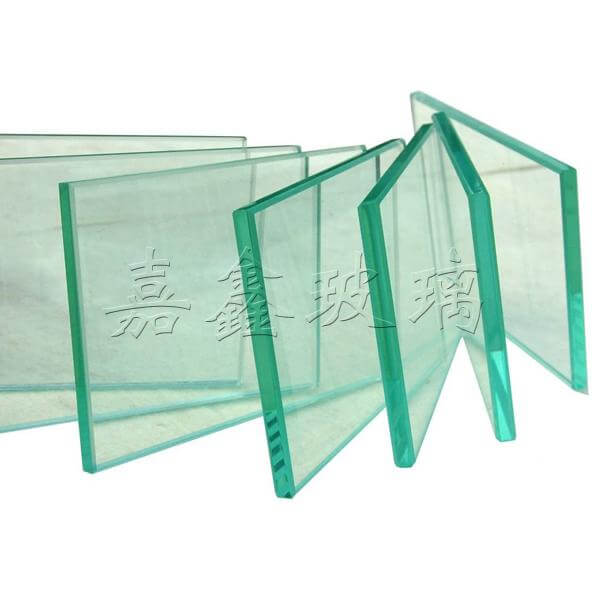
Introduction to Enterprise Technical Strength: Jiaxin Glass' "Three-level Breakthrough" and Scenario-based Solutions
Jiangyin Jiaxin Glass Products Co., Ltd. throughTechnology iteration, equipment upgrade, management optimizationThree-tier breakthrough, establishing a comprehensive technical barrier for adhesive glass.STEP 1: Innovation in Adhesive Layer Technology—— Using imported German high weatherability PVB film, the content of its ultraviolet absorber is 40% higher than that of ordinary film. The actual measurement shows that after 10 years of use in the Jiangsu and Zhejiang areas (annual sunshine exceeds 2000 hours), the light transmittance still maintains above 85%.STEP 2: Intelligent Processing Control—— Introducing the Italian BOTTERO fully automatic laminating production line, which monitors the adhesive layer temperature in real-time with infrared (accuracy ±0.5℃),配合真空预压技术(pressure up to -0.095MPa),to completely eliminate bubble and delamination risks.Step 3: Composite sound insulation design——Launched "hollow + interlayer" composite glass for high-end needs, with a structure of 5mm+12A+5mm (filled with argon in the hollow layer), the sound insulation performance is improved to STC 42 decibels (ordinary interlayer glass is only STC 35 decibels). Currently, Jiaxin Glass has provided customized solutions for projects such as Shanghai Tower and Suzhou Bay Grand Theater, with the maximum supply volume per project exceeding 20,000 square meters and a customer repurchase rate of 92%.
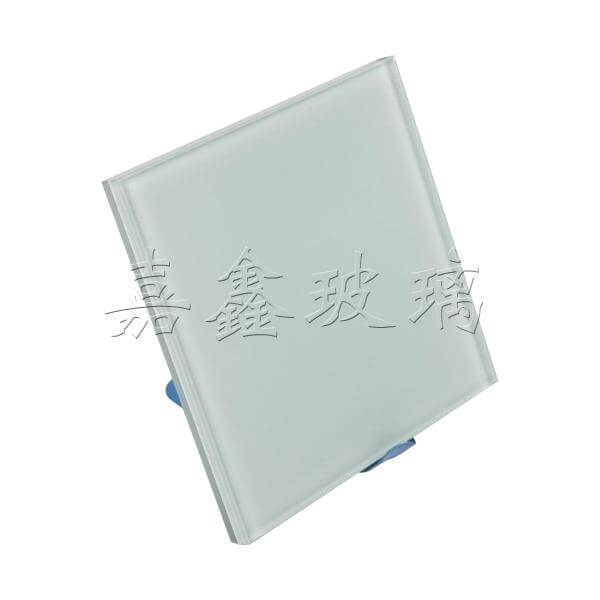
FAQ: Laminated Glass Technology Selection Guide
Q1: How to determine if the weather resistance of the laminated glass meets the standard?
A: Can beThree-step detection methodVerification:STEP1Review the "UV Accelerated Aging Test" data in the inspection report (industry standard: light transmittance attenuation ≤10% after 5000 hours).STEP2Observe the film layer color, high-quality PVB film should be colorless and transparent (yellowing indicates insufficient additives).STEP3Touch the edge of the adhesive layer, no delamination or lifting (Jiaxin Glass uses laser edge sealing technology, improving edge sealing by 30%).
Q2: What factors are related to the sound-insulating performance of laminated glass?
A: Mainly depends onCoating thickness, glass spacing, gas fillingThree Elements:STEP1The thicker the adhesive layer (recommended ≥0.76mm), the better the absorption effect on low-frequency noise (such as elevator operation noise).STEP2The best sound insulation performance is achieved when the hollow layer spacing is between 12-15mm (too small a spacing may cause "resonance," while too large a spacing may reduce structural strength).STEP3Filling with inert gases such as argon can further reduce sound conduction (the argon content in Jiaxin composite glass hollow layer ≥90%).
Q3: How to avoid air bubble issues in processed toughened glass?
Strict control required.Temperature, Pressure, TimeThree parameters:STEP1The heating stage adopts "gradual temperature rise" (it takes ≥40 minutes to rise from room temperature to 130℃, to avoid local overheating of the adhesive layer).STEP2Maintain stable pressure during the vacuum pre-compression stage (-0.09MPa to -0.095MPa, fluctuation range ≤0.002MPa).STEP3Insulation stage lasts ≥30 minutes (Jiaxin Glass automatically records parameters through PLC control system to ensure consistency of each batch process).
Summary of the Whole: Core Logic of Technical Selection and Jiaxin Value
Technical selection of laminated glass should focus onWeather resistance, sound insulation, stabilityThree core indicators are expanded, and the value of Jiaxin Glass lies in the full-chain optimization of "material-equipment-management," transforming technical parameters into quantifiable scenario solutions: its high weatherability PVB film extends the service life of glass, the intelligent processing line ensures product consistency, and the composite sound insulation design meets the high-end noise reduction requirements. For the project party, choosing Jiaxin means not only obtaining a piece of glass but also selecting a complete technical support system from design to after-sales service, which is the key to standing out in the fierce market competition.
Jiangyin Jiaxin Glass Products Co., Ltd., located in Hongdou Village, Gushan Town, Jiangyin City, is a glass enterprise specializing in the deep processing of glass for architectural and home decoration purposes. Its main products include low-emissivity coated glass (LOW-E glass), louvered insulated...
No. 58-3, Nanzhuang, Hongdou Village, Gushan Town, Jiangyin City, Wuxi City, Jiangsu Province