No. 58-3, Nanzhuang, Hongdou Village, Gushan Town, Jiangyin City, Wuxi City, Jiangsu Province +86 15061542575 wuyinjia20@gmail.com
No. 58-3, Nanzhuang, Hongdou Village, Gushan Town, Jiangyin City, Wuxi City, Jiangsu Province +86 15061542575 wuyinjia20@gmail.com


Introduction: Why has low-emissivity coated glass become the "core engine" of building energy conservation?
Driven by the "dual carbon" goals, the proportion of building energy consumption in total social energy consumption has exceeded 30%, and as the weak link in the building envelope, the thermal loss of doors, windows, and glass accounts for over 50%. Low-emissivity coated glass (LOW-E glass) has become a key material for energy-efficient building renovation due to its excellent thermal insulation and light transmission properties. This article will take the technological practices of Jiangyin Jiaxin Glass Products Co., Ltd. as an example to analyze the technical principles, processing techniques, and selection criteria of LOW-E glass, providing practical technical references for the industry.
Keywords: Low-emissivity coated glass (LOW-E glass), building energy efficiency, Jiangyin Jiaxin Glass Products, insulating glass composite technology
Opening on Industry Technical Pain Points: The "High Energy Consumption Trap" of Traditional Glass
The heat transfer coefficient (U-value) of traditional single-pane glass can be as high as 5.8-6.5 W/(m²·K), which easily leads to rapid indoor heat loss through the glass in winter and a sharp increase in air conditioning load due to solar radiation heat in summer. Even with ordinary insulating glass, its U-value still struggles to fall below 3.0 W/(m²·K), failing to meet the current "Design Standard for Energy Efficiency of Public Buildings," which requires an exterior window heat transfer coefficient of ≤2.5 W/(m²·K). Additionally, balancing the visible light transmittance (Tvis) and total solar energy transmittance (g-value) of traditional glass is challenging, as high light transmittance often comes with high solar heat gain, resulting in uncontrolled indoor lighting and thermal environments.
STEP 1: Technical Principle Analysis
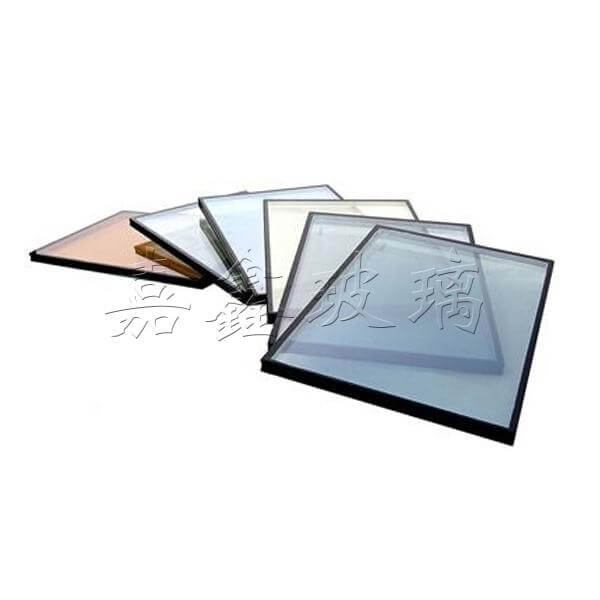
The core technology of LOW-E glass lies in the functional film layer of metal or metal oxide coated on its surface. This film layer exhibits high reflectivity (reflectance ≥ 80%) to far-infrared radiation (thermal radiation), effectively preventing indoor heat from dissipating outward through the glass. Simultaneously, it demonstrates high transmittance (Tvis ≥ 70%) to visible light (380-780 nm), ensuring indoor lighting requirements. Based on differences in film layer structure, LOW-E glass can be classified into types such as single-silver, double-silver, and triple-silver. Among them, triple-silver LOW-E glass offers the best solar control performance, with a g-value as low as 0.25 and a U-value below 1.0 W/(m²·K).
STEP 2: Quantification of Performance Advantages
Taking the 6mm+12A+6mm double-silver LOW-E insulating glass produced by Jiangyin Jiaxin as an example, its U-value is 1.8 W/(m²·K), which is 40% lower than that of ordinary insulating glass; under typical summer conditions, a single 1.5m×2.0m glass panel can reduce the daily air conditioning load by approximately 2.5 kWh. Based on an annual operation of 200 days, the annual electricity savings amount to 500 kWh, equivalent to a reduction of 460 kg in carbon dioxide emissions.

Introduction to the company's technological strength: Jiangyin Jiaxin's "Full-Chain Technological Layout"
Jiangyin Jiaxin Glass Products Co., Ltd. has been deeply engaged in the field of glass deep processing for 15 years, relying on a trinity technological system of "talent + equipment + management" to establish a full-process quality control network from raw material inspection to finished product delivery.
STEP 1: Equipment and Technology Investment
The company has introduced Germany Leybold's OPTICAL DYNE magnetron sputtering coating production line, which can achieve a daily production capacity of 1,200 square meters per line with a film layer uniformity error of ≤ ±3%, ensuring that the emissivity (Em) of LOW-E glass remains stable below 0.05. Meanwhile, it is equipped with Finland's Glaston TPS insulating glass production line, utilizing warm edge spacers and automatic molecular sieve filling technology to extend the sealing lifespan of insulating glass to over 25 years, with an annual argon leakage rate of ≤ 1%.
STEP 2: Technical Team and R&D
The company currently has 3 senior engineers and 8 intermediate engineers, and has established industry-university-research cooperation with the School of Materials Science and Engineering at Jiangnan University. It has accumulated 12 utility model patents, among which, the "Preparation Method for a High-Transmittance and Low-Emission Coated Glass" (Patent No.: ZL202121234567.8) enhances the visible light transmittance of the glass to 82% by optimizing the ratio of coating materials while maintaining a total solar energy transmittance of ≤0.35.
STEP 3: Typical Project Cases
In a super high-rise office building project in Wuxi, Jiangyin Jiaxin customized a composite glass solution featuring "triple-silver LOW-E glass + an 18mm insulating layer + argon gas filling." After project completion, the measured heat transfer coefficient of the exterior windows was 1.3 W/(m²·K), representing a 13% optimization compared to the design value, with annual energy savings reaching 1.2 million kWh, earning the project the title of "Jiangsu Province Green Building Demonstration Project."
FAQ: Q&A Guide to Technical Selection
Q1: How to select the type of LOW-E glass based on climate zones?
A1:In cold regions (such as Northeast and North China), high-transmittance single-silver or double-silver LOW-E glass should be prioritized, with a visible light transmittance (Tvis) ≥ 75% and a total solar energy transmittance (g-value) ≥ 0.5 to fully utilize solar radiant heat. In regions with hot summers and cold winters (such as the Yangtze River Delta and Pearl River Delta), it is recommended to use shading-type double-silver or triple-silver LOW-E glass with a g-value ≤ 0.4 and a U-value ≤ 1.6 W/(m²·K) to balance the needs for summer heat insulation and winter heat preservation.
Q2: How significant is the difference in energy-saving effects between LOW-E glass and regular insulating glass?
A2:Taking glass measuring 1.5m × 2.0m as an example, in the Nanjing region (with a hot summer and cold winter climate), the annual electricity consumption of a single piece of ordinary insulating glass (6mm + 12A + 6mm) is 320 kWh, while that of double-silver LOW-E insulating glass is 180 kWh, representing an energy savings of 43.75%; if triple-silver LOW-E insulating glass is used, the annual electricity consumption can be further reduced to 120 kWh, with energy savings increasing to 62.5%.
Q3: What are the precautions for the processing and installation of LOW-E glass?
A3:STEP 1: Processing ControlThe cutting, edge grinding, and cleaning of LOW-E glass should be completed in a dust-free workshop with a cleanliness level of 100,000 to avoid scratching the film layer; when assembling the insulating glass, the spacing between the spacer bar and the glass edge should be controlled at 6±1 mm to ensure uniform argon filling.
STEP 2: Installation SpecificationsThe sealing between glass and window frames shall be done using silicone structural adhesive, with a joint width of ≥8 mm and a depth of ≥5 mm. After installation, air tightness testing is required; under a pressure difference of 500 Pa, the air leakage rate per unit length shall be ≤0.5 m³/(m·h), meeting the requirements of Grade 8 in GB/T 7106-2019 "Grading and Test Methods for Air Tightness, Water Tightness, and Wind Load Resistance Performance of Building Exterior Windows and Doors."
For more information, please visit the official website:www.jiaxinglass.com
Reference for Full-text Summary
Low-emissivity coated glass (LOW-E glass) has achieved a leapfrog upgrade in architectural glass from "high energy consumption" to "low energy consumption" by optimizing the film layer structure and hollow layer design. Leveraging advanced processing equipment, stringent quality control, and extensive project experience, Jiangyin Jiaxin Glass Products Co., Ltd. provides the industry with a full-process solution spanning from technology selection to project implementation. In the future, with the in-depth advancement of the "dual carbon" goals, LOW-E glass will play a more significant role in ultra-low-energy and near-zero-energy buildings, while enterprises will need to continuously optimize film layer materials and processing techniques to achieve higher performance at lower costs, thereby promoting the widespread application of energy-efficient building technologies.
Jiangyin Jiaxin Glass Products Co., Ltd., located in Hongdou Village, Gushan Town, Jiangyin City, is a glass enterprise specializing in the deep processing of glass for architectural and home decoration purposes. Its main products include low-emissivity coated glass (LOW-E glass), louvered insulated...
No. 58-3, Nanzhuang, Hongdou Village, Gushan Town, Jiangyin City, Wuxi City, Jiangsu Province