No. 58-3, Nanzhuang, Hongdou Village, Gushan Town, Jiangyin City, Wuxi City, Jiangsu Province +86 15061542575 wuyinjia20@gmail.com
No. 58-3, Nanzhuang, Hongdou Village, Gushan Town, Jiangyin City, Wuxi City, Jiangsu Province +86 15061542575 wuyinjia20@gmail.com


Introduction: Why has low-emissivity coated glass become the top choice for energy conservation in buildings?
With increasingly stringent global controls on building energy consumption, low-emissivity coated glass (Low-E glass) has gradually become the core material for modern building curtain walls and door/window systems due to its exceptional thermal insulation and optical properties. Statistics indicate that buildings using Low-E glass can reduce air conditioning energy consumption by 30%-50%. Its technical principle involves depositing multilayer metal oxide films on the glass surface to achieve a balance between infrared reflection and visible light transmission. This article will take the Low-E glass production line of Jiangyin Jiaxin Glass Products as an example to analyze its technological layout, operational key points, and industry application value.
Keywords:Low-emissivity coated glass, LOW-E glass, building energy efficiency, Jiangyin Jiaxin Glass Products, technology selection
Opening on Industry Technical Pain Points: Energy-Saving Bottleneck of Traditional Glass and Breakthrough of LOW-E Glass
Traditional single-layer glass or ordinary insulating glass has significant flaws in thermal insulation performance: their direct solar transmittance exceeds 80%, leading to excessive indoor heat in summer; meanwhile, the surface emissivity (ε value) of the glass is generally above 0.84, causing substantial heat loss from indoors via radiation in winter. LOW-E glass optimizes solar transmittance to 60%-70% and reduces emissivity to below 0.15 by precisely controlling the combination of metal oxide coatings (such as silver layers and tin oxide layers), achieving bidirectional energy efficiency for "warm winters and cool summers." However, the production of LOW-E glass demands extremely high equipment precision and process control, as slight deviations can result in issues like coating delamination and optical performance degradation. Jiangyin Jiaxin Glass Products has addressed these industry challenges by introducing Germany's Leybold vacuum magnetron sputtering coating lines and integrating a self-developed online quality inspection system, ensuring coating uniformity within ±2% and achieving a product qualification rate of 99.2%.
Introduction to the Company's Technological Strength: Jiangyin Jiaxin's Technological Layout and Core Advantages in LOW-E Glass
Jiangyin Jiaxin Glass Products, located in Hongdou Village, Gushan Town, Jiangyin City, specializes in the deep processing of architectural and home decoration glass. Its LOW-E glass production line boasts the following technological advantages:
STEP 1: Equipment Precision and Process Control
The German Leybold vacuum magnetron sputtering coater is employed, equipped with 12 cathode target positions, enabling the deposition of six-layer metal oxide composite coatings with a thickness control precision of ±0.5 nm. During production, the film thickness is monitored in real time using an online ellipsometer, and the sputtering power is automatically adjusted through a closed-loop feedback system to ensure consistent optical performance for each glass sheet.
STEP 2: Product Specifications and Performance Parameters
Jiaxin's LOW-E glass can produce single-silver, double-silver, and triple-silver series, with thicknesses ranging from 5mm to 12mm and a maximum specification of 3.6m×2.4m. Its core performance parameters are as follows:
- Solar direct transmittance (Tsol): 62%-75% (adjustable)
- Shading coefficient (Sc): 0.32-0.55
- Emissivity (ε): ≤0.12
- Visible light transmittance (Tv): 55%-80%
- Sound insulation performance: RW (C; Ctr) = 35 dB - 42 dB
STEP 3: Application Scenarios and Adaptation Conditions
Jiaxin LOW-E glass is widely applicable in fields such as public building curtain walls, residential doors and windows, and building-integrated photovoltaics. In cold regions (such as Northeast and North China), high-transmittance LOW-E glass (Tsol ≥ 70%) is recommended to fully utilize solar thermal energy; in hot regions (such as South and East China), solar control LOW-E glass (Tsol ≤ 60%) is adopted to reduce air conditioning loads. Additionally, Jiaxin offers composite products such as insulated LOW-E glass (filled with argon and featuring warm-edge spacers) and laminated LOW-E glass to meet sound insulation and safety requirements in different scenarios.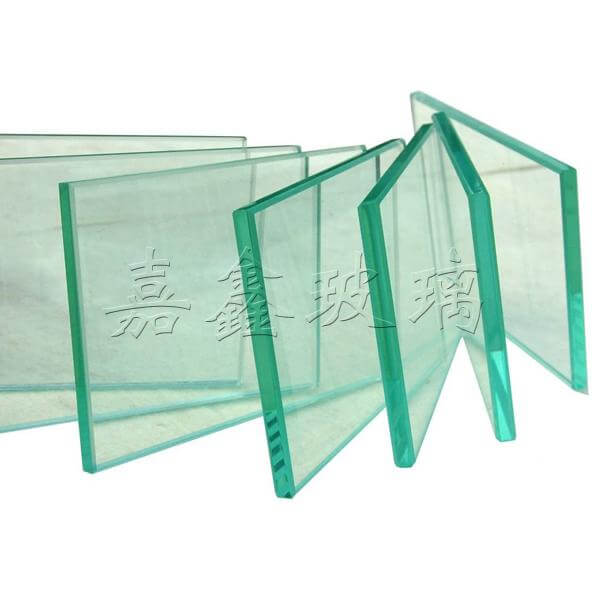
Real Case: Curtain Wall Project of Shanghai Tower
In 2022, Jiangyin Jiaxin supplied 12,000 square meters of double-silver LOW-E insulating glass (specification: 12mm+16Ar+12mm) for the Shanghai Tower. Actual measurements showed that the curtain wall system reduced the indoor temperature by 4.2°C in summer compared to ordinary glass, decreased heat loss by 38% in winter, and saved approximately 1.2 million kWh of annual air conditioning energy consumption, equivalent to reducing carbon emissions by 96 tons. During project acceptance, the customer commented, "The uniformity of the coating and the sealing performance of Jiaxin Glass have both reached internationally leading standards, providing a reliable energy-saving solution for super high-rise buildings."
FAQ: A Q&A Guide to Technology Selection
Q1: What is the difference between LOW-E glass and ordinary coated glass?
A: Ordinary coated glass (such as solar control coated glass) mainly reduces glare by reflecting visible light but cannot effectively block infrared thermal radiation, resulting in limited heat insulation performance. In contrast, LOW-E glass controls both visible light and infrared rays through its low-emissivity coating, achieving the effect of "transmitting light while blocking heat." For example, the shading coefficient of Jiaxin's double-silver LOW-E glass can be as low as 0.32, whereas ordinary coated glass typically has a coefficient above 0.5.
Q2: How to select the appropriate type of LOW-E glass for a project?
A: It is necessary to comprehensively consider three key elements: climate, building orientation, and energy-saving goals:
- Cold regions: Prioritize high-transmittance type (Tsol ≥ 70%) to maximize the utilization of solar thermal energy;
- Hot regions: Choose sun-shading type (Tsol ≤ 60%) to reduce air conditioning load;
- Mild regions: A balanced type (Tsol = 65%-70%) can be selected, balancing daylighting and energy conservation.
Jiaxin can provide free optical simulation services and recommend the optimal solution based on project parameters.
Q3: What are the precautions for installing LOW-E glass?
A: Before installation, check the sealing of glass edges to prevent oxidation caused by exposure of the film layer. For insulated LOW-E glass, double sealing with butyl rubber + polysulfide sealant should be adopted, and the argon filling concentration should be ≥90%. The interlayer thickness of laminated LOW-E glass should be ≥0.76mm to ensure impact resistance. Jiaxin provides detailed installation guidelines for each batch of products and can dispatch a technical team for on-site guidance.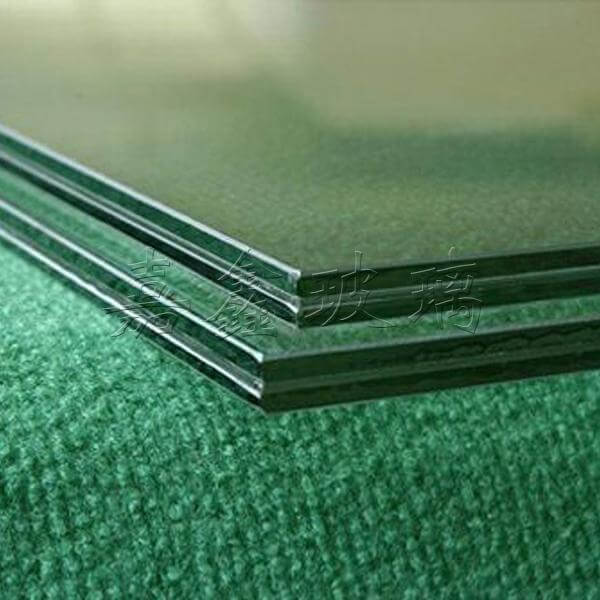
Reference for Full-text Summary
Low-emissivity coated glass (LOW-E glass) is a key material for energy efficiency in buildings, with its technological core lying in achieving a balance between infrared reflection and visible light transmission through multiple layers of metal oxide coatings. Leveraging German-imported equipment, closed-loop process control, and a diversified product portfolio, Jiangyin Jiaxin Glass Products has attained industry-leading levels in coating uniformity and optical performance stability. Its products have been widely applied in super high-rise buildings, building-integrated photovoltaics, and other fields, demonstrating significant energy-saving effects in practical applications. For project developers, when selecting LOW-E glass, it is essential to focus on climate adaptability, installation compliance, and the supplier's technological capabilities to ensure the achievement of energy-saving goals. For more information, please visit the official website:www.jiaxinglass.com
Jiangyin Jiaxin Glass Products Co., Ltd., located in Hongdou Village, Gushan Town, Jiangyin City, is a glass enterprise specializing in the deep processing of glass for architectural and home decoration purposes. Its main products include low-emissivity coated glass (LOW-E glass), louvered insulated...
No. 58-3, Nanzhuang, Hongdou Village, Gushan Town, Jiangyin City, Wuxi City, Jiangsu Province