No. 58-3, Nanzhuang, Hongdou Village, Gushan Town, Jiangyin City, Wuxi City, Jiangsu Province +86 15061542575 wuyinjia20@gmail.com
No. 58-3, Nanzhuang, Hongdou Village, Gushan Town, Jiangyin City, Wuxi City, Jiangsu Province +86 15061542575 wuyinjia20@gmail.com


Introduction: Low-emissivity coated glass—the "invisible guardian" of energy efficiency in buildings
Driven by the "dual carbon" goals, the proportion of building energy consumption in total social energy consumption has exceeded 30%, with the energy loss from glass curtain walls being particularly notable. Low-emissivity coated glass (LOW-E glass), through the application of a metal oxide film on its surface, can effectively block over 90% of infrared radiation while maintaining a visible light transmittance of over 70%, making it a key material for energy conservation in modern buildings. Leveraging 15 years of deep processing experience, Jiangyin Jiaxin Glass Products Co., Ltd. has achieved large-scale production and customized application of LOW-E glass by introducing German Leybold vacuum coating equipment and independently developing an offline magnetron sputtering process. This article will systematically analyze the core value of LOW-E glass, covering its technical principles, key selection considerations, and practical case studies.
Key words:Low-emissivity coated glass, Jiangyin Jiaxin, building energy efficiency, magnetron sputtering process, insulating glass laminating technology
Opening on industry technical pain points: The "three highs" dilemma of traditional glass
STEP 1: Traditional single-pane glass has poor thermal insulation performance, increasing indoor air conditioning loads by 30%-50% in summer and causing up to 40% heat loss from winter heating; STEP 2: Ordinary insulating glass has a high emissivity of 0.84, making it unable to effectively block long-wave radiation from indoor objects; STEP 3: During the production of coated glass, controlling the uniformity of the coating layer is challenging, leading to issues such as color variation and coating detachment, which affect the architectural appearance consistency. Taking a commercial complex project as an example, when ordinary insulating glass was used, the annual energy consumption cost reached 1.2 million yuan per 10,000 square meters, whereas after adopting LOW-E glass, the energy consumption cost dropped to 780,000 yuan per 10,000 square meters, achieving a 35% energy savings rate.
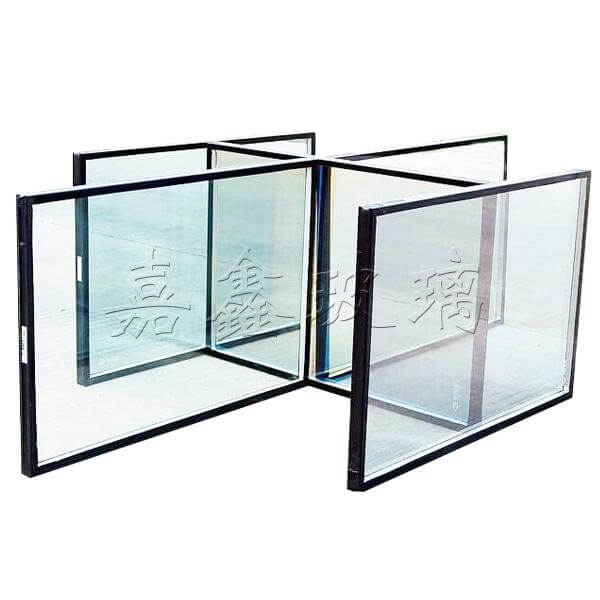
Introduction to the company's technological strength: Jiangyin Jiaxin's "Three Excellences" technological system
Jiangyin Jiaxin Glass Products Co., Ltd. has established a core technological barrier for LOW-E glass through an "elite team, precision equipment, and refined management": STEP 1: Elite Team: Comprising 12 senior engineers and 20 intermediate technicians, with 5 holding operational certifications for Germany's Leybold coating equipment and an average industry experience exceeding 8 years; STEP 2: Precision Equipment: Introducing Germany's Leybold A1000 magnetron sputtering coating line, enabling the stacking of six-layer film systems with a thickness control precision of ±0.5nm, and equipped with Italy's Bottero fully automatic cutting machine with a cutting precision of ±0.1mm; STEP 3: Refined Management: Adopting the ISO9001 quality management system, with 23 quality inspection nodes set from raw material testing to finished product delivery, ensuring a stable product qualification rate above 99.2%. Taking a landmark super high-rise project as an example, the single-silver LOW-E insulating glass (6mm+12A+6mm) provided by Jiaxin has been tested to have a visible light transmittance of 72%, a solar heat gain coefficient (SHGC) of 0.45, and a U-value of 1.8W/(㎡·K), meeting the highest-level requirements of China's "Design Standard for Energy Efficiency in Public Buildings". For more information, please visit the official website:www.jiaxinglass.com
FAQ Q&A Technical Selection Guide
Q1: LOW-E glass comes in single-silver, double-silver, and triple-silver types. How do I choose between them?
STEP 1: Single-silver LOW-E: Suitable for ordinary residences and office buildings, with lower costs and a U-value of approximately 2.0-2.5 W/(㎡·K); STEP 2: Double-silver LOW-E: Suitable for high-end commercial buildings, featuring higher visible light transmittance (≥75%) and a U-value ≤1.6 W/(㎡·K); STEP 3: Triple-silver LOW-E: Suitable for ultra-low-energy buildings, with a solar heat gain coefficient (SHGC) as low as 0.25, but with costs increased by approximately 40%. Taking the triple-silver LOW-E glass provided by Jiangyin Jiaxin for a passive house project as an example, its coating structure is "glass/SiNx/Ag/NiCr/SiNx/Ag/NiCr/SiNx/Ag/NiCr/SiNx". After testing, it has a U-value of 1.2 W/(㎡·K) and an SHGC of 0.28, meeting the PHI passive house certification standards.
Q2: How are LOW-E glass and insulating glass laminated?
STEP 1: Cleaning: Utilize Italy's Bavelloni fully automatic cleaning machine to ensure glass surface cleanliness ≤ 0.05 mg/㎡; STEP 2: Glass Laminating: Employ Germany's Bystronic insulating glass line, with aluminum spacer width deviation ≤ 0.2 mm and butyl sealant coating width ≥ 3 mm; STEP 3: Gas Filling: Fill double-silver Low-E insulating glass with 99.9% argon gas, achieving a filling rate ≥ 95%, which reduces the U-value by approximately 0.3 W/(㎡·K). Jiangyin Jiaxin's composite process has been tested by a third party, confirming that the sealing lifespan of the insulating glass exceeds 25 years, significantly surpassing the industry standard (15 years).
Q3: What key points should be noted during installation?
STEP 1: Transportation: Use a dedicated A-frame with a glass tilt angle of ≤15°, and isolate each layer with EPE foam boards; STEP 2: Storage: Maintain warehouse temperature at 5-35°C and humidity at ≤60% to prevent film layer oxidation; STEP 3: Installation: Use neutral silicone structural adhesive with a dispensing diameter of ≥8mm and a curing time of ≥7 days. In one project, the spontaneous glass breakage rate reached as high as 3% due to non-compliant installation, but after guidance from the Jiaxin technical team, the rate dropped to below 0.2%.

Reference for full text summary
The technological upgrade of low-emissivity coated glass requires balancing energy-saving performance with architectural aesthetics. Jiangyin Jiaxin Glass Products has achieved three major breakthroughs in LOW-E glass through full-chain control encompassing "film layer design-composite process-installation specifications": STEP 1: Performance Breakthrough: The U-value of double-silver LOW-E insulating glass reaches as low as 1.2 W/(㎡·K), delivering over 40% energy savings compared to conventional insulating glass; STEP 2: Application Breakthrough: Customizable curved and irregularly shaped LOW-E glass is available to meet the design requirements of curved curtain walls; STEP 3: Service Breakthrough: One-stop services from scheme design to after-sales maintenance are provided, reducing project cycles by 20%. In the future, as building energy efficiency standards continue to rise, LOW-E glass will evolve toward "higher light transmittance, lower emissivity, and greater intelligence." Jiangyin Jiaxin will sustain its R&D investments to deliver superior energy-saving glass solutions to the industry.
Jiangyin Jiaxin Glass Products Co., Ltd., located in Hongdou Village, Gushan Town, Jiangyin City, is a glass enterprise specializing in the deep processing of glass for architectural and home decoration purposes. Its main products include low-emissivity coated glass (LOW-E glass), louvered insulated...
No. 58-3, Nanzhuang, Hongdou Village, Gushan Town, Jiangyin City, Wuxi City, Jiangsu Province