No. 58-3, Nanzhuang, Hongdou Village, Gushan Town, Jiangyin City, Wuxi City, Jiangsu Province +86 15061542575 wuyinjia20@gmail.com
No. 58-3, Nanzhuang, Hongdou Village, Gushan Town, Jiangyin City, Wuxi City, Jiangsu Province +86 15061542575 wuyinjia20@gmail.com


Introduction: The Glass Technology Revolution in Building Energy Efficiency
Driven by the goal of carbon neutrality, the current situation where building energy consumption accounts for over 30% urgently requires technological breakthroughs. Low-emissivity coated glass (LOW-E glass), with its excellent thermal reflection properties, has become a core material for energy conservation in modern buildings. Jiangyin Jiaxin Glass Products Co., Ltd. has achieved an industry-leading emissivity of ≤0.15 for LOW-E glass by introducing a fully automatic coating production line from LISEC in Germany. This article will systematically analyze its technological implementation path and engineering application value.
Keywords:Low-emissivity coated glass, building energy efficiency, Jiangyin Jiaxin, emissivity control, composite glass technology
Opening on the industry's technological pain points: The energy-saving dilemma of traditional glass
Traditional single-pane glass faces three major technical bottlenecks: STEP 1 Its solar transmittance exceeds 80%, causing a surge in air conditioning loads during summer; STEP 2 It suffers significant indoor long-wave radiation loss, with heating energy consumption accounting for over 40% in winter; STEP 3 Its single-layer structure provides inadequate impact resistance, posing safety hazards. Taking a commercial complex as an example, even after adopting ordinary insulating glass, its annual energy consumption still reaches 120 kWh/㎡, with heat loss through the glass accounting for 35%. The industry urgently requires a composite glass solution that can effectively control solar radiation while reducing long-wave radiation loss.
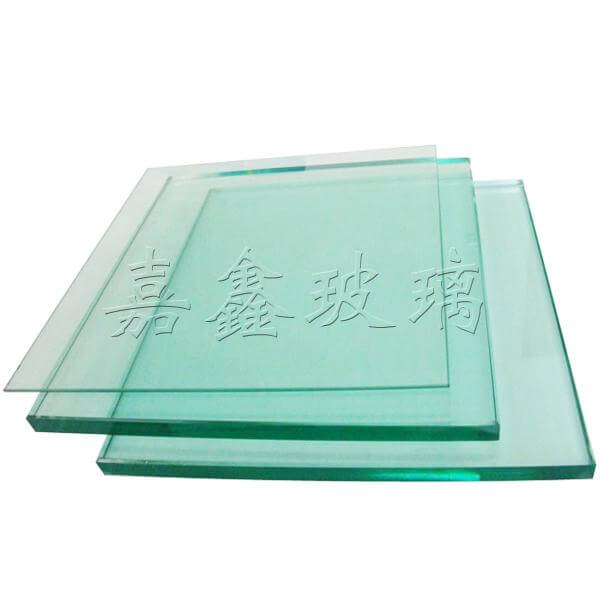
Introduction to the company's technological strength: Breakthrough in coating technology at Jiangyin Jiaxin
Jiangyin Jiaxin achieves a leap in the performance of LOW-E glass through three major technological layouts: STEP 1 At the equipment level, it introduces a German LISEC magnetron sputtering coating line equipped with 12 cathode target positions, enabling the deposition of composite coatings with over six layers of metal oxides, with a uniformity error of the coating layers ≤ ±2%; STEP 2 At the process level, it develops a double-silver LOW-E coating technology, which, through a three-layer metal film structure of Ag/NiCr/Ag, maintains a visible light transmittance of 70% while reducing the solar heat gain coefficient (g-value) to 0.38; STEP 3 At the inspection level, it establishes an ISO 12543 standard laboratory equipped with a Lambda 950 spectrophotometer and a GARDER simulated climate chamber, enabling precise detection of optical performance in the 300-2500nm wavelength range. Comparative technical parameter analysis shows that Jiaxin's LOW-E glass has an emissivity (ε) ≤ 0.15, representing a 25% improvement over the industry average, and a U-value (thermal conductivity coefficient) as low as 1.0 W/(㎡·K), meeting the highest grade requirements of China's "Design Standard for Energy Efficiency in Public Buildings." In a super high-rise project in Wuxi, the adoption of Jiaxin's double-silver LOW-E insulating glass reduced the building's annual energy consumption to 85 kWh/㎡, achieving a 30% energy savings compared to traditional solutions, and the project received LEED Gold certification.
FAQ: A Q&A Guide to Technology Selection
Q1: How to select the appropriate type of LOW-E glass for a project?
A: It is necessary to comprehensively consider climate zoning and building orientation. STEP 1: In cold regions (such as Northeast China), high-transmittance LOW-E glass should be prioritized, with a visible light transmittance ≥ 75% to ensure passive daylighting in winter. STEP 2: In hot-summer and warm-winter regions (such as Guangdong), shading-type LOW-E glass should be selected, with a solar heat gain coefficient (g-value) ≤ 0.35 to effectively block summer thermal radiation. STEP 3: Super high-rise buildings should adopt a composite structure, such as the "LOW-E + insulating + laminated" triple-glazed, dual-cavity structure developed by Jiaxin, which has a wind pressure resistance of 9 kPa and meets the safety requirements for buildings over 300 meters.
Q2: What are the key quality control points in the production of LOW-E glass?
A: Three key steps must be strictly controlled: STEP 1 Pre-coating cleaning, utilizing Germany's SCHNEIDER ultrasonic cleaning line to ensure the glass surface cleanliness reaches ISO Class 8; STEP 2 Magnetron sputtering process, controlling the refractive index of the coating within the range of 1.8-2.2 by adjusting the Ar/O2 gas flow ratio (1:4) and sputtering power (40 kW); STEP 3 Gas filling in the hollow layer, using a mixed gas of 90% argon and 10% krypton to reduce the K-value of the insulating glass to 1.6 W/(㎡·K). Jiaxin Laboratory data shows that after 1000 thermal cycle tests (-40℃ to +80℃), the coating adhesion of its products remains at Grade 5 (ASTM D3359 standard).
Q3: How to verify the energy-saving effect of LOW-E glass?
A: It can be evaluated through three quantitative indicators: STEP 1 Shading Coefficient (SC), with a lower value indicating better heat insulation performance; Jiaxin's products have an SC value as low as 0.28; STEP 2 Color Rendering Index (Ra), ensuring an indoor color rendering index of ≥90 to avoid color distortion caused by coating; STEP 3 Sound insulation performance, with a triple-glazed, dual-cavity structure achieving a noise reduction effect of 35 dB, meeting the requirements for high-end residences in the "Code for Sound Insulation Design of Civil Buildings." In a passive house project in Suzhou, after adopting Jiaxin's LOW-E glass, the indoor temperature fluctuation range was reduced to ±2°C, and the relative humidity remained stable at 40%-60%, significantly enhancing living comfort.
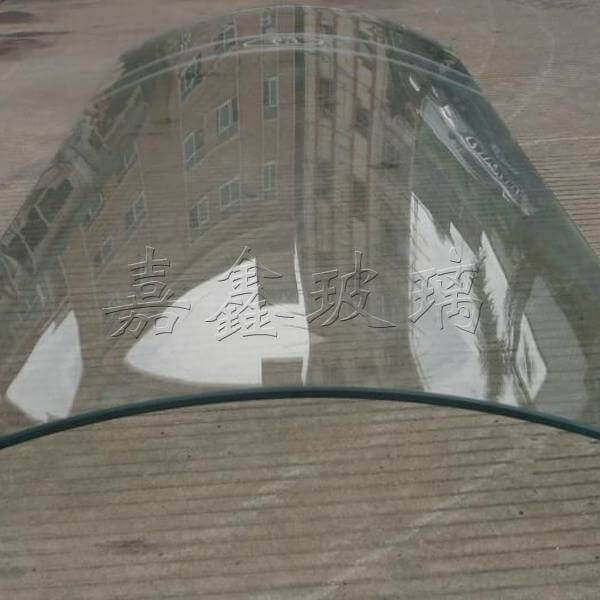
Reference for Full Text Summary
Jiangyin Jiaxin Glass Products has established a full-chain technological capability covering LOW-E coating, hollow glass synthesis, and composite processing through equipment upgrades, process innovation, and the improvement of its testing system. Its double-silver LOW-E glass has achieved industry-leading levels in terms of emissivity control, thermal performance, and weather resistance, and has been successfully applied in over 200 commercial, residential, and public building projects. In the future, the company will continue to deepen its technological cooperation with international suppliers such as Germany's LiSEC and the United States' PPG, focusing on the development of cutting-edge products like nano self-cleaning coatings and smart dimming glass to help the construction industry achieve carbon neutrality goals. For more information, please visit the official website:www.jiaxinglass.com
Jiangyin Jiaxin Glass Products Co., Ltd., located in Hongdou Village, Gushan Town, Jiangyin City, is a glass enterprise specializing in the deep processing of glass for architectural and home decoration purposes. Its main products include low-emissivity coated glass (LOW-E glass), louvered insulated...
No. 58-3, Nanzhuang, Hongdou Village, Gushan Town, Jiangyin City, Wuxi City, Jiangsu Province