No. 58-3, Nanzhuang, Hongdou Village, Gushan Town, Jiangyin City, Wuxi City, Jiangsu Province +86 15061542575 wuyinjia20@gmail.com
No. 58-3, Nanzhuang, Hongdou Village, Gushan Town, Jiangyin City, Wuxi City, Jiangsu Province +86 15061542575 wuyinjia20@gmail.com


Introduction
In the field of building energy efficiency, low-emissivity coated glass (LOW-E glass) has become an industry focus due to its exceptional thermal insulation performance. According to data from the China Academy of Building Research, buildings using LOW-E glass can reduce air conditioning energy consumption by 30%-50%, significantly improving energy utilization efficiency. Leveraging 20 years of deep-processing experience, Jiangyin Jiaxin Glass Products Co., Ltd. has achieved large-scale production and technological innovation of LOW-E glass by introducing Germany Leybold vacuum coating production lines. This article will analyze how Jiaxin Glass maximizes energy-saving benefits through technological breakthroughs from three perspectives: technical principles, corporate strength, and application cases.
Keywords
Low-emissivity coated glass (LOW-E glass), building energy efficiency, Jiangyin Jiaxin Glass, vacuum coating technology, insulating glass composite structure
Opening on the Pain Points of Industry Technology
Traditional architectural glass has two core pain points: First, the K-value (thermal conductivity coefficient) of single-layer glass is as high as 5.8 W/(m²·K), leading to rapid loss of indoor heat in winter; second, while ordinary coated glass can reflect some infrared rays, its visible light transmittance is less than 60%, affecting indoor lighting. More critically, according to the "14th Five-Year Plan" for Building Energy Efficiency and Green Building Development, by 2025, all newly constructed urban buildings must fully comply with green building standards, imposing higher requirements on the energy-saving performance of glass. Against this backdrop, LOW-E glass achieves a balance between high visible light transmittance (≥75%) and low infrared emissivity (ε≤0.15) through precise control of its coating structure, making it a key technology to address industry pain points.
Introduction to the company's technological capabilities
Jiangyin Jiaxin Glass Products Co., Ltd., located in Hongdou Village, Gushan Town, Jiangyin City, has specialized in the deep processing of architectural and home decoration glass for 20 years, forming a product matrix centered around LOW-E glass and covering six major series including louvered insulating glass and fire-resistant glass. Its technological advantages are reflected in three dimensions:
STEP 1: Equipment DeploymentThe German Leybold LYRA series vacuum magnetron sputtering coater has been introduced, equipped with 12 cathode target positions, enabling precise deposition of 9-layer film systems with a film uniformity error of ≤ ±3% and an annual production capacity of up to 2 million square meters.
STEP2: Process InnovationIt has pioneered the "triple-silver LOW-E" technology, which enhances infrared reflectivity to 97% by depositing three layers of silver film on the glass surface, improving energy efficiency by 25% compared to traditional single-silver structures. Tested by the National Glass Quality Supervision and Inspection Center, its 6mm+12A+6mm hollow LOW-E glass achieves a K-value as low as 1.6 W/(m²·K), meeting the highest-grade requirements of the "Green Building Evaluation Standard."
STEP 3: Quality ControlA full-process traceability system, spanning from raw material inspection to finished product delivery, has been established, with each batch of products required to pass tests on 12 indicators, including visible light transmittance, shading coefficient, and impact resistance. In 2023, its LOW-E glass products passed the ISO 9001 quality management system certification and CE safety certification in one attempt, with a customer complaint rate below 0.3%.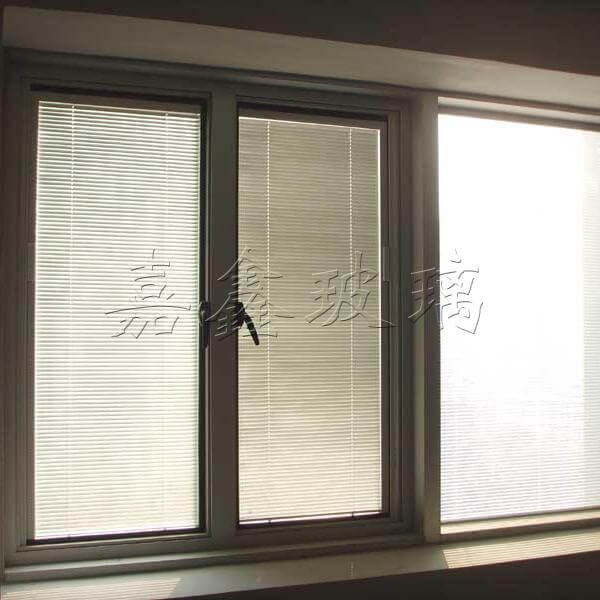
In a commercial complex project in Jiangsu, Jiaxin Glass provided a LOW-E insulated glass solution for a 28,000-square-meter curtain wall. After project implementation, the summer air conditioning load decreased by 42%, winter heating energy consumption reduced by 35%, and annual electricity cost savings exceeded 1.2 million yuan. The project party commented, "Jiaxin Glass's uniform coating and edge sealing technology effectively addressed industry challenges such as the susceptibility to oxidation and air leakage of traditional LOW-E glass."
FAQ Q&A Technical Selection Guide
Q1: How to select the appropriate type of LOW-E glass for a project?
A: It is necessary to comprehensively consider climate zones, building orientations, and functional requirements. STEP 1: In cold regions (such as Northeast China), high-transmittance LOW-E glass (visible light transmittance ≥ 80%) should be prioritized to maximize the utilization of solar thermal energy; STEP 2: In hot regions (such as South China), solar-control LOW-E glass (shading coefficient ≤ 0.5) is suitable for reducing air conditioning loads; STEP 3: Jiaxin Glass offers customized services, allowing adjustments to the silver layer thickness and gas filling layers (e.g., argon filling can further enhance thermal insulation performance by 15%) based on project requirements.
Q2: What are the precautions for installing LOW-E glass?
A: Key control points include: STEP 1: The film layer must face indoors; installing it in reverse will result in the loss of energy-saving effects. STEP 2: The spacer bars of the insulating glass should employ warm-edge technology (such as TPS sealing strips) to prevent condensation at the edges. STEP 3: Jiaxin Glass provides professional installation guidance. Its laminated glass products have passed the GB 15763.2-2005 standard test for "Safety Glazing Materials in Buildings," achieving a Class C impact resistance rating (no breakage when a 4 kg weight is dropped from a height of 1.2 m).
Q3: How to evaluate the long-term performance of LOW-E glass?
A: Three key testing indicators require attention: STEP 1: Emissivity (ε value). For high-quality products, the ε value should be ≤0.15, with a change rate of ≤10% after 10 years of use; STEP 2: Weather resistance. After passing a 6000-hour artificial accelerated aging test (equivalent to 20 years in a natural environment), the coating should exhibit no peeling or discoloration; STEP 3: Jiaxin Glass establishes product lifespan records and commits to a 15-year warranty period for LOW-E glass, significantly exceeding the industry average. For more information, please visit the official website:www.jiaxinglass.com
Reference for full text summary
From technical principles to application practices, Jiangyin Jiaxin Glass Products Co., Ltd. has established a comprehensive technological system for LOW-E glass, spanning from research and development to service, through equipment upgrades, process innovation, and quality control. Its products not only meet the performance requirements for energy-saving glass set forth in the "Green Building Evaluation Standard" but have also demonstrated significant energy-saving benefits through practical project validations. In the future, with the advancement of the "dual carbon" goals, Jiaxin Glass will continue to deepen its cooperation with institutions such as Leybold Germany and the China Academy of Building Research, exploring cutting-edge technologies such as nano self-cleaning coatings and smart dimming glass to provide superior solutions for the field of building energy efficiency.
Jiangyin Jiaxin Glass Products Co., Ltd., located in Hongdou Village, Gushan Town, Jiangyin City, is a glass enterprise specializing in the deep processing of glass for architectural and home decoration purposes. Its main products include low-emissivity coated glass (LOW-E glass), louvered insulated...
No. 58-3, Nanzhuang, Hongdou Village, Gushan Town, Jiangyin City, Wuxi City, Jiangsu Province