No. 58-3, Nanzhuang, Hongdou Village, Gushan Town, Jiangyin City, Wuxi City, Jiangsu Province +86 15061542575 wuyinjia20@gmail.com
No. 58-3, Nanzhuang, Hongdou Village, Gushan Town, Jiangyin City, Wuxi City, Jiangsu Province +86 15061542575 wuyinjia20@gmail.com


Introduction
As the construction industry continues to raise its demands for energy efficiency and comfort, low-emissivity coated glass (LOW-E glass) has become the preferred material for modern building curtain walls, doors, and windows due to its exceptional thermal insulation and light transmission properties. However, how to scientifically select the appropriate type, optimize parameter configurations according to project requirements, and address technical challenges in practical applications remains a focal point of industry attention. This article will systematically analyze the technical advantages and application strategies of LOW-E glass from three dimensions: technical principles, corporate practical experience, and case reviews.
Key words
Low-emissivity coated glass (LOW-E glass), building energy efficiency, thermal insulation performance, light transmittance, parameter optimization, Jiangyin Jiaxin Glass Products
Opening on the Pain Points of Industry Technology
In architectural glass applications, traditional single-pane glass has two core pain points: firstly, its inadequate thermal insulation leads to a surge in air conditioning energy consumption during summer and rapid loss of indoor heat in winter; secondly, achieving a balance between light transmittance and thermal insulation is challenging, as high light-transmittance glass often comes with high emissivity, exacerbating heat exchange between indoors and outdoors. Additionally, improper selection in some projects has resulted in issues such as spontaneous glass breakage and seal failure, further compromising building safety and service life.
STEP 1: At the technical principle level, LOW-E glass forms a reflective barrier against infrared rays by depositing multiple layers of metal or metal oxide films on the glass surface, while maintaining high transmittance of visible light. Its emissivity can be as low as below 0.15, representing a reduction of over 70% compared to ordinary glass, thereby significantly reducing heat transfer.
STEP 2: At the practical parameter level, the industry generally faces contradictions in parameter configuration: for instance, while high-transmittance LOW-E glass (with a light transmittance > 70%) can meet lighting requirements, its shading coefficient (SC value) may exceed 0.5, resulting in inadequate thermal insulation; conversely, low-transmittance glass (with a light transmittance < 50%) can enhance thermal insulation but may compromise indoor natural light levels.
STEP 3: At the application scenario level, there are significant differences in glass performance requirements across different climate zones and building orientations. For example, in cold northern regions, glass with a high shading coefficient and low heat transfer coefficient (U-value) should be prioritized, while in hot southern regions, a balance between light transmission and thermal insulation performance is necessary to avoid excessive reliance on air conditioning for cooling.
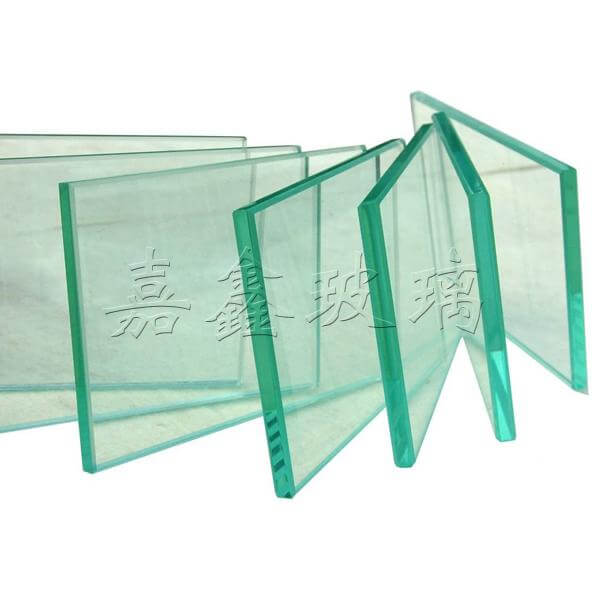
Introduction to the company's technological strength
Jiangyin Jiaxin Glass Products Co., Ltd. has been deeply engaged in the field of architectural glass deep processing for over a decade, relying on the three-dimensional technological system of "talent + equipment + management" to establish a full-chain technological advantage for LOW-E glass from R&D to implementation.
STEP 1: Talent and Technology Reserves: The company has established a technical team led by 10 senior engineers with multidisciplinary backgrounds in material science, optical engineering, mechanical design, and more. The team has accumulated a total of six patents related to glass processing, among which the "Composite Process for LOW-E Glass with Adjustable Light Transmittance" won the third prize for Scientific and Technological Progress in Jiangsu Province.
STEP 2: Equipment and Capacity Assurance: We have introduced internationally advanced equipment, such as Germany's Leybold optical coating production lines and Finland's Glaston tempering furnaces, achieving a thickness control precision of ±0.5nm for the coating layers on LOW-E glass, with an annual production capacity of 500,000 square meters, meeting the bulk demands of projects like large-scale commercial complexes and super high-rise buildings.
STEP 3: Scientific Management Model: Certified under the ISO 9001 quality management system, a comprehensive quality traceability system has been established, covering the entire process from raw material inspection and production monitoring to finished product acceptance. For example, each batch of glass undergoes testing for 12 parameters, including visible light transmittance, solar direct transmittance, and shading coefficient, to ensure performance indicators comply with the GB/T 18915.2-2013 national standard.
Technical Case: In a super high-rise project (with a building height of 280 meters) completed in Suzhou in 2022, Jiaxin Glass customized and developed a composite glass solution of "high-transmittance low-emissivity + hollow argon filling" based on the project's location in the Yangtze River Delta and the climatic characteristics of hot and humid summers. This solution employs a 6mm Low-E + 12A + 6mm hollow structure, achieving a light transmittance of 72% and a U-value as low as 1.6 W/(m²·K). Compared to ordinary double-silver Low-E glass, it enhances energy efficiency by 25%, and reduces annual carbon emissions by approximately 120 tons after the project's commissioning.
For more information, please visit the official website:www.jiaxinglass.com
FAQ: A Q&A Guide to Technology Selection
Q1: How to select the type of LOW-E glass based on building orientation?
A: South-facing buildings require a balance between lighting and heat insulation. It is recommended to use high-transmittance (light transmittance > 65%) double-silver LOW-E glass, with a shading coefficient controlled between 0.4 and 0.5. East/west-facing buildings need enhanced shading and can employ medium-transmittance (light transmittance 50%-65%) triple-silver LOW-E glass, with a shading coefficient ≤ 0.35. North-facing buildings primarily focus on thermal insulation, and low-transmittance (light transmittance < 50%) single-silver LOW-E glass can meet the requirements.
Q2: What is the necessity of filling argon when LOW-E glass is combined with insulating glass?
A: Filling with argon gas can significantly reduce the thermal conductivity of the gas in the hollow layer (from 0.026 W/(m·K) to 0.017 W/(m·K)), resulting in a 10%-15% reduction in the overall U-value. Jiaxin Glass employs fully automatic argon filling equipment, ensuring a gas purity of ≥99.9%. The pressure equilibrium time in the hollow layer after filling is ≤3 minutes, effectively preventing glass deformation.
Q3: How to avoid damage to the film layer during the processing of LOW-E glass?
A: Coating damage mainly occurs during the cleaning and cutting processes. Jiaxin Glass controls risks through three measures: First, it employs a cleaning process using soft brushes and deionized water to prevent scratches from hard particles; second, it selects diamond cutting wheels with a diameter of 1.8 mm and an angle of 140° for cutting, with the cutting pressure controlled between 0.2-0.3 MPa; third, it conducts coating adhesion tests (cross-cut method) before processing each batch of glass to ensure that the detached area after scribing is less than 5%.
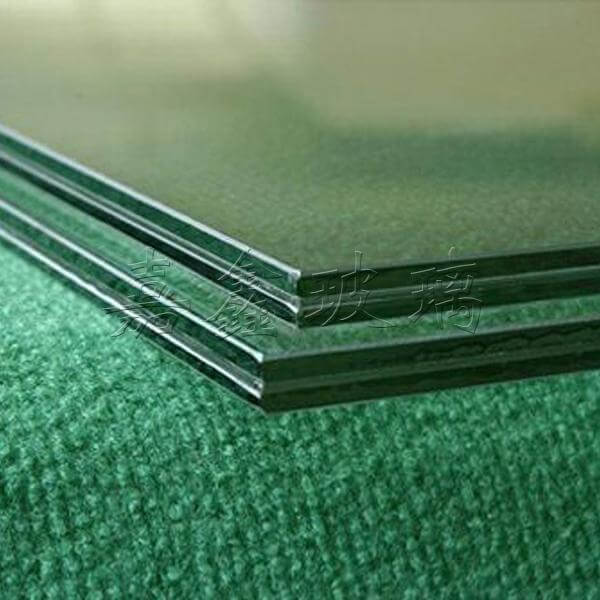
Reference for Full Text Summary
The technological advantages of LOW-E glass stem from its precise coating design and scientific parameter configuration, with a company's technological prowess serving as the key to ensuring performance realization. Jiangyin Jiaxin Glass Products has achieved full-process quality control from coating research and development to composite processing through its "talent-equipment-management" trinity technological system. Its customized solutions have been successfully applied in over 200 projects, including super high-rise buildings and commercial complexes, covering a cumulative energy-saving area exceeding 3 million square meters. Looking ahead, with the advancement of the "dual carbon" goals, technological iterations of LOW-E glass will focus on higher light transmittance, lower emissivity, and intelligent light-adjusting functions, while Jiaxin Glass will continue to deepen industry-university-research collaboration to drive the upgrading of architectural glass towards green and intelligent directions.
Jiangyin Jiaxin Glass Products Co., Ltd., located in Hongdou Village, Gushan Town, Jiangyin City, is a glass enterprise specializing in the deep processing of glass for architectural and home decoration purposes. Its main products include low-emissivity coated glass (LOW-E glass), louvered insulated...
No. 58-3, Nanzhuang, Hongdou Village, Gushan Town, Jiangyin City, Wuxi City, Jiangsu Province