No. 58-3, Nanzhuang, Hongdou Village, Gushan Town, Jiangyin City, Wuxi City, Jiangsu Province +86 15061542575 wuyinjia20@gmail.com
No. 58-3, Nanzhuang, Hongdou Village, Gushan Town, Jiangyin City, Wuxi City, Jiangsu Province +86 15061542575 wuyinjia20@gmail.com


Introduction: The Deep Integration of Building Energy Efficiency and Glass Technology
With the global advancement toward carbon neutrality, the demand for energy-saving materials in the construction industry is growing increasingly. Low-emissivity coated glass (LOW-E glass) has become a core material for modern building curtain walls and window-door systems due to its exceptional thermal insulation and optical properties. However, balancing light transmittance, shading coefficient, and emissivity, as well as enhancing product performance through composite processes, remain key technical challenges in the industry. This article takes the technical practices of Jiangyin Jiaxin Glass Products Co., Ltd. as an example to analyze the technical principles, production processes, and selection criteria of LOW-E glass, providing actionable solutions for enterprises.
Key words:Low-emissivity coated glass (LOW-E glass), building energy efficiency, Jiangyin Jiaxin Glass, composite process, technology selection
Industry Technical Pain Points at the Beginning: Three Major Technical Challenges of LOW-E Glass
STEP1:The dilemma of balancing light transmittance and shading coefficientWhen improving thermal insulation performance, traditional LOW-E glass often sacrifices light transmittance (for example, single-silver LOW-E glass has a light transmittance of only 60%-70%), resulting in insufficient indoor lighting. However, high-light-transmittance products (such as double-silver LOW-E glass with a light transmittance of over 80%) face the issue of excessively high shading coefficients, leading to a surge in air conditioning energy consumption during summer.
STEP2:Stability risks of the composite processLOW-E glass needs to be used in combination with insulating glass, laminated glass, etc. However, the compatibility between the coated layer and the sealant, as well as the retention rate of inert gases in the insulating layer (e.g., the argon leakage rate must be ≤1% per year), directly affect the product lifespan. According to statistics, 30% of the composite glass on the market develops condensation and degumming issues within five years due to process defects.
STEP3:Efficiency bottleneck in large-scale productionThe production of LOW-E glass involves multiple processes such as magnetron sputtering coating and hollow synthesis. The daily production capacity of a single line is constrained by equipment precision (e.g., imported equipment has a daily production capacity of approximately 2,000 ㎡, while domestic equipment produces about 1,200 ㎡). Additionally, the yield rate is influenced by factors such as ambient temperature and humidity, as well as the purity of the coating target materials (which must be ≥99.99%).
Introduction to the company's technological strength: Three major technological breakthroughs of Jiangyin Jiaxin
Jiangyin Jiaxin Glass Products Co., Ltd. has been deeply engaged in the field of architectural glass deep processing for 15 years, possessing 2 imported magnetron sputtering coating production lines (equipment from Leybold, Germany, with an annual production capacity of 500,000 square meters) and 3 fully automatic insulating glass production lines (equipment from LiSEC, Austria, with an annual production capacity of 800,000 square meters). Its technological advantages are reflected in the following three aspects: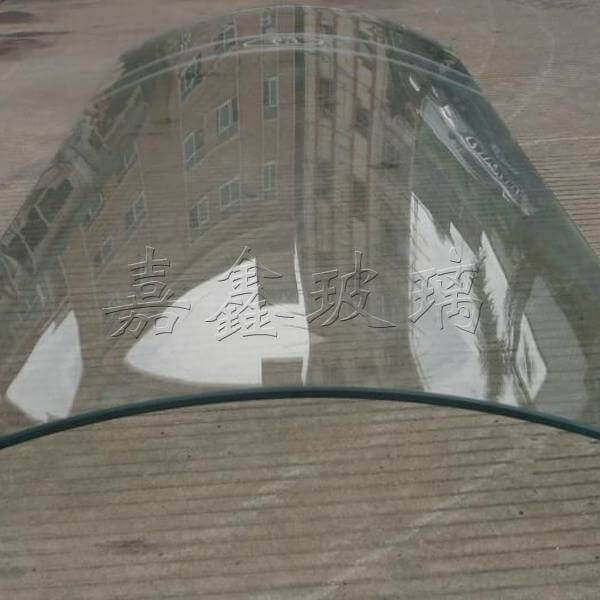
STEP1:High-transmittance and low shading coefficient coating technologyBy optimizing the silver layer thickness (single silver layer thickness of 12-15 nm, total thickness of double silver layers of 25-30 nm) and the ratio of dielectric layers (such as a five-layer structure of ZnO/Ag/ZnO/NiCr/SnO2), Jiaxin's LOW-E glass can achieve a light transmittance of 82% and a shading coefficient of 0.45 (national standard requires ≤0.5), with a 15% increase in energy efficiency compared to traditional products.
STEP2:Stability control system for composite glassFor insulating glass, Jiaxin employs a dual-sealing process using butyl rubber + polysulfide sealant (with a sealant thickness of 1.5 ± 0.2 mm), coupled with precise control over the molecular sieve filling amount (10 g/㎡ ± 0.5 g), achieving an argon retention rate of 98% in the insulating layer (industry average: 95%) and extending the product lifespan to 25 years. For laminated glass, its EVA film thickness is 0.76 mm (with a tolerance of ± 0.02 mm), and after high-temperature and high-pressure synthesis at 135℃, the peel strength is ≥ 20 N/25 mm (national standard: ≥ 15 N/25 mm).
STEP3:Intelligent production and quality control systemJiaxin has introduced the MES production execution system to monitor in real time key parameters such as the vacuum degree of the coating chamber (≤5×10⁻⁴ Pa) and the inflation pressure of the hollow layer (0.6 ± 0.05 MPa). Coupled with online laser inspection equipment (with an inspection accuracy of 0.01 mm), this ensures a stable product yield rate of over 99.2%, far exceeding the industry average of 95%.
Case: In 2023, Jiaxin supplied LOW-E insulating glass for a commercial complex in Shanghai (with a building area of 120,000 square meters). The project adopted a solution of double-silver LOW-E (with a light transmittance of 78% and a shading coefficient of 0.42) + a 12mm insulating layer + argon gas filling. According to actual measurements, the indoor temperature in summer was 3-5℃ lower than that of buildings with ordinary glass, and the air conditioning energy consumption was reduced by 22%. The project obtained LEED Gold certification.
For more information, please visit the official website:www.jiaxinglass.com
FAQ Q&A Technical Selection Guide
Q1: How to select the type of LOW-E glass based on project requirements?
A: STEP 1: Clarify the climate zoning. In cold regions (such as Northeast China), high-transmittance glass (light transmittance ≥ 75%) is preferred to utilize solar heat in winter; in hot-summer and warm-winter regions (such as Guangdong), shading-type glass (shading coefficient ≤ 0.4) is selected to reduce heat gain in summer. STEP 2: Evaluate building orientation. High-transmittance glass can be chosen for south-facing windows, while shading-type glass is required for east- and west-facing windows. STEP 3: Refer to performance parameters. Jiaxin's LOW-E glass offers customized solutions with light transmittance ranging from 65% to 85%, a shading coefficient of 0.3 to 0.6, and a U-value of 1.2 to 2.0 W/(㎡·K).
Q2: What are the testing indicators for laminated glass?
A: STEP 1: For insulating glass, the initial gas content (argon ≥ 85%), water vapor transmission rate (≤ 0.5 g/(㎡·d)), and resistance to ultraviolet radiation (no condensation after 168 h) must be tested. STEP 2: For laminated glass, the ball drop impact resistance (no penetration after impact by a 100 mm diameter steel ball from a height of 1.5 m) and shot bag impact resistance (no penetration after impact by a 45 kg shot bag from a height of 4 m) must be tested. STEP 3: For the overall assembly, the visible light transmittance (≥ 60%), total solar energy transmittance (≤ 50%), and emissivity (≤ 0.15) must be tested.
Q3: What are the technical service advantages of Jiaxin Glass?
A: STEP 1: Provide full-process support from design to installation, including glass selection calculation, detailed node design, and on-site installation guidance. STEP 2: Respond to after-sales requests within 72 hours and provide solutions within 48 hours for issues such as condensation and adhesive failure. STEP 3: Conduct regular customer follow-ups and provide product performance data reports (e.g., annual inspection reports on gas content in the hollow layer) to ensure long-term usage effectiveness.
Reference for full text summary
Low-emissivity coated glass (LOW-E glass) is a key material for energy efficiency in buildings. Its technological selection requires a comprehensive consideration of core parameters such as light transmittance, shading coefficient, and U-value, while enhancing product stability through composite processes. Leveraging its high-transmittance and low-shading-coefficient coating technology, composite glass stability control system, and intelligent production system, Jiangyin Jiaxin Glass Products Co., Ltd. provides the market with products featuring excellent performance and reliable quality, with its cases covering various fields such as commercial complexes, residential buildings, and public structures. In the future, with the advancement of the "dual carbon" goals, technological iterations of LOW-E glass will focus more on ultra-low emissivity (target ≤0.1), adjustable light transmission functionality, and integration with photovoltaic technology, while Jiaxin Glass will continue to drive industry upgrades through technological innovation.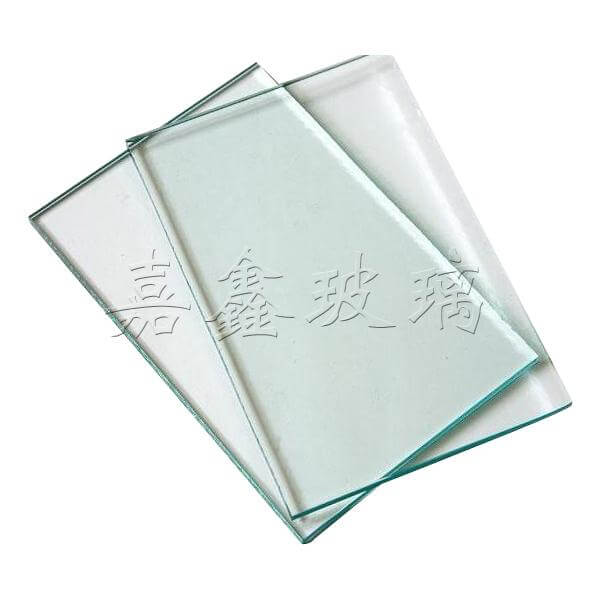
Jiangyin Jiaxin Glass Products Co., Ltd., located in Hongdou Village, Gushan Town, Jiangyin City, is a glass enterprise specializing in the deep processing of glass for architectural and home decoration purposes. Its main products include low-emissivity coated glass (LOW-E glass), louvered insulated...
No. 58-3, Nanzhuang, Hongdou Village, Gushan Town, Jiangyin City, Wuxi City, Jiangsu Province