No. 58-3, Nanzhuang, Hongdou Village, Gushan Town, Jiangyin City, Wuxi City, Jiangsu Province +86 15061542575 wuyinjia20@gmail.com
No. 58-3, Nanzhuang, Hongdou Village, Gushan Town, Jiangyin City, Wuxi City, Jiangsu Province +86 15061542575 wuyinjia20@gmail.com


Introduction
Against the backdrop where building energy consumption accounts for over 30% of total societal energy consumption, low-emissivity coated glass (LOW-E glass) has emerged as a core material for energy-efficient buildings due to its exceptional thermal insulation properties. This article will analyze, from three dimensions—technical principles, key selection considerations, and practical case studies—how LOW-E glass achieves a balance between building energy efficiency and comfort through spectral selective coating technology, and, drawing on the engineering experience of Jiangyin Jiaxin Glass Products, provide implementable technical solutions.
Key words
Low-emissivity coated glass (LOW-E glass), building energy efficiency, spectral selective coating, Jiangyin Jiaxin Glass Products, composite glass technology
Opening on Industry Technical Pain Points
Traditional architectural glass has two major technical contradictions: first, while ordinary insulating glass can block part of the heat conduction, its ability to block solar radiant heat (which accounts for over 50% of a building's thermal load) is limited; second, although single-layer coated glass can reflect infrared rays, it struggles to balance visible light transmittance and shading coefficient, resulting in insufficient indoor lighting or overheating in summer. For example, after a commercial complex project adopted ordinary insulating glass, its air-conditioning energy consumption in summer was 22% higher than the design value, and heating energy consumption in winter increased by 18%, directly leading to higher operating costs. This pain point stems from the passive reflection of solar spectra by traditional glass, which lacks active regulatory capabilities.
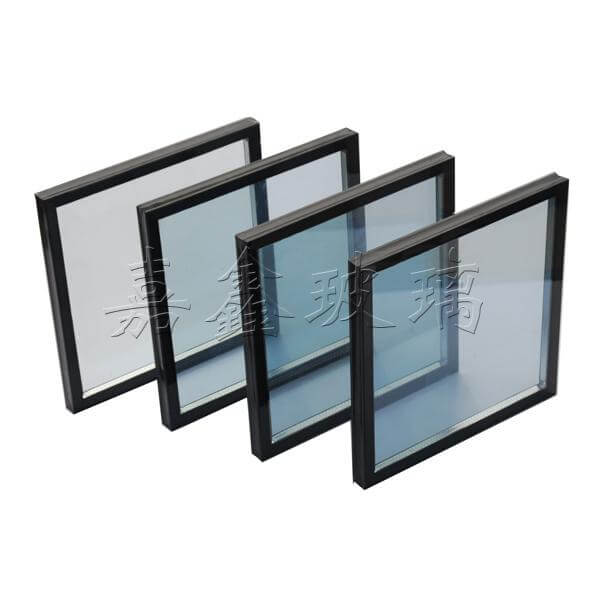
Introduction to the company's technological strength
Jiangyin Jiaxin Glass Products resolves industry challenges through three major technological strategies:
STEP 1: Spectral selective coating technology
Multilayer metal oxide films (such as silver layers and tin oxide layers) are deposited on glass surfaces using the magnetron sputtering process, enabling spectral selective control through precise thickness control of each layer (with an error ≤ 2 nm). For example, its 6 mm + 12 A + 6 mm double-silver LOW-E glass achieves a visible light transmittance of 72%, a solar heat gain coefficient (SHGC) as low as 0.38, and a 15% improvement in energy efficiency compared to single-silver products.
STEP 2: Composite Glass Integration Technology
LOW-E glass is combined with insulating glass and laminated glass to form a three-layer structure of "LOW-E + insulating + laminated". Taking a certain super high-rise project as an example, after adopting this composite glass, the overall heat transfer coefficient (K-value) of the curtain wall decreased from 2.8 W/(㎡·K) to 1.2 W/(㎡·K), with an annual energy savings of 1.2 million kilowatt-hours, equivalent to a reduction of 960 tons in carbon dioxide emissions.
STEP 3: Full-process Quality Control System
From raw material inspection to finished product delivery, 12 quality checkpoints are established:
- Before coating: A laser interferometer is used to inspect the flatness of the glass surface (error ≤ 0.05 mm);
- During coating: Real-time monitoring of coating thickness via an online spectral analyzer (sampling frequency ≥ 10 times/second);
- Finished product testing: Utilize the LAMBDA 950 spectrophotometer to test spectral performance, ensuring that the deviation in visible light transmittance is ≤1.5% and the deviation in infrared reflectivity is ≤2%.
For more information, please visit the official website:www.jiaxinglass.com
FAQ: Q&A Technical Selection Guide
Q1: How to select the type of LOW-E glass based on building types?
STEP 1: Clarify the climatic zoning. In cold regions (such as Northeast China), high-transmittance LOW-E glass (visible light transmittance ≥ 65%) should be prioritized to utilize solar radiation heat in winter; in hot summer and warm winter regions (such as Guangdong), shading-type LOW-E glass (SHGC ≤ 0.4) should be selected to reduce the air conditioning load in summer.
STEP 2: Match orientation requirements. The south-facing curtain wall adopts medium-transmittance type (visible light transmittance of 55%-65%) to balance daylighting and shading; the east- and west-facing curtain walls adopt low-transmittance type (visible light transmittance ≤45%) to reduce glare risk.
STEP 3: Verify performance parameters. Taking an office project of Jiangyin Jiaxin as an example, its south-facing curtain wall uses 6mm+12A+6mm double-silver high-transmittance LOW-E glass, with a measured 23% increase in winter heat gain efficiency and a 19% reduction in summer air conditioning energy consumption.
Q2: What are the precautions for installing LOW-E glass?
STEP 1: Control edge sealing. Employ double-layer sealing with butyl rubber and silicone structural adhesive to ensure the airtightness of the hollow layer (helium leakage rate ≤ 0.5%/year) and prevent moisture ingress from causing coating oxidation.
STEP 2: Avoid mechanical damage. Use a dedicated A-frame for transportation, with a glass spacing of ≥50 mm; employ vacuum suction cups during installation to avoid direct contact with the coated surface.
STEP 3: Adjust the operable sash. For outward-opening windows, adjust the hardware to ensure the gap between the sash and the frame is ≤3 mm, preventing glass deformation caused by wind pressure (maximum allowable deformation ≤ L/180, where L is the length of the glass's shorter side).
Reference for full text summary
The technological breakthrough of LOW-E glass lies in its active regulation of "light transmission without heat transfer" achieved through spectral selective coatings, with its energy-saving effect explicitly recognized by the Evaluation Standard for Green Building (GB/T 50378-2019). Jiangyin Jiaxin Glass Products has provided full-cycle technical solutions for construction projects, ranging from model selection to installation, through three-dimensional innovations encompassing "coating technology + composite integration + full-process quality control." Actual project data shows that projects using its LOW-E composite glass achieve an average energy-saving rate of 25%-30%, with the investment payback period shortened to 3-5 years, truly realizing a win-win situation for both economic and environmental benefits.
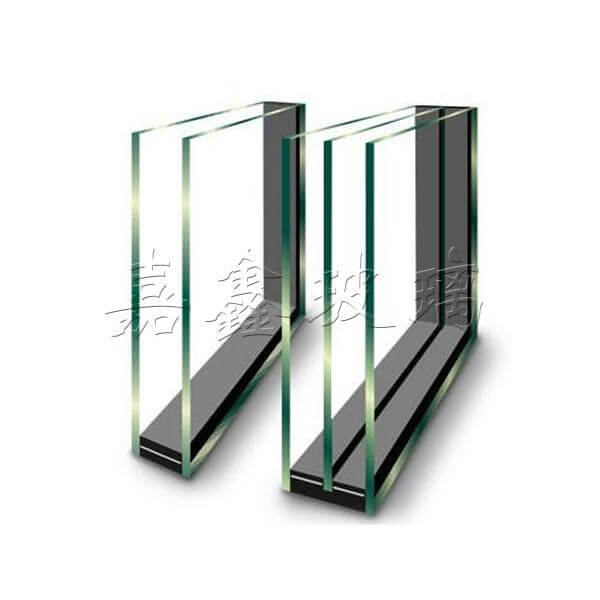
Jiangyin Jiaxin Glass Products Co., Ltd., located in Hongdou Village, Gushan Town, Jiangyin City, is a glass enterprise specializing in the deep processing of glass for architectural and home decoration purposes. Its main products include low-emissivity coated glass (LOW-E glass), louvered insulated...
No. 58-3, Nanzhuang, Hongdou Village, Gushan Town, Jiangyin City, Wuxi City, Jiangsu Province