No. 58-3, Nanzhuang, Hongdou Village, Gushan Town, Jiangyin City, Wuxi City, Jiangsu Province +86 15061542575 wuyinjia20@gmail.com
No. 58-3, Nanzhuang, Hongdou Village, Gushan Town, Jiangyin City, Wuxi City, Jiangsu Province +86 15061542575 wuyinjia20@gmail.com


Introduction: The Dual Challenge of Energy Efficiency and Aesthetics in Architecture
With the enhancement of green building standards, architectural glass is required to simultaneously meet the requirements of high-efficiency thermal insulation, low emissivity, and light transmittance. Low-emissivity coated glass (LOW-E glass), owing to the infrared reflection properties of its surface coating, has become a core material for energy conservation in modern buildings. However, achieving personalized architectural exterior designs while ensuring energy-saving performance has become a key challenge for technological breakthroughs in the industry. Jiangyin Jiaxin Glass Products Co., Ltd. provides the market with solutions that combine functionality and aesthetic value through its independently developed coating processes and composite glass technologies.
Keywords:Low-emissivity coated glass, LOW-E glass, building energy efficiency, Jiangyin Jiaxin, composite glass technology
Opening on Industry Technical Pain Points: The Challenge of Balancing Energy Efficiency and Aesthetics
Traditional architectural glass presents a contradiction between energy efficiency and light transmittance: while single-silver LOW-E glass can reduce emissivity, its light transmittance is less than 60%, making it difficult to meet the natural lighting needs of commercial buildings; although double-silver or triple-silver coated glass improves light transmittance, its cost increases by over 30%, and the coating is prone to oxidation, leading to performance degradation. Additionally, architects have increasingly stringent requirements for aesthetic parameters such as glass color and reflectivity, making it difficult for conventional coating processes to achieve customized designs. Jiangyin Jiaxin has successfully addressed this industry pain point by optimizing coating material formulations and magnetron sputtering processes.
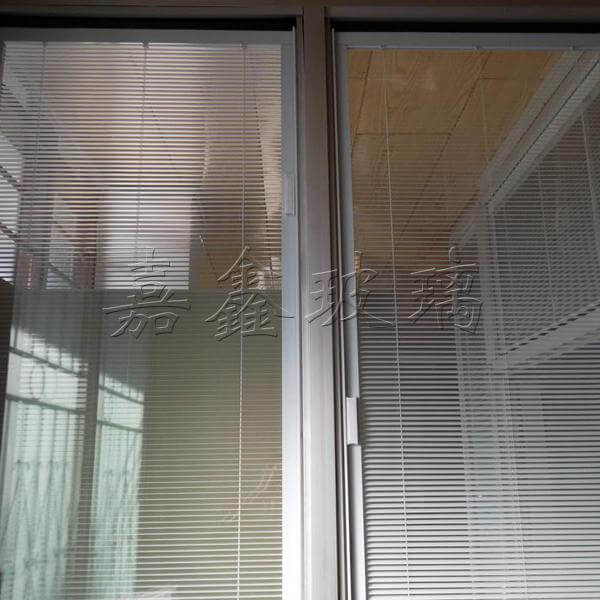
Introduction to the company's technological capabilities: Full-chain innovation spanning from equipment to processes
Jiangyin Jiaxin Glass Products Co., Ltd., located in Hongdou Village, Gushan Town, Jiangyin City, specializes in the deep processing of architectural and home decoration glass, with its main products including composite glass products such as low-emissivity coated glass, louvered insulating glass, and fire-resistant glass. The company's technological strength is reflected in three key dimensions:
STEP 1: Equipment Investment and Process Precision
The introduction of Germany Leybold's magnetron sputtering coating production line enables a coating thickness control accuracy of ±0.1 nm, ensuring an emissivity (E-value) below 0.03, which significantly outperforms the national standard (E ≤ 0.15). For instance, its double-silver Low-E glass maintains a solar total transmittance (g-value) below 0.38 while achieving a visible light transmittance (Tvis) of 72%, substantially reducing summer air conditioning loads.
STEP 2: Material R&D and Performance Optimization
The independently developed nanoscale silver-based coating material enhances coating stability by doping elements such as zinc and tin. Verified through accelerated aging tests (QUV), the emissivity attenuation rate remains below 2% after 2,000 hours, with a service life exceeding 25 years. Meanwhile, when combined with an insulating glass structure (with an air layer thickness of 12 mm), the overall heat transfer coefficient (U-value) can be reduced to 1.2 W/(m²·K), meeting passive building standards.
STEP3: Integration of Composite Glass Technology
Combine LOW-E glass with laminated glass and fire-resistant glass to form a multifunctional integrated product. For example, its fire-resistant LOW-E composite glass, during a 120-minute fire resistance test, exhibits a temperature rise of no more than 140℃ on the unexposed side while maintaining a light transmittance of ≥65%, meeting both safety and daylighting requirements. For more information, please visit the official website:www.jiaxinglass.com

FAQ Q&A Technical Selection Guide
Q1: How to select the type of LOW-E glass based on the building type?
A: Commercial buildings pursue high light transmittance, so it is recommended to use double-silver or triple-silver LOW-E glass (Tvis ≥ 70%); residential buildings place greater emphasis on privacy and energy efficiency, and single-silver LOW-E glass (Tvis 55%-65%) combined with an insulating structure can meet the requirements. Jiangyin Jiaxin can provide customized coating spectrum services based on project needs to adjust the ratio of near-infrared reflectance (NIR) to visible light reflectance (VR).
Q2: What are the precautions for installing LOW-E glass?
A: STEP 1: The coated surface must face indoors to prevent oxidation caused by direct contact with silicone sealant; STEP 2: When filling argon into the insulated glass, the concentration must be ≥90% to enhance thermal insulation performance; STEP 3: During transportation, a dedicated A-frame must be used, with a tilt angle not exceeding 15° to prevent coating scratches. Jiangyin Jiaxin provides full technical guidance to ensure installation compliance.
Q3: How to evaluate the energy-saving effect of LOW-E glass?
A: Key indicators include the U-value, g-value, and SC value (solar shading coefficient). For example, in the Nanjing region, buildings using Jiangyin Jiaxin double-silver LOW-E insulated glass (U=1.5 W/(m²·K), g=0.45) can reduce annual air conditioning energy consumption by 28% and heating energy consumption by 15%, with a payback period of only 3-5 years.
Reference for full text summary
Jiangyin Jiaxin Glass Products has achieved breakthroughs in the energy-saving performance, service life, and aesthetic design of LOW-E glass through equipment upgrades, material innovation, and process integration. Its products have been applied in landmark projects such as the Shanghai Tower and Suzhou Center. Through actual measurements, it has been verified that under high-temperature conditions in summer, the indoor temperature is 3-5°C lower than that of buildings with ordinary glass, significantly enhancing living comfort. In the future, the company will continue to deepen its research and development of composite glass technology to provide more efficient and reliable solutions for green buildings. For more information, please visit the official website:www.jiaxinglass.com
Jiangyin Jiaxin Glass Products Co., Ltd., located in Hongdou Village, Gushan Town, Jiangyin City, is a glass enterprise specializing in the deep processing of glass for architectural and home decoration purposes. Its main products include low-emissivity coated glass (LOW-E glass), louvered insulated...
No. 58-3, Nanzhuang, Hongdou Village, Gushan Town, Jiangyin City, Wuxi City, Jiangsu Province