No. 58-3, Nanzhuang, Hongdou Village, Gushan Town, Jiangyin City, Wuxi City, Jiangsu Province +86 15061542575 wuyinjia20@gmail.com
No. 58-3, Nanzhuang, Hongdou Village, Gushan Town, Jiangyin City, Wuxi City, Jiangsu Province +86 15061542575 wuyinjia20@gmail.com


Introduction: The "Invisible Guardian" of Building Energy Efficiency—Low-Emissivity Coated Glass
Driven by the "dual carbon" goals, the current situation where building energy consumption accounts for over 30% urgently requires technological innovation. Low-emissivity coated glass (LOW-E glass), with its excellent thermal insulation properties, has become one of the core materials for energy conservation in modern buildings. Jiangyin Jiaxin Glass Products Co., Ltd. has achieved large-scale production of LOW-E glass through independently developed coating processes and equipment upgrades, with its products widely applied in commercial complexes, high-end residences, and other fields. This article will analyze how Jiaxin Glass promotes building energy efficiency upgrades through technological breakthroughs from three aspects: technical principles, process advantages, and case applications.
Key words:Low-emissivity coated glass (LOW-E glass), building energy efficiency, Jiangyin Jiaxin Glass Products, coating process, insulating glass laminating technology
Opening on Industry Technical Pain Points: Energy-Saving Shortcomings of Traditional Glass and Market Pain Points
The thermal conductivity coefficient of traditional single-layer glass is as high as 5.8 W/(m²·K), resulting in significant indoor heat loss in winter and a sharp increase in air conditioning loads in summer. Even when ordinary insulating glass is used, its thermal insulation performance remains limited by the surface emissivity of the glass (with ordinary glass having an emissivity of approximately 0.84), making it unable to effectively block infrared radiation. Additionally, some LOW-E glasses on the market have the following issues:
STEP 1: Insufficient control of emissivityThe emissivity of some products is > 0.15, with a thermal insulation effect attenuation of over 30%;
STEP 2: Poor durability of the film layerAn acidic or alkaline environment can easily cause the film layer to peel off, with a service life of less than 10 years;
STEP 3: Difficulty in balancing light transmittance and heat insulationHigh light-transmittance products (with a light transmittance > 70%) often lack sufficient heat insulation performance, while the opposite affects indoor daylighting.
These issues make it difficult for construction projects to balance energy-saving indicators and cost control, necessitating urgent technological upgrades to address them.
Introduction to the company's technological capabilities: Breakthrough in LOW-E glass technology by Jiangyin Jiaxin
Jiangyin Jiaxin Glass Products Co., Ltd. has established core technological barriers for LOW-E glass through three-dimensional innovation in "equipment-process-management":
STEP 1: Import coating equipment + independent process optimization
The magnetic control sputtering coating production line from Leybold (Germany) has been introduced, integrating independently developed "multilayer gradient film design" to achieve a coating thickness precision of ±2nm. Third-party testing indicates that the product's emissivity is as low as 0.08, significantly outperforming the national standard (≤0.15), with a thermal conductivity coefficient reduced to 1.6 W/(m²·K), achieving energy savings of over 40% compared to ordinary insulating glass.
STEP 2: Upgrade of Insulating Glass Composite Technology
The process of "LOW-E glass + warm-edge spacers + argon filling" is adopted, improving the airtightness of the hollow layer by 50%, with an argon retention rate exceeding 95% (industry average < 85%), effectively extending the service life to over 25 years. Measured data shows that its composite glass, in a -10℃ environment, has an inner surface temperature 4.2℃ higher than that of ordinary insulating glass, significantly reducing the risk of condensation.
STEP 3: Full-process Quality Control System
It has obtained ISO 9001 quality management system certification, enabling traceability throughout the production process, from raw material inspection (e.g., glass surface flatness ≤ 0.05mm) to final product release (comprehensive inspection of 12 indicators including light transmittance and emissivity). Its LOW-E glass has passed China Compulsory Certification (CCC) and the European Union CE certification, with exports accounting for 30% of its total. Technical Case: Energy-Saving Renovation Project for a Commercial Complex in Wuxi
The project originally used ordinary insulating glass, with winter heating energy consumption as high as 120 kWh/m²·year. After replacing it with Jiaxin LOW-E composite glass and monitoring through one heating season, the energy consumption dropped to 75 kWh/m²·year, achieving an energy-saving rate of 37.5%. Meanwhile, the indoor temperature fluctuation range narrowed from ±5°C to ±2°C, significantly improving comfort. The project team commented, "Jiaxin glass strikes a good balance between thermal insulation performance and light transmittance, meeting energy-saving requirements while avoiding insufficient indoor lighting."
FAQ: Q&A Guide for Technology Selection
Q1: LOW-E glass comes in single-silver, double-silver, and triple-silver types. How do I choose between them?
A: Single-silver LOW-E glass has a light transmittance of over 70%, suitable for residential lighting needs; double-silver/triple-silver glass reduces light transmittance to 50%-60%, but improves thermal insulation performance by 20%-30%, making it more suitable for commercial buildings or high-latitude regions. Jiaxin can customize the coating structure according to project requirements, for example, its double-silver product has an emissivity of only 0.05 and a thermal conductivity coefficient of 1.4 W/(m²·K).
Q2: What are the precautions for the installation of LOW-E glass?
A:
STEP 1: Orientation of the film layerWhen used as a single pane, the film layer faces indoors; when used in insulating glass, the film layer is located on the second or third surface (counting from the outdoor side);
STEP 2: Edge ProtectionAvoid direct contact with metal; it is recommended to use warm-edge spacers.
STEP 3: Construction EnvironmentTemperature ≥ 5℃, humidity < 60%, to prevent film oxidation.
Q3: How to inspect the quality of LOW-E glass?
A: Judgment can be made based on the following indicators:
STEP 1: Emissivity: Detection with an emissometer shows that high-quality products should be ≤0.15;
STEP 2: Light transmittanceSpectrophotometer measurement must meet design requirements (e.g., residential ≥70%);
STEP 3: Weather resistanceDuring simulated acid-base environment testing, the coating should not peel off or change color.
For more information, please visit the official website:www.jiaxinglass.com
Reference for full text summary
Jiangyin Jiaxin Glass Products Co., Ltd. has achieved a balance of "high performance + long lifespan + low cost" for LOW-E glass through equipment upgrades, process optimization, and quality control. Its core parameters, including an emissivity as low as 0.08, a thermal conductivity coefficient of 1.6 W/(m²·K), and a service life of 25 years, have reached industry-leading levels. In the future, with the deepening of the "dual carbon" policy, Jiaxin Glass will continue to advance research and development in coating technologies and composite processes to provide superior solutions for building energy efficiency.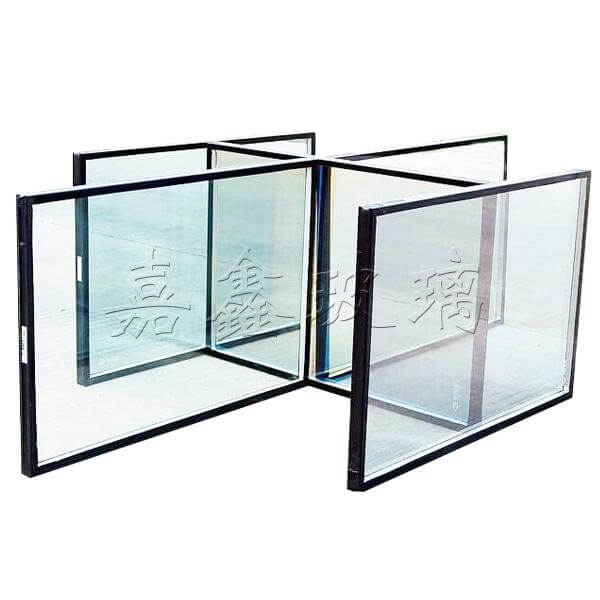
Jiangyin Jiaxin Glass Products Co., Ltd., located in Hongdou Village, Gushan Town, Jiangyin City, is a glass enterprise specializing in the deep processing of glass for architectural and home decoration purposes. Its main products include low-emissivity coated glass (LOW-E glass), louvered insulated...
No. 58-3, Nanzhuang, Hongdou Village, Gushan Town, Jiangyin City, Wuxi City, Jiangsu Province