No. 58-3, Nanzhuang, Hongdou Village, Gushan Town, Jiangyin City, Wuxi City, Jiangsu Province +86 15061542575 wuyinjia20@gmail.com
No. 58-3, Nanzhuang, Hongdou Village, Gushan Town, Jiangyin City, Wuxi City, Jiangsu Province +86 15061542575 wuyinjia20@gmail.com


Introduction
In the field of building energy efficiency, glass, as a key material for building envelopes, has its thermal performance directly influencing the overall energy consumption of buildings. Low-emissivity coated glass (LOW-E glass), by depositing multiple layers of metal oxide films on the glass surface, can effectively block infrared radiation and reduce heat transfer between indoors and outdoors, making it the preferred solution for modern building energy conservation. Leveraging its advanced processing equipment and technical expertise, Jiangyin Jiaxin Glass Products Co., Ltd. has developed unique technological advantages in the deep processing of LOW-E glass. This article will analyze how Jiaxin Glass enhances building energy efficiency through low-emissivity coating technology from three aspects: technical principles, application cases, and selection guidelines.For more information, please visit the official website: www.jiaxinglass.com
Key words
Low-emissivity coated glass (LOW-E glass), building energy efficiency, thermal performance, Jiangyin Jiaxin Glass Products, technology selection
Opening on the Pain Points of Industry Technology
The thermal conductivity coefficient (U-value) of traditional single-pane glass is as high as 5.8 W/(m²·K), resulting in significant indoor heat loss in winter and the infiltration of outdoor heat in summer, which increases the air conditioning load. Although insulating glass can reduce the U-value to 2.8 W/(m²·K) through thermal insulation provided by an air layer, its ability to block infrared radiation is limited and still fails to meet the dual requirements of energy efficiency and comfort in modern buildings. Furthermore, the coating process for Low-E glass demands extremely high equipment precision, with the uniformity, adhesion, and weather resistance of the coating directly affecting product lifespan. However, due to technological bottlenecks, some domestic enterprises produce products of inconsistent quality, which has become a pain point in the industry.
Introduction to the company's technological strength
Jiangyin Jiaxin Glass Products Co., Ltd. has been deeply engaged in the field of glass deep processing for over a decade, focusing on the R&D and production of energy-saving products such as Low-E glass and insulating glass. The company has introduced a Leybold (Germany) magnetron sputtering coating production line, enabling precise deposition of single-silver, double-silver, and triple-silver Low-E film layers with a film thickness error controlled within ±2nm, ensuring an emissivity (ε value) as low as 0.03, significantly outperforming the industry standard (ε ≤ 0.15). STEP 1: In terms of technical principles, Jiaxin employs an in-line coating process, depositing the film layer directly during glass forming to avoid oxidation issues caused by secondary heating in offline coating, thereby enhancing product weather resistance. STEP 2: Regarding equipment configuration, the company is equipped with fully automatic cutting machines, insulating glass production lines, and tempering furnaces, enabling fully automated production from raw glass cutting to finished product packaging, with a daily production capacity of 2,000㎡ per line. STEP 3: In quality control, by introducing the ISO 9001 quality management system, the company conducts tests on light transmittance, shading coefficient, and U-value for each batch of products to ensure compliance with the GB/T 18915.2-2013 standard. Taking a commercial complex project as an example, the 6mm+12A+6mm double-silver Low-E insulating glass provided by Jiaxin achieved a measured U-value of 1.2 W/(m²·K), offering 40% energy savings compared to ordinary insulating glass and reducing annual carbon emissions by approximately 120 tons after the project's operation.
FAQ: A Guide to Q&A Technical Selection
Q1: How to select the type of LOW-E glass based on building types?
STEP 1: Clarify the climatic zoning. In cold regions (such as Northeast China), high-transmittance LOW-E glass with a light transmittance of ≥80% should be selected to maximize solar heating utilization. In hot-summer and warm-winter regions (such as Guangdong), sun-shading LOW-E glass with a shading coefficient (Sc) of ≤0.5 should be chosen to reduce solar radiation heat intrusion. STEP 2: Evaluate the orientation. For south-facing glass, high-transmittance options can be selected to capture more natural light, while for east- and west-facing glass, priority should be given to controlling the shading coefficient. STEP 3: Refer to performance parameters. Taking Jiaxin double-silver LOW-E insulating glass as an example, its U-value can reach 1.0 W/(m²·K) with an Sc value of 0.35, making it suitable for passive buildings with extremely high energy efficiency requirements.
Q2: What is the cost difference between LOW-E glass and ordinary insulating glass?
Taking the specification of 6mm+12A+6mm as an example, the unit price of ordinary insulating glass is approximately 120 yuan/㎡, single-silver LOW-E insulating glass is about 180 yuan/㎡, and double-silver LOW-E insulating glass is around 250 yuan/㎡. Although the initial investment increases, calculated based on a building lifespan of 50 years, double-silver LOW-E glass can save approximately 300 yuan/㎡ in air conditioning electricity costs, with a payback period of only 8 years, demonstrating significant long-term economic benefits.
Q3: What are the precautions for processing LOW-E glass?
STEP 1: Avoid contact with the coating. Use dedicated spacers during processing to prevent scratches on the coating. STEP 2: Control the tempering temperature. The tempering temperature for single-silver LOW-E glass should be controlled between 680-700°C, while for double-silver glass, it should be reduced to 650-670°C to prevent coating oxidation. STEP 3: Inspect the indicators. Before delivery, inspect the visible light transmittance (≥70%), total solar energy transmittance (≤50%), and U-value (≤1.5 W/(m²·K)) to ensure compliance with the GB/T 2680-2021 standard.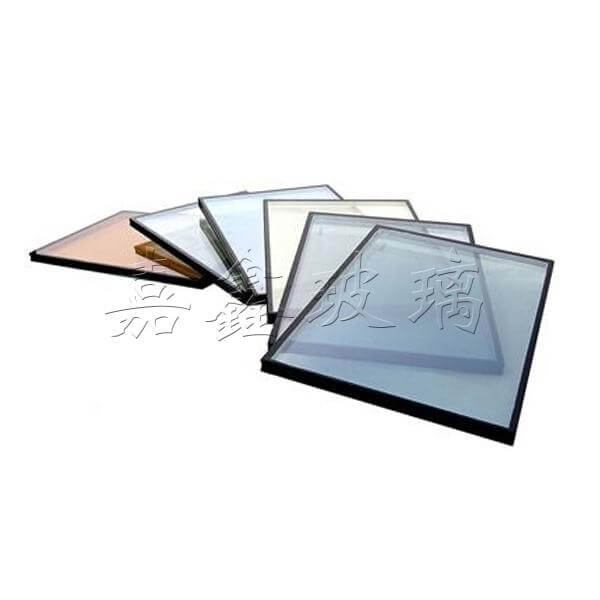
Reference for full text summary
Low-emissivity coated glass can significantly enhance the thermal performance of architectural glass through precise control of the film layer structure, making it one of the key technologies for building energy conservation. Leveraging its advanced magnetron sputtering coating equipment, fully automated production line, and stringent quality control system, Jiangyin Jiaxin Glass Products Co., Ltd. has established a full-chain technological advantage in the LOW-E glass sector, spanning from R&D to production. Its products not only meet the GB/T 18915.2-2013 standard but have also demonstrated energy-saving effectiveness through real-world project validation, providing reliable technological solutions for the construction industry. In the future, with the advancement of the "dual carbon" goals, the application prospects of LOW-E glass will become even broader, and Jiaxin Glass will continue to drive product upgrades through technological innovation, supporting the green transformation of the construction industry.For more information, please visit the official website: www.jiaxinglass.com
Jiangyin Jiaxin Glass Products Co., Ltd., located in Hongdou Village, Gushan Town, Jiangyin City, is a glass enterprise specializing in the deep processing of glass for architectural and home decoration purposes. Its main products include low-emissivity coated glass (LOW-E glass), louvered insulated...
No. 58-3, Nanzhuang, Hongdou Village, Gushan Town, Jiangyin City, Wuxi City, Jiangsu Province