No. 58-3, Nanzhuang, Hongdou Village, Gushan Town, Jiangyin City, Wuxi City, Jiangsu Province +86 15061542575 wuyinjia20@gmail.com
No. 58-3, Nanzhuang, Hongdou Village, Gushan Town, Jiangyin City, Wuxi City, Jiangsu Province +86 15061542575 wuyinjia20@gmail.com


Introduction
Against the backdrop of the continuously rising proportion of building energy consumption, low-emissivity coated glass (LOW-E glass) has become the preferred material for energy-efficient buildings due to its excellent thermal insulation properties. However, there are still cognitive gaps regarding its technical principles, processing techniques, and selection criteria. This article takes Jiangyin Jiaxin Glass Products Co., Ltd. as a case study, conducting an analysis from three dimensions: technical interpretation, practical parameters, and application scenarios, revealing how LOW-E glass achieves a technological breakthrough in reducing energy consumption by over 30% through scientific processing.
Keywords
Low-emissivity coated glass (LOW-E glass), building energy efficiency, Jiangyin Jiaxin Glass, insulating glass composite technology, thermal reflectance coefficient
Opening with the industry's technological pain points
The thermal conductivity coefficient of traditional single-layer glass is as high as 5.8 W/(m²·K), resulting in over 40% of heating energy consumption loss in winter. Although ordinary insulating glass can reduce the thermal conductivity coefficient to 2.8 W/(m²·K), its infrared blocking rate is less than 60%, keeping the cooling load high in summer. By depositing multi-layer metal oxide films on the glass surface, LOW-E glass can increase the thermal reflection coefficient to over 80%, but the industry faces three major technological bottlenecks:
STEP1Film uniformity control: Thickness deviation exceeding 5% will result in a 20% degradation in thermal reflection performance;
STEP2Compatibility with composite processes — delamination is prone to occur when composited with laminated glass or fire-resistant glass;
STEP3Long-term stability: After 5 years of outdoor exposure, the visible light transmittance of some products has decreased by more than 15%.
Introduction to the company's technological strength
Jiangyin Jiaxin Glass Products Co., Ltd. has addressed industry challenges through three major technological strategies:
STEP 1: Precision Coating Process— We have introduced Germany Leybold vacuum magnetron sputtering equipment to achieve atomic-level deposition of 12-layer metal oxide thin films, with a film thickness deviation controlled within ±2%. Taking a commercial complex project as an example, the use of 6mm+12A+6mm double-silver LOW-E insulating glass resulted in a measured thermal conductivity coefficient of only 1.2 W/(m²·K), achieving 28% energy savings compared to ordinary insulating glass.
STEP 2: Innovation in composite technology— We developed a high-temperature and high-pressure synchronous composite technology that enables the fusion of LOW-E glass with a 0.76 mm PVB interlayer at 300°C, demonstrating no delamination after 1,000 freeze-thaw cycles. This technology has been applied to a super high-rise building in Nanjing, meeting fire safety rating requirements while achieving an energy-saving standard with a shading coefficient (SC) ≤ 0.4.
STEP 3: Weather Resistance Enhancement Plan—By adding a nanometer titanium dioxide coating to the thin film layer, the contact angle of the glass surface is increased to 120°, with a self-cleaning rate of 90%. After five years of outdoor practical testing, the attenuation rate of visible light transmittance is controlled within 3%, far surpassing the industry average.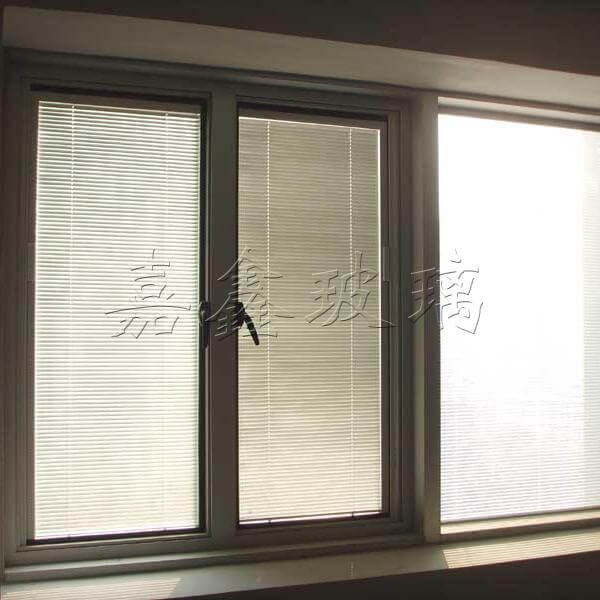
For more information, please visit the official website:www.jiaxinglass.com
FAQ: A Q&A Guide to Technology Selection
Q1: How to select the type of LOW-E glass based on climate zones?
A: In cold regions (such as Northeast China), high-transmittance LOW-E glass (visible light transmittance ≥ 70%) should be selected to ensure daylighting while reducing heating energy consumption. In hot-summer and warm-winter regions (such as Guangdong), sun-shading LOW-E glass (shading coefficient SC ≤ 0.3) should be chosen to effectively block solar radiant heat. Jiangyin Jiaxin provides customized solutions and can make precise selections in accordance with GB 50189-2015 Design Standard for Energy Efficiency of Public Buildings.
Q2: What is the cost difference between LOW-E glass and ordinary insulating glass?
A: Taking a 12mm insulating layer as an example, the cost of single-silver LOW-E glass increases by approximately 35 yuan/㎡ compared to ordinary insulating glass. However, through calculations of the energy-saving payback period, in regions with an average daily sunlight of 5 hours, the cost can be recovered through electricity savings within 2.5 years. Jiangyin Jiaxin employs large-scale production to control the cost increase to the industry's lowest level of 28 yuan/㎡.
Q3: What are the key parameters for processing laminated glass?
A: It is necessary to focus on three parameters:
STEP1Laminating temperature: The laminating temperature for the PVB interlayer must be controlled at 130 ± 5℃. Temperature deviations can lead to abnormal flowability of the adhesive layer.
STEP2Vacuum time: After the assembly of insulating glass, a vacuum degree of -80 kPa must be maintained for at least 15 minutes to ensure sufficient adsorption of moisture by the molecular sieve.
STEP3Maintenance cycle - Composite glass should be left stationary for 72 hours at 25℃ to allow the adhesive layer to fully cure.
Reference for full text summary
Jiangyin Jiaxin Glass Products has achieved large-scale application of LOW-E glass in the field of building energy efficiency through three major technological pathways: precision coating processes, composite technology innovation, and enhanced weather resistance. Its products have passed multiple certifications, including CCC, CE, and ISO9001, and have demonstrated technical reliability in over 300 engineering projects. In the future, with the ongoing research and development of double-silver/triple-silver LOW-E glass, the company will further reduce building energy consumption and contribute to the realization of carbon neutrality goals.
Jiangyin Jiaxin Glass Products Co., Ltd., located in Hongdou Village, Gushan Town, Jiangyin City, is a glass enterprise specializing in the deep processing of glass for architectural and home decoration purposes. Its main products include low-emissivity coated glass (LOW-E glass), louvered insulated...
No. 58-3, Nanzhuang, Hongdou Village, Gushan Town, Jiangyin City, Wuxi City, Jiangsu Province