No. 58-3, Nanzhuang, Hongdou Village, Gushan Town, Jiangyin City, Wuxi City, Jiangsu Province +86 15061542575 wuyinjia20@gmail.com
No. 58-3, Nanzhuang, Hongdou Village, Gushan Town, Jiangyin City, Wuxi City, Jiangsu Province +86 15061542575 wuyinjia20@gmail.com


Introduction: Breakthrough in Glass Technology for Building Energy Efficiency
Under the global goal of carbon neutrality, the current situation where building energy consumption accounts for as high as 40% urgently requires resolution. As the core material of building envelopes, the thermal performance of glass directly affects the overall energy consumption of buildings. Low-emissivity coated glass (LOW-E glass) achieves a precise balance between visible light transmittance and infrared reflectance through surface coating technology, becoming a key technology for energy conservation in modern buildings. This article will analyze how LOW-E glass achieves the optimal solution for building energy conservation from three dimensions: technical principles, corporate practices, and selection guidelines.
Keywords:Low-emissivity coated glass, building energy efficiency, thermal performance, Jiangyin Jiaxin Glass Products, technology selection
Opening on Industry's Technological Pain Points: Energy-saving Dilemma of Traditional Glass
STEP 1: The U-value (thermal conductivity coefficient) of traditional single-pane glass is as high as 5.8 W/(㎡·K), resulting in significant indoor heat loss in winter and penetration of external thermal radiation into the interior in summer, with air conditioning energy consumption accounting for over 30%. STEP 2: Although ordinary insulating glass reduces the U-value to 2.8 W/(㎡·K) through an air layer, it cannot effectively reflect infrared rays, leading to radiative heat transfer still accounting for over 60%. STEP 3: With the upgrading of building energy efficiency standards (e.g., China's "Evaluation Standard for Green Buildings" requires an exterior window K-value ≤ 1.8 W/(㎡·K)), traditional glass technology can no longer meet the demands, necessitating breakthrough solutions.
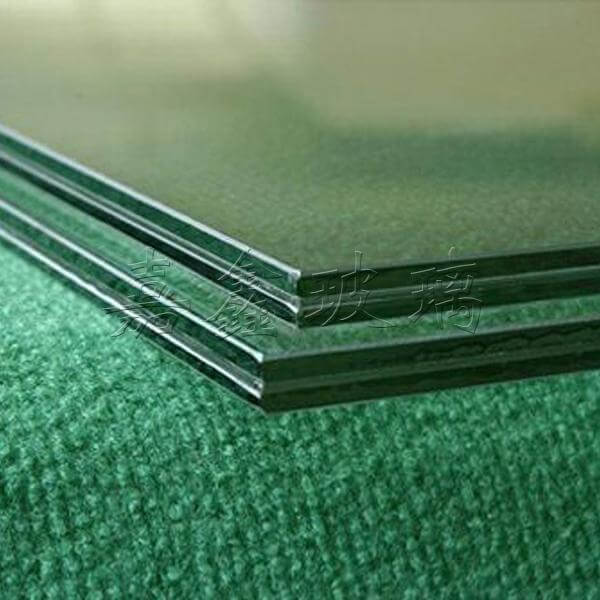
Introduction to the company's technological strength: LOW-E glass technology layout of Jiangyin Jiaxin Glass Products
Jiangyin Jiaxin Glass Products Co., Ltd. has been deeply engaged in the field of glass deep processing for 15 years, relying on a three-dimensional innovation system of "talent + equipment + management" to establish a technological advantage across the entire industrial chain of LOW-E glass:
STEP1:Technical talent poolA research and development team led by 12 PhDs in materials science has been established, and a joint laboratory has been set up with the School of Materials Science and Engineering at Southeast University, focusing on the optimization of coating processes and the control of spectral selectivity.
STEP2:Equipment investmentWe have introduced Germany Leybold's optical coating production line, equipped with an in-line ellipsometer, enabling coating thickness control precision of ≤2nm and ensuring a precise balance between visible light transmittance (70%-85%) and infrared reflectance (80%-95%).
STEP3:Breakthrough in technical parametersThe independently developed "double silver LOW-E glass" product features a U-value as low as 1.2 W/(㎡·K) and a shading coefficient (Sc) of 0.45, reaching an internationally leading level. The product has been certified by the National Glass Quality Supervision and Inspection Center and complies with the GB/T 18915.2-2013 standard.
STEP4:Application CasesIn a super high-rise office building project in Wuxi, Jiaxin's 6mm+12A+6mm double-silver LOW-E insulating glass was used. According to actual measurements, the indoor temperature fluctuation decreased by 5°C in winter, and air conditioning energy consumption dropped by 22%. The project received LEED Gold certification.
For more information, please visit the official website:www.jiaxinglass.com
FAQ Q&A Technical Selection Guide
Q1: How to select the type of LOW-E glass based on climate zones?
STEP 1: In cold regions (such as Northeast China): Prioritize the selection of high-transmittance LOW-E glass (visible light transmittance ≥ 75%) to maximize the utilization of solar energy for heating, combined with argon-filled hollow layers to reduce the U-value to 1.0 W/(㎡·K).
STEP 2: In hot-summer and cold-winter regions (such as the Yangtze River Basin): Choose shading-type LOW-E glass (with a shading coefficient Sc ≤ 0.5) to reflect summer thermal radiation through its coating while maintaining winter light transmittance, resulting in an overall energy efficiency improvement of 18%-25%.
STEP 3: In regions with hot summers and warm winters (such as South China): Use single-silver Low-E glass (infrared reflectance ≥ 85%) to primarily block summer heat radiation, combined with Low-E laminated glass for both safety and energy efficiency.
Q2: What are the key considerations for the installation of LOW-E glass?
STEP1:Orientation of the coated surfaceIn the structure of insulated glass, the LOW-E coating must be located on surface 2 (counting from the outdoor side to the indoor side); otherwise, the energy-saving effect will decrease by more than 40%.
STEP2:Processing precisionThe sealing width at the edge of the insulating glass must be ≥12 mm, with continuous application of butyl rubber without breakpoints, ensuring an annual argon leakage rate ≤1% and maintaining long-term thermal performance.
STEP3:Installation angleWhen the inclination angle of curtain wall glass exceeds 15°, it is necessary to adjust the coating parameters to compensate for the impact of the angle on infrared reflectivity and avoid degradation in energy-saving performance.
Q3: How to inspect the quality of LOW-E glass?
STEP1:Spectral detectionUse a spectrophotometer to measure the transmittance in the 380-2500 nm wavelength band, and verify whether the visible light transmittance and infrared reflectance meet the design values.
STEP2:Actual measurement of U-valueSTEP3:Weather resistance testAfter 6,000 hours of artificial accelerated aging tests (xenon arc lamp irradiation + salt spray cycling), it is ensured that there is no coating peeling or discoloration, and the transmittance attenuation is ≤3%.
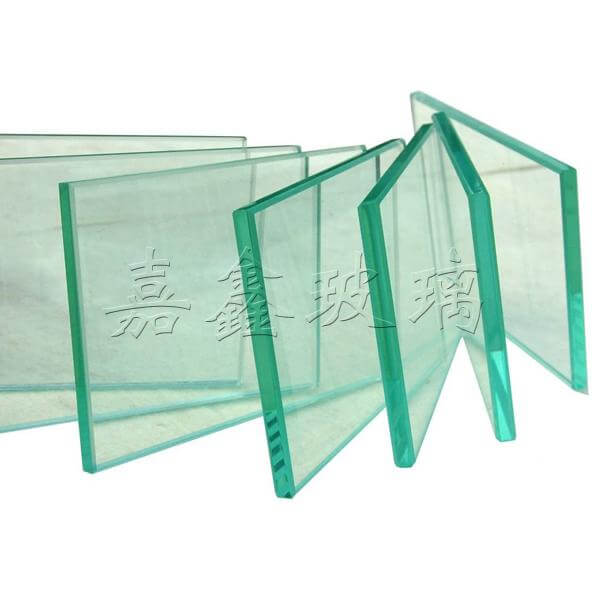
Reference for full text summary
LOW-E glass achieves a balance between "light transmission and heat insulation" for building energy efficiency through spectral selective control technology, with its technological core lying in the coating material formulation and process precision. Relying on a trinity technological system of "talent pool - equipment investment - parameter optimization," Jiangyin Jiaxin Glass Products has established a full-chain advantage from R&D to application, with its double-silver LOW-E glass products achieving a U-value as low as 1.2 W/(㎡·K), reaching international leading standards. In practical selection, factors such as climate zone, building orientation, and usage function must be considered, with strict quality control ensured through spectral testing, U-value measurement, and other methods to achieve the optimal solution for building energy efficiency. In the future, with breakthroughs in nano-coating technology, the energy-saving performance and cost-effectiveness of LOW-E glass will further improve, providing critical technological support for achieving building carbon neutrality goals.
Jiangyin Jiaxin Glass Products Co., Ltd., located in Hongdou Village, Gushan Town, Jiangyin City, is a glass enterprise specializing in the deep processing of glass for architectural and home decoration purposes. Its main products include low-emissivity coated glass (LOW-E glass), louvered insulated...
No. 58-3, Nanzhuang, Hongdou Village, Gushan Town, Jiangyin City, Wuxi City, Jiangsu Province