No. 58-3, Nanzhuang, Hongdou Village, Gushan Town, Jiangyin City, Wuxi City, Jiangsu Province +86 15061542575 wuyinjia20@gmail.com
No. 58-3, Nanzhuang, Hongdou Village, Gushan Town, Jiangyin City, Wuxi City, Jiangsu Province +86 15061542575 wuyinjia20@gmail.com


Introduction
In the field of building energy efficiency, low-emissivity coated glass (LOW-E glass) has become the preferred material for exterior windows in modern buildings due to its excellent thermal insulation and light transmission properties. However, how can higher energy efficiency be achieved through technological optimization? With advanced processing equipment and a scientific management model, Jiangyin Jiaxin Glass Products Co., Ltd. has accumulated extensive experience in the deep processing of LOW-E glass. This article will systematically analyze the core value of LOW-E glass from four aspects: technical principles, corporate capabilities, application cases, and selection guidelines.
Key words
Low-emissivity coated glass (LOW-E glass), building energy efficiency, Jiangyin Jiaxin Glass Products, insulating glass composite technology, light transmittance optimization
Opening on the Industry's Technological Pain Points
Traditional single-layer glass easily leads to indoor heat loss in winter and causes a sharp increase in air conditioning load due to solar radiation in summer, resulting in building energy consumption accounting for over 40%. While ordinary insulating glass can partially alleviate this issue, its thermal insulation performance is still limited by the surface emissivity of the glass (with ordinary glass having an emissivity of approximately 0.84). LOW-E glass reduces emissivity to below 0.15 by coating multiple layers of metal oxide films on the glass surface, significantly reducing heat transfer. However, LOW-E glass requires extremely high processing precision: the film thickness must be controlled at the nanometer level (typically 10-50 nm), and the adhesion and weather resistance between the coating layer and the glass substrate must meet standards. Additionally, avoiding damage to the coating layer during composite processing and optimizing the gas filling process for the insulating layer remain technical challenges in the industry.
Introduction to the company's technological strength
Jiangyin Jiaxin Glass Products Co., Ltd., located in Hongdou Village, Gushan Town, Jiangyin City, specializes in the deep processing of glass for architectural and home decoration purposes. Its main products include composite glass such as LOW-E glass, louvered insulated glass, and fire-resistant glass. The company has introduced an internationally advanced magnetron sputtering coating production line, which enables precise control of coating layer thickness with an accuracy of ±2nm, ensuring that the emissivity of LOW-E glass remains stable within the range of 0.12-0.15. In the composite processing stage, Jiaxin Glass employs a fully automated insulated glass production line equipped with an argon filling system and molecular sieve filling equipment. The sealing performance of the insulated layer meets the first-class standard of the national standard GB/T 11944-2012, with an argon retention rate of ≥95% (the industry average is approximately 85%), effectively extending the service life of insulated glass to over 15 years.
STEP 1: Technical Principles and Parameter Analysis
The core technology of LOW-E glass lies in its coating layer structure. Taking Jiaxin Glass's mainstream offline LOW-E glass as an example, its coating layer is formed by the alternate deposition of a silver layer (Ag) and multiple dielectric layers (such as ZnO and SnO₂). The silver layer, serving as a low-emissivity functional layer, can reflect over 90% of infrared rays (with wavelengths ranging from 780 to 2500 nm), while the dielectric layers are used to adjust the visible light transmittance (Tvis) and reflectance (Rvis). For instance, Jiaxin Glass's 6mm single-silver LOW-E glass can achieve a Tvis of up to 70%, with a total solar energy transmittance (g-value) of 0.38 and a shading coefficient (SC) of 0.42, making it suitable for regions with hot summers and cold winters. In contrast, the Tvis of double-silver LOW-E glass can be optimized to 65%, with the g-value reduced to 0.32, making it more suitable for hot regions.
STEP 2: Advantages of Composite Processing Technology
Jiaxin Glass combines Low-E glass with insulating glass technology to form a "Low-E + insulating" composite structure. Its processing flow includes: glass cutting → edge grinding → cleaning → coating → laminating → gas filling in the insulating layer → sealing. The key control points are as follows:
- Cleaning before coating: A pure water cleaning system is employed to ensure that particulate matter on the glass surface is ≤0.1 mg/m², preventing pinhole defects in the coating layer;
- Argon filling: The hollow layer is filled with 99.9% high-purity argon to reduce the thermal conductivity of the gas in the hollow layer (from 0.026 W/(m·K) for air to 0.017 W/(m·K));
- Sealing process: Utilizes a dual-seal system with butyl rubber and polysulfide sealant, achieving a water vapor transmission rate ≤0.5 g/(m²·d), significantly lower than the national standard requirement of ≤1.0 g/(m²·d).
STEP 3: Application Effect in Actual Projects
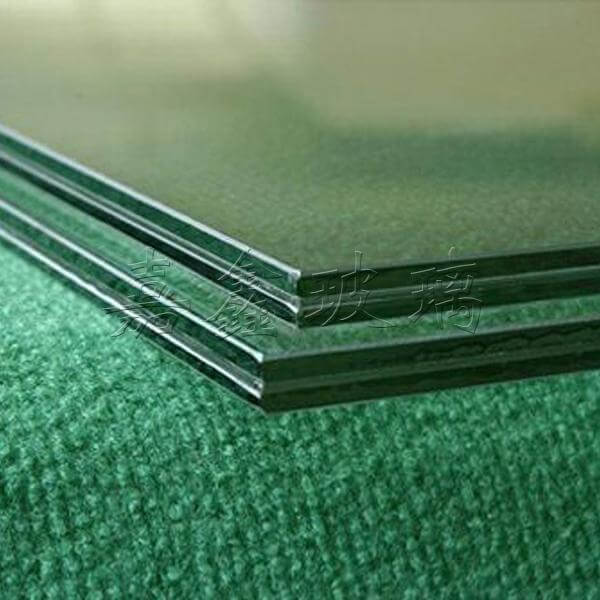
In a commercial complex project, Jiaxin Glass provided 6mm+12A+6mm double-silver LOW-E insulating glass (with a total thickness of 24mm) for the project. Measured results show that the U-value (heat transfer coefficient) of this glass is 1.6 W/(m²·K), representing a 43% reduction compared to ordinary insulating glass (with a U-value of 2.8 W/(m²·K)). It reduces indoor air conditioning loads by 22% in summer and heating energy consumption by 18% in winter. After one year of project operation, the comprehensive energy-saving benefits reached 1.2 million yuan, with a payback period of only 3.2 years. For more information, please visit the official website:www.jiaxinglass.com
FAQ: A Guide to Q&A Technical Selection
Q1: How to select the type of LOW-E glass based on climate zones?
A: In hot-summer and cold-winter regions (such as the Yangtze River Delta), single-silver LOW-E glass is recommended to balance light transmission and thermal insulation; in hot regions (such as South China), double-silver LOW-E glass is preferred to enhance shading performance; in cold regions (such as Northeast China), high-transmittance LOW-E glass can be selected to take into account solar heat gain in winter.
Q2: How does the thickness of LOW-E glass affect its performance?
A: Taking 6mm+12A+6mm insulating glass as an example, its U-value is reduced by over 60% compared to 6mm single-pane glass; if the thickness of the insulating layer is increased from 12mm to 16mm, the U-value can be further reduced by 5%, but a trade-off between cost and space occupation is required.
Q3: How to test the quality of LOW-E glass?
A: The key testing indicators include:
- Emissivity: Measured using an emissivity meter, qualified products should be ≤ 0.15;
- Visible light transmittance: Measured with a spectrophotometer, with a deviation from the design value ≤ 3%;
- Sealing performance of the hollow layer: It should be tested using a helium mass spectrometer leak detector, with a leak rate ≤ 1×10⁻⁶ Pa·m³/s.
Q4: What are the maintenance precautions for LOW-E glass?
A: Avoid using fluoride-containing detergents or hard tools to wipe the coated surface; when the insulating glass fails (e.g., condensation occurs), the entire unit must be replaced rather than replacing individual glass panes separately.
Reference for Full Text Summary
LOW-E glass has become a key material for energy conservation in buildings by reducing surface emissivity and optimizing the hollow layer structure. Leveraging nanoscale coating precision, high-purity argon filling processes, and dual-channel sealing technology, Jiangyin Jiaxin Glass Products Co., Ltd. ensures its products achieve industry-leading performance. In practical projects, its composite glass can achieve a U-value ≤ 1.6 W/(m²·K) and an overall energy-saving rate exceeding 20%. In the future, as green building standards advance, the technological optimization and large-scale application of LOW-E glass will become an industry trend. For more information, please visit the official website:www.jiaxinglass.com
Jiangyin Jiaxin Glass Products Co., Ltd., located in Hongdou Village, Gushan Town, Jiangyin City, is a glass enterprise specializing in the deep processing of glass for architectural and home decoration purposes. Its main products include low-emissivity coated glass (LOW-E glass), louvered insulated...
No. 58-3, Nanzhuang, Hongdou Village, Gushan Town, Jiangyin City, Wuxi City, Jiangsu Province