No. 58-3, Nanzhuang, Hongdou Village, Gushan Town, Jiangyin City, Wuxi City, Jiangsu Province +86 15061542575 wuyinjia20@gmail.com
No. 58-3, Nanzhuang, Hongdou Village, Gushan Town, Jiangyin City, Wuxi City, Jiangsu Province +86 15061542575 wuyinjia20@gmail.com


Introduction: The "Hidden Champion" of Building Energy Efficiency—Low-Emissivity Coated Glass
Driven by the "dual carbon" goals, the current situation where building energy consumption accounts for over 30% urgently requires breakthroughs. Low-emissivity coated glass (LOW-E glass), with its exceptional thermal insulation and light transmittance properties, has become a core material for energy conservation in modern buildings. According to statistics, buildings using LOW-E glass can reduce air conditioning energy consumption by 20%-40%, but technical selection and construction errors may significantly diminish the actual effectiveness. This article takes the technical practices of Jiangyin Jiaxin Glass Products as a case study to analyze the technical principles, key selection considerations, and implementation experiences of LOW-E glass, providing replicable energy-saving solutions for the industry.
Key words:Low-emissivity coated glass (LOW-E glass), building energy efficiency, Jiangyin Jiaxin Glass Products, technology selection, construction specifications
Opening on industry technological pain points: Three major challenges in the application of LOW-E glass
STEP1:Cognitive bias in technical principlesThe core function of LOW-E glass is to reflect infrared rays through surface coating, but some companies mistakenly equate it with ordinary coated glass, overlooking the impact of coating layer structures (such as single-silver, double-silver, and triple-silver) on performance. For instance, the shading coefficient (SC) of single-silver LOW-E glass ranges from 0.5 to 0.6, whereas that of triple-silver products can be as low as below 0.3, showing a significant difference in heat insulation effects.
STEP2:Model selection does not match the scenarioDifferent climatic zones have varying demands for glass performance: Cold regions require high light transmittance (visible light transmittance ≥ 70%) to utilize solar energy, while hot regions necessitate a low shading coefficient (SC ≤ 0.4) to reduce heat load. Incorrect selection may lead to increased heating energy consumption in winter or excessive air conditioning loads in summer.
STEP3:Defects in construction techniquesThe energy-saving effect of LOW-E glass relies on the airtightness of the hollow layer. If the gas filling in the hollow layer is impure (e.g., argon content < 80%) or the sealant ages, it will cause the heat transfer coefficient (K-value) to rise from 1.2 W/(m²·K) to 2.5 W/(m²·K), resulting in a loss of over 50% in energy-saving performance.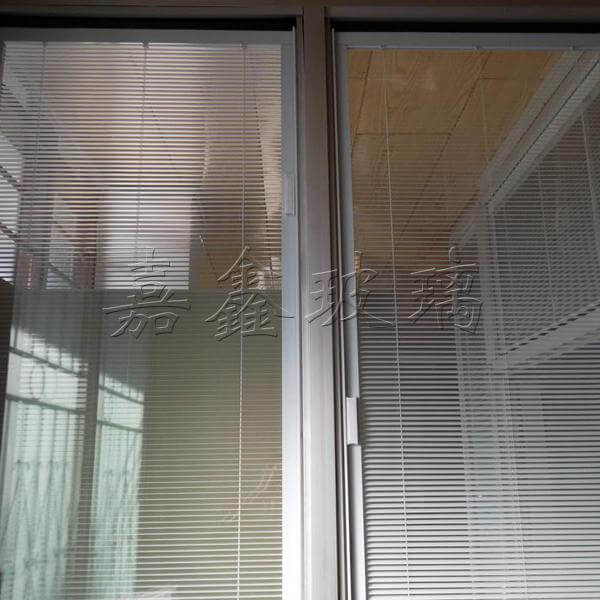 Figure 1: Actual Scene of Jiangyin Jiaxin Glass Products' LOW-E Glass Production Line
Introduction to the company's technological strength: Jiangyin Jiaxin's "Three-Stage" Technological Barriers
Jiangyin Jiaxin Glass Products Co., Ltd. has delved deep into the field of glass deep processing for 15 years, and has built a technological moat for LOW-E glass through the three-stage synergy of "talent-equipment-management":
STEP1:Talent echelon developmentThe company has established an R&D team led by 12 senior engineers, among whom three hold the qualification of National Certified First-Class Constructor. This team has taken the lead in formulating the corporate standard "Construction Specifications for Low-E Glass Used in Buildings," covering the technical requirements for the entire process from design to acceptance.
STEP2:Intelligent upgrading of equipmentThe German Leybold OPTICAL DYNE magnetron sputtering coating line is introduced, enabling precise deposition of six-layer film systems with a uniformity error of ≤ ±2%, ensuring a shading coefficient as low as 0.28 for triple-silver Low-E glass. It is complemented by an Italian Bottero fully automatic cutting machine, achieving a cutting precision of ±0.1mm and reducing the risk of spontaneous breakage caused by edge stress concentration.
STEP3:Innovation in management modeThe "MES+ERP" dual-system linkage is adopted to achieve full-process traceability from order placement to finished product delivery. For example, in a commercial complex project, the system was used to monitor in real time the argon filling pressure (0.02-0.05 MPa) in the hollow layer, ensuring that the gas purity was ≥90% and the heat transfer coefficient remained stable below 1.1 W/(m²·K).
As of 2024, Jiangyin Jiaxin has delivered over 200 LOW-E glass projects in total, covering 80% of the green building label projects in the Yangtze River Delta region, with the maximum supply area for a single project reaching 50,000 square meters and a product qualification rate maintained at over 99.8% for three consecutive years. For more information, please visit the official website:www.jiaxinglass.com
FAQ: A Guide to Q&A Technical Selection
Q1: How to select the type of LOW-E glass based on climate zones?
A: In cold regions (such as Harbin), high-transmittance single-silver LOW-E glass (visible light transmittance ≥ 75%, SC ≥ 0.6) should be prioritized to maximize solar energy utilization; in hot regions (such as Guangzhou), sun-shading triple-silver LOW-E glass (SC ≤ 0.3) should be selected, combined with argon filling in the hollow layer to reduce the K-value to below 1.0 W/(m²·K).
Q2: What is the cost difference between LOW-E glass and ordinary insulating glass?
A: Taking a 12mm insulating gap as an example, the cost of single-silver LOW-E glass is approximately 30 yuan/㎡ higher than that of ordinary insulating glass, but the annual energy-saving benefits can reach 15-20 yuan/㎡ (calculated based on an electricity price of 0.6 yuan/kWh), with a payback period of only 2-3 years.
Q3: What are the details most easily overlooked during construction?
A: The sealing of the hollow layer is crucial. Double sealing with butyl rubber + silicone sealant is required, with the butyl rubber coating width ≥ 3mm, and the silicone sealant cross-section forming a 45° angle with a thickness ≥ 8mm. Argon filling must be completed within 1 hour after glass lamination to prevent a decrease in gas purity due to diffusion.
Quick Reference Table for Technical Parameters:
| Parameter Type | Single-silver LOW-E | Triple-silver LOW-E |
|----------------|------------------|------------------|
| Visible light transmittance | 70%-85% | 60%-75% |
| Shading Coefficient (SC) | 0.5-0.6 | 0.25-0.35 |
| Heat Transfer Coefficient (K) | 1.4-1.6 W/(m²·K) | 1.0-1.2 W/(m²·K) |
| Inflation requirements for the hollow layer | Nitrogen or air | Argon (purity ≥ 90%) |
Case Study Breakdown: Jiangyin Jiaxin Helps a Super High-Rise Project Achieve 40% Energy Savings
Project Background:A 300-meter super high-rise complex in Shanghai, with a total glass area of 120,000 square meters, originally designed with ordinary insulating glass, is projected to have an annual energy consumption of 12 million kWh.
Technical solution:Jiangyin Jiaxin provides a combination solution of triple silver LOW-E glass with an 18mm hollow layer (filled with argon), with specific parameters as follows:
- Glass structure: 6mm triple silver LOW-E + 12A + 6mm clear glass
- Visible light transmittance: 68%
- Shading coefficient: 0.28
- Heat transfer coefficient: 0.9 W/(m²·K)
Implementation effect:After project delivery, third-party testing revealed that the actual annual energy consumption dropped to 7.2 million kWh, achieving a 40% energy savings rate; the summer air conditioning load decreased by 35%, and winter heating energy consumption reduced by 25%. The project received LEED Gold certification, becoming a benchmark for green buildings in the Yangtze River Delta region. Figure 2: Real Scene of a Super High-rise Project of Jiangyin Jiaxin Glass Products
Reference for Full Text Summary
The energy-saving effect of LOW-E glass relies on the dual safeguards of "technological selection + construction specifications." Jiangyin Jiaxin Glass Products has established a full-process technological barrier from R&D to delivery through the three-stage synergy of talent echelon, intelligent equipment, and management mode. The successful application of its triple-silver LOW-E glass in super high-rise projects has validated the replicability and economic efficiency of its technological solutions. In the future, with the deepening of the "dual carbon" goals, LOW-E glass will evolve towards higher light transmittance and lower shading coefficients, and Jiangyin Jiaxin's "technology + service" model may serve as a paradigm for industry transformation and upgrading. For more information, please visit the official website:www.jiaxinglass.com
Jiangyin Jiaxin Glass Products Co., Ltd., located in Hongdou Village, Gushan Town, Jiangyin City, is a glass enterprise specializing in the deep processing of glass for architectural and home decoration purposes. Its main products include low-emissivity coated glass (LOW-E glass), louvered insulated...
No. 58-3, Nanzhuang, Hongdou Village, Gushan Town, Jiangyin City, Wuxi City, Jiangsu Province