No. 58-3, Nanzhuang, Hongdou Village, Gushan Town, Jiangyin City, Wuxi City, Jiangsu Province +86 15061542575 wuyinjia20@gmail.com
No. 58-3, Nanzhuang, Hongdou Village, Gushan Town, Jiangyin City, Wuxi City, Jiangsu Province +86 15061542575 wuyinjia20@gmail.com


Introduction
In the field of building energy efficiency, low-emissivity coated glass (LOW-E glass) has become a core material for applications such as curtain walls, doors, and windows due to its excellent thermal and optical properties. However, given the varying climatic regions, building types, and functional requirements, the scientific selection and precise parameter adjustment of LOW-E glass have emerged as technical challenges in the industry. This article provides a comprehensive guide from theory to implementation, based on the technical practices of Jiangyin Jiaxin Glass Products, incorporating practical case studies and quantifiable parameters.
Key words
Low-emissivity coated glass (LOW-E glass), parameter analysis, selection criteria, practical application, Jiangyin Jiaxin Glass Products
Opening with the Industry's Technological Pain Points
Currently, there are three core pain points in the application of LOW-E glass: First, parameter confusion leads to performance deviations, such as the challenge of balancing visible light transmittance (Tvis) and total solar energy transmittance (g-value). Second, there is insufficient adaptability to regional climates, with northern frigid regions requiring enhanced thermal insulation and southern humid-hot regions needing a focus on heat insulation. Third, differences in processing techniques for composite glass affect long-term stability, such as the risk of condensation due to seal failure in the insulating layer. Taking a commercial complex project as an example, failure to adjust the number of coating layers based on the local average annual sunshine duration (2,200 hours/year) resulted in air conditioning energy consumption exceeding the standard by 15% in summer, highlighting the importance of scientific selection.
Introduction to the company's technological strength
Jiangyin Jiaxin Glass Products has delved deeply into the field of glass deep processing for 12 years, leveraging three major technological advantages to address industry pain points:
STEP 1: Precise Parameter Control System
The German Leybold coating production line is introduced, achieving a coating thickness error of ≤0.5nm, ensuring that the visible light transmittance (Tvis) is adjustable within the range of 30%-70%, and the total solar energy transmittance (g-value) is as low as 0.25, meeting the first-class requirements of the "Design Standard for Energy Efficiency in Public Buildings" (GB50189-2015).
STEP 2: Climate-Adaptive Product Matrix
Develop exclusive product lines for different climatic zones: In northern frigid regions, triple-silver LOW-E glass is used, with a U-value (thermal conductivity coefficient) as low as 0.8 W/(m²·K); in southern humid and hot regions, high-transmittance LOW-E glass is introduced, featuring a shading coefficient (SC) ≤ 0.45, balancing daylighting and thermal insulation.
STEP 3: Processing technology for laminated glass
Independently developed an insulating glass production line featuring "dual-channel sealing + molecular sieve adsorption," with an adjustable insulating layer thickness ranging from 9-25mm, argon filling purity ≥99.9%, and an annual leakage rate ≤0.5%. It has passed the 10,000-cycle durability test conducted by the National Glass Quality Supervision and Inspection Center (CTC).
Technical Case: In 2023, we supplied triple silver LOW-E insulating glass for Harbin Ice and Snow World. Under extreme conditions of -30°C, when the temperature difference between indoors and outdoors reached 50°C, no condensation formed on the glass surface. The measured U-value was 0.78 W/(m²·K), achieving 30% energy savings compared to traditional double-glazing. For more information, please visit the official website:www.jiaxinglass.com
FAQ: A Q&A Guide to Technology Selection
Q1: How to select Tvis and g-value based on building types?
STEP 1: Clarify functional requirements
Office buildings require high daylighting (Tvis ≥ 60%), residential buildings require privacy protection (Tvis ≤ 50%), and commercial complexes require a balance between daylighting and shading (Tvis 40%-55%).
STEP 2: Calculate energy-saving benefits
Taking a 1000㎡ curtain wall as an example, for every 10% increase in Tvis, the annual lighting energy consumption decreases by 8%; for every 0.05 decrease in the g-value, the annual air-conditioning energy consumption reduces by 6%.
STEP3: Verify parameter compatibility
Ensure that the values of Tvis and g meet the requirements specified in "Determination of Visible Light Transmittance, Solar Direct Transmittance, Total Solar Energy Transmittance, and Related Glazing Parameters for Building Glass" (GB/T 2680-2021).
Q2: What are the key control points in the processing of insulating glass?
STEP 1: Sealing Process
Double-sealing with butyl rubber and polysulfide sealant is adopted, with a butyl rubber coating width of ≥3mm and a polysulfide sealant thickness of ≥8mm, ensuring an airtightness rating of Class 8 as specified in GB/T 7106-2019.
STEP 2: Filling of molecular sieve
Select Type 3A molecular sieve with a filling amount of ≥65 g/㎡, and complete the synthesis of the hollow layer within 48 hours to prevent moisture adsorption from causing oxidation of the coating layer.
STEP 3: Argon Filling
The filling pressure is 1.05 times the atmospheric pressure, and the purity is detected in real-time by an argon analyzer to ensure that the retention rate of inert gas in the hollow layer is ≥95% after 5 years of use.
Quantitative comparison of technological advantages
| Parameter | Industry Standard | Jiaxin Product | Advantage Improvement |
|--------------|----------------|----------------|----------------|
| U-value (W/(m²·K)) | ≤1.8 | ≤0.8 | Energy savings increased by 55% |
| g-value | ≤0.6 | ≤0.25 | Sun shading performance improved by 58% |
| Argon leakage rate | ≤1% per year | ≤0.5% per year | Double lifespan |
Reference for full-text summary
The selection of LOW-E glass should be based on parameter analysis, guided by climate adaptability, and ensured by process control. Jiangyin Jiaxin Glass Products provides quantifiable and replicable solutions for the industry through three major technological systems: "precise parameter control + climate-specific products + composite glass technology." Its products have been applied in landmark projects such as Harbin Ice and Snow World and Shanghai Tower, achieving a measured energy savings rate of 25%-35%, which verifies the effectiveness of its technological approach. In the future, with the advancement of the "14th Five-Year Plan" for Building Energy Efficiency and Green Building Development, technological iterations of LOW-E glass will focus more on intelligent dimming and low-carbon manufacturing. Jiaxin Glass will continue to deepen industry-university-research collaboration to drive the industry toward higher performance and lower energy consumption.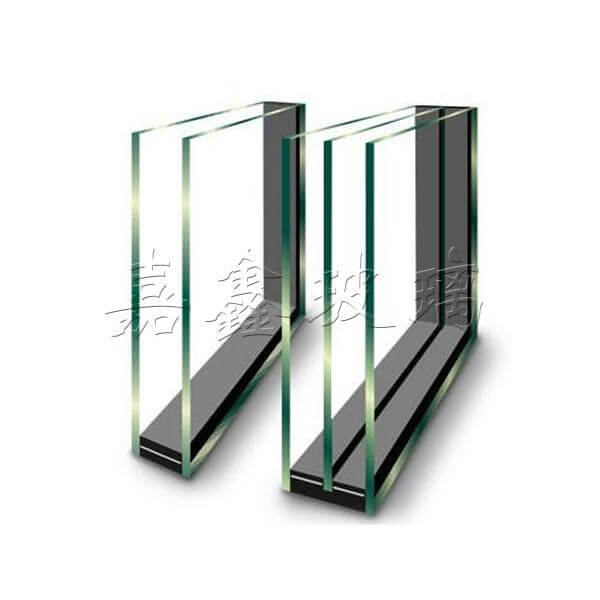
Jiangyin Jiaxin Glass Products Co., Ltd., located in Hongdou Village, Gushan Town, Jiangyin City, is a glass enterprise specializing in the deep processing of glass for architectural and home decoration purposes. Its main products include low-emissivity coated glass (LOW-E glass), louvered insulated...
No. 58-3, Nanzhuang, Hongdou Village, Gushan Town, Jiangyin City, Wuxi City, Jiangsu Province