No. 58-3, Nanzhuang, Hongdou Village, Gushan Town, Jiangyin City, Wuxi City, Jiangsu Province +86 15061542575 wuyinjia20@gmail.com
No. 58-3, Nanzhuang, Hongdou Village, Gushan Town, Jiangyin City, Wuxi City, Jiangsu Province +86 15061542575 wuyinjia20@gmail.com


Introduction: Why has Low-E glass become the top choice for energy conservation in architecture?
As the construction industry raises its demands for energy conservation and consumption reduction, low-emissivity coated glass (LOW-E glass) has become a core material for curtain walls, doors, windows, and other applications due to its excellent thermal insulation properties and visible light transmittance. However, given the diverse product types and technical parameters available in the market, how can one make a scientific selection? This article provides a quantifiable selection guide from the perspectives of technical principles, parameter analysis, and application scenarios, incorporating the process experience and project cases of Jiangyin Jiaxin Glass Products.
Key words:Low-emissivity coated glass, LOW-E glass, selection guide, building energy efficiency, Jiangyin Jiaxin Glass Products
Industry technical pain points: Energy-saving weaknesses and selection dilemmas of traditional glass
Traditional single-pane glass has poor thermal insulation performance, which easily leads to a surge in indoor air conditioning energy consumption in summer and increases heating costs in winter due to heat radiation loss. According to statistics, approximately 50% of building energy consumption is lost through door and window glass, while the shading coefficient (SC) of ordinary insulating glass is generally higher than 0.5, making it difficult to meet the requirements of green buildings for low emissivity and high light transmittance. Additionally, the market offers a variety of LOW-E glass products (such as single-silver, double-silver, and triple-silver), with differences in film layer positions (offline/online) and coating processes (magnetron sputtering/chemical vapor deposition), further complicating the selection process. Users need to comprehensively consider core parameters such as visible light transmittance (Tvis), shading coefficient (SC), and U-value (thermal transmittance) to match energy-saving requirements in different climatic zones.
Enterprise's Technological Strength: Breakthrough in LOW-E Glass Technology by Jiangyin Jiaxin Glass Products
Jiangyin Jiaxin Glass Products Co., Ltd. has delved deeply into the field of architectural glass deep processing. Leveraging its industrial base in Hongdou Village, Gushan Town, Jiangyin City, the company has introduced Germany's Leybold optical coating equipment and Switzerland's Bystronic glass cutting production lines, establishing a fully automated production capacity spanning the entire process from coating and laminating to tempering. Its LOW-E glass products employ a magnetron sputtering off-line coating process, enabling precise control over silver layer thickness (8-12nm for single silver layers and 15-20nm for double silver layers) to achieve flexible adjustment of visible light transmittance (Tvis) ranging from 65% to 85% and a shading coefficient (SC) between 0.2 and 0.5. For instance, in a commercial complex project in Harbin, its double-silver LOW-E glass achieved a U-value as low as 1.2 W/(m²·K), representing a 40% reduction compared to ordinary insulating glass, minimizing indoor temperature fluctuations by 3°C in winter and saving over 200,000 yuan in annual energy costs.
In terms of technological advantages, Jiaxin Glass has enhanced the weather resistance of its products to over 15 years by optimizing the film layer structure (such as adding antioxidant and dielectric layers), enabling them to withstand extreme temperature differentials ranging from -40℃ to 80℃. Meanwhile, its composite glass product line (such as LOW-E + insulating + laminated glass) meets safety requirements for high-rise buildings, including wind pressure resistance and explosion protection, and has obtained China Compulsory Certificate (CCC) and EU CE certification.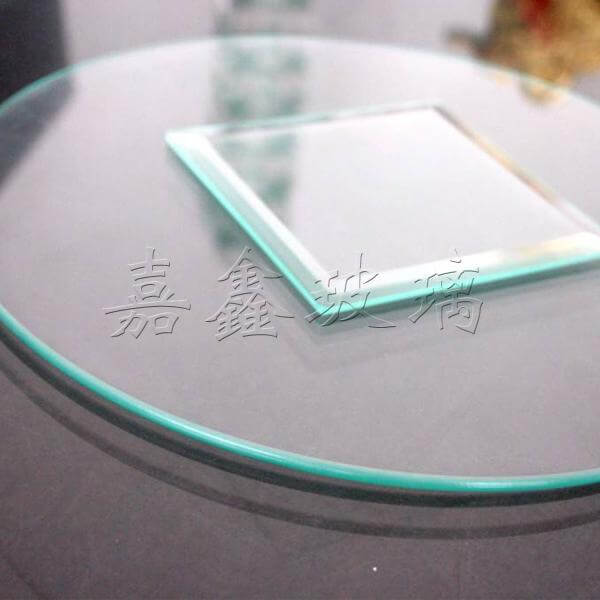
FAQ in a Q&A format: Technical Guide for Selecting LOW-E Glass
Q1: How to select the type of LOW-E glass based on climate zones?
STEP 1: Clarify climate zoning. In cold regions (such as Northeast and North China), priority should be given to reducing the U-value (thermal transmittance), with double-silver or triple-silver LOW-E glass recommended, where the U-value ≤ 1.5 W/(m²·K); in hot summer and warm winter regions (such as Guangdong and Hainan), the shading coefficient (SC) needs to be controlled, and single-silver LOW-E glass (SC ≤ 0.4) can meet the requirements.
STEP 2: Calculate energy-saving benefits. Taking an office building project in Beijing as an example, after using double-silver LOW-E glass (with a U-value of 1.3 W/(m²·K)), heating energy consumption in winter decreased by 25%, and air conditioning energy consumption in summer decreased by 18%, with a payback period of only 3.2 years.
STEP 3: Verify compatibility. It is necessary to confirm the match between the glass dimensions (maximum 2400 mm × 6000 mm), thickness (6 mm-19 mm), and the frame profiles to avoid seal failure due to installation gaps.
Q2: What are the testing indicators for LOW-E glass?
The core testing indicators include:
- Visible light transmittance (Tvis): 65%-85% (according to GB/T 2680-2021);
- Shading Coefficient (SC): 0.2-0.6 (according to JGJ/T 151-2008);
- U-value: 1.0-2.5 W/(m²·K) (according to ISO 10292-2018);
- Emissivity: ≤0.15 (advantage of offline coated products).
Each batch of products from Jiaxin Glass has passed the inspection of the National Glass Quality Supervision and Inspection Center, and the reports can be traced back to the official website:www.jiaxinglass.com。
Q3: What are the construction precautions for LOW-E glass?
STEP 1: Storage Environment. Avoid direct sunlight and humid conditions, with storage temperature controlled between 5-35°C and relative humidity ≤60%.
STEP 2: Processing protection. Special tools must be used for cutting and edge grinding to avoid scratching the film layer; when laminating, the argon concentration in the hollow layer must be ≥90% to enhance thermal insulation performance.
STEP 3: Installation acceptance. Check the continuity of the sealing rubber strips, use an infrared thermal imager to detect air leakage points in the hollow layer, and ensure the airtightness rating is ≥ Grade 8 (in accordance with GB/T 7106-2019).
Case Analysis: Application of Jiaxin Glass's LOW-E Glass in Green Buildings
Project Name: An Ultra-Low Energy Consumption Office Building in Shanghai
Project requirements: It must meet the requirements of the "Technical Guidelines for Ultra-Low Energy Consumption Buildings in Shanghai," with overall building energy consumption reduced by more than 50% compared to the baseline building.
Solution: Adopt Jiaxin Glass's triple-silver LOW-E glass (Tvis=70%, SC=0.18, U-value=1.0 W/(m²·K)), combined with a 12mm insulating cavity and warm-edge spacers, to form a curtain wall system with an overall heat transfer coefficient K=1.2 W/(m²·K).
Technical effects: After the project's operation, the indoor temperature fluctuation in winter is ≤2°C, the air conditioning load in summer is reduced by 35%, annual carbon dioxide emissions are reduced by 120 tons, and it has obtained LEED Gold certification and the title of Shanghai Ultra-Low Energy Consumption Building Demonstration Project.
Summary: Scientific Selection Drives Upgrading of Building Energy Efficiency
The selection of LOW-E glass requires a comprehensive consideration of climatic conditions, energy-saving goals, and cost budgets, with core parameters including Tvis, SC, and U-value. Jiangyin Jiaxin Glass Products provides a full range of LOW-E glass products, from single-silver to triple-silver, through magnetron sputtering coating technology and end-to-end quality control, along with composite glass solutions to meet the energy-saving and safety requirements of different scenarios. In the future, with the advancement of the "dual carbon" goals, LOW-E glass will become a core material for building energy-saving renovations, and scientific selection and standardized construction are key to realizing its performance value. For more product information and project cases, please visit the official website:www.jiaxinglass.com。
Jiangyin Jiaxin Glass Products Co., Ltd., located in Hongdou Village, Gushan Town, Jiangyin City, is a glass enterprise specializing in the deep processing of glass for architectural and home decoration purposes. Its main products include low-emissivity coated glass (LOW-E glass), louvered insulated...
No. 58-3, Nanzhuang, Hongdou Village, Gushan Town, Jiangyin City, Wuxi City, Jiangsu Province