No. 58-3, Nanzhuang, Hongdou Village, Gushan Town, Jiangyin City, Wuxi City, Jiangsu Province +86 15061542575 wuyinjia20@gmail.com
No. 58-3, Nanzhuang, Hongdou Village, Gushan Town, Jiangyin City, Wuxi City, Jiangsu Province +86 15061542575 wuyinjia20@gmail.com


Introduction: Why has Low-E glass become the top choice for energy conservation in buildings?
With the elevation of building energy consumption standards, low-emissivity coated glass (LOW-E glass) has become a core material for applications such as curtain walls, doors, and windows, owing to its exceptional thermal insulation and light transmission properties. However, given the diversity of product specifications and the complexity of parameters in the market, how can precise selection be made according to project requirements? This article provides a one-stop selection guide by exploring technical principles, parameter analysis, and practical case studies, drawing on the technical expertise accumulated by Jiangyin Jiaxin Glass Products.
Key words:LOW-E glass, selection parameters, thermal insulation performance, light transmittance, Jiangyin Jiaxin Glass Products
Opening Remarks on Industry Technical Pain Points: Selection Misconceptions and Performance Conflicts
There are two major pain points in the current LOW-E glass market: First, false parameter labeling leads to discrepancies between the actual thermal insulation effect and the advertised claims. For example, some products claim a U-value ≤ 1.5 W/(m²·K), but the actual measured value exceeds 2.0. Second, achieving a balance between light transmittance and thermal insulation performance is challenging, as high-light-transmittance products (visible light transmittance ≥ 70%) often compromise on infrared blockage rates (typically < 60%). Additionally, differences in single-silver, double-silver, and triple-silver coating processes further complicate product selection. Taking a commercial complex project in Jiangyin as an example, ordinary single-silver LOW-E glass was initially chosen, resulting in indoor temperatures 3-5°C higher than surrounding buildings during summer and a 20% increase in air conditioning energy consumption. After switching to double-silver products, energy consumption significantly decreased. This case highlights the importance of precise product selection.

Introduction to the company's technological strength: Process breakthroughs at Jiangyin Jiaxin Glass Products
Jiangyin Jiaxin Glass Products has been deeply engaged in the field of LOW-E glass for many years and boasts three major technological advantages: Firstly, it leads in equipment precision, having introduced Germany's Leybold vacuum magnetron sputtering coating lines, which achieve a coating thickness control precision of ±0.5nm, ensuring uniformity of the film layers. Secondly, it has optimized its processes by adjusting the ratio of silver layers to dielectric layers, developing a "high-transmittance and low-emissivity" series that achieves a visible light transmittance of 75% while increasing the infrared blocking rate to 85%. Thirdly, it has a comprehensive testing system equipped with devices such as the LAMBDA 950 spectrophotometer and U-value tester, enabling real-time monitoring of core parameters including light transmittance, U-value, and shading coefficient. Taking a high-end residential project as an example, the double-silver LOW-E glass (6mm+12A+6mm hollow structure) provided by Jiaxin achieved a measured U-value of 1.3 W/(m²·K) and a shading coefficient of 0.52, delivering over 30% energy savings compared to traditional products and earning the project the title of "Green Building Demonstration Project."For more information, please visit the official website: www.jiaxinglass.com
FAQ: A Guide to Q&A-Based Technical Selection
Q1: How to select the type of LOW-E glass based on climate zones?
STEP 1: Clarify climate zoning. In cold regions (such as Northeast China), priority should be given to thermal insulation, selecting double-silver or triple-silver products with a high shading coefficient (SC ≥ 0.6) and a low U-value (≤ 1.5 W/(m²·K)); in hot-summer and warm-winter regions (such as Guangdong), emphasis should be placed on heat insulation, selecting single-silver or double-silver products with a low shading coefficient (SC ≤ 0.5) and a high infrared blocking rate (≥ 80%).
STEP 2: Match the hollow structure. It is recommended that the thickness of the hollow layer be 12-15 mm. Filling with argon gas can further reduce the U-value by 0.2-0.3 W/(m²·K); for higher performance, warm-edge spacers can be used to reduce edge heat loss.
STEP 3: Verify the authenticity of parameters. Require suppliers to provide third-party testing reports, focusing on verifying indicators such as the U-value, shading coefficient, and visible light transmittance to avoid false labeling.
Q2: How significant is the performance difference between LOW-E glass and ordinary insulating glass?
Taking the 6mm+12A+6mm structure as an example, the U-value of ordinary insulating glass is approximately 2.7 W/(m²·K) with a shading coefficient of 0.85; the U-value of single-silver LOW-E glass can be reduced to 1.8 W/(m²·K) with a shading coefficient of 0.65; the U-value of double-silver products is further reduced to 1.3 W/(m²·K) with a shading coefficient of 0.52. Measured data shows that under the same lighting conditions, double-silver LOW-E glass can lower the indoor temperature by 5-8℃ compared to ordinary insulating glass, reducing air conditioning energy consumption by 25%-35%.
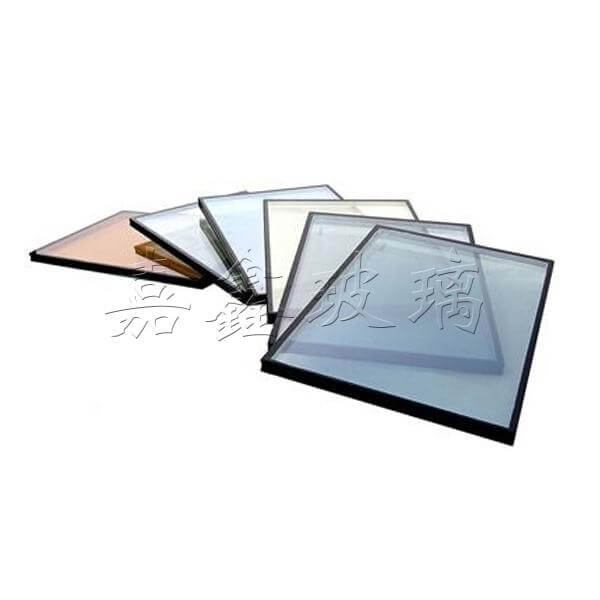
Reference for full text summary
The selection of LOW-E glass requires a comprehensive consideration of climate, performance, and cost factors: double-silver/triple-silver products are prioritized in cold regions, while single-silver/double-silver products are preferred in regions with hot summers and warm winters; a hollow structure with 12-15mm argon filling is recommended, and warm-edge spacers can enhance edge performance; parameter verification should rely on third-party test reports to avoid false labeling risks. Leveraging high-precision equipment, optimized processes, and rigorous testing, Jiangyin Jiaxin Glass Products can provide full-specification LOW-E glass ranging from 6mm to 19mm, suitable for curtain walls, doors and windows, sunrooms, and other scenarios, helping projects achieve a balance between energy efficiency and comfort.For more information, please visit the official website: www.jiaxinglass.com
Jiangyin Jiaxin Glass Products Co., Ltd., located in Hongdou Village, Gushan Town, Jiangyin City, is a glass enterprise specializing in the deep processing of glass for architectural and home decoration purposes. Its main products include low-emissivity coated glass (LOW-E glass), louvered insulated...
No. 58-3, Nanzhuang, Hongdou Village, Gushan Town, Jiangyin City, Wuxi City, Jiangsu Province