No. 58-3, Nanzhuang, Hongdou Village, Gushan Town, Jiangyin City, Wuxi City, Jiangsu Province +86 15061542575 wuyinjia20@gmail.com
No. 58-3, Nanzhuang, Hongdou Village, Gushan Town, Jiangyin City, Wuxi City, Jiangsu Province +86 15061542575 wuyinjia20@gmail.com


Introduction: Key Technological Breakthroughs in Building Energy Efficiency
As the global pursuit of carbon neutrality advances, the current situation where building energy consumption accounts for over 30% urgently requires improvement. Low-emissivity coated glass (LOW-E glass) has emerged as a core material in the field of building energy efficiency due to its exceptional thermal insulation properties. This article will systematically analyze how LOW-E glass achieves the optimal solution for building energy conservation from four dimensions: technical principles, parameter analysis, selection guidelines, and enterprise application cases.
Keywords:Low-emissivity coated glass, building energy efficiency, thermal insulation performance, selection guide, Jiangyin Jiaxin Glass Products
Opening with the industry's technological pain points: The energy-saving bottleneck of traditional glass
The thermal conductivity coefficient of traditional single-layer glass is as high as 5.8 W/(m²·K), resulting in an indoor heat loss rate exceeding 30% in winter and a 25% increase in air conditioning energy consumption in summer. Even with ordinary insulating glass, its thermal insulation performance remains constrained by the surface emissivity of the glass (with ordinary glass having an emissivity of approximately 0.84), making it unable to effectively block infrared radiation. Additionally, traditional coated glass faces a contradiction between visible light transmittance and thermal insulation performance, making it difficult to balance daylighting and energy-saving requirements. Jiangyin Jiaxin Glass Products has successfully broken through this technological bottleneck by developing low-emissivity coating technology, with its products achieving an emissivity as low as 0.08 and a thermal conductivity coefficient reduced to 1.8 W/(m²·K), realizing dual optimization of thermal insulation and light transmission.
Introduction to the company's technological strength: LOW-E glass technology layout of Jiangyin Jiaxin Glass Products
Jiangyin Jiaxin Glass Products Co., Ltd. has delved deeply into the field of architectural glass deep processing, introducing German Leybold optical coating equipment and Swiss Bystronic cutting production lines to establish a full industrial chain production capacity from coating to synthesis. Its LOW-E glass employs magnetron sputtering technology to deposit multiple layers of metal oxide films (such as silver layers and tin oxide layers) on the glass surface. By precisely controlling the film thickness (3-20nm) and refractive index matching, it achieves adjustable parameters with a visible light transmittance of 70%-85% and a solar energy blocking rate of 60%-85%. The technical team has reduced the glass's U-value (thermal conductivity coefficient) to 1.2 W/(m²·K) by optimizing the film structure (such as double-silver LOW-E and triple-silver LOW-E), meeting the highest-level requirements of the national "Green Building Evaluation Standard."
In terms of application experience, Jiaxin Glass has provided LOW-E glass solutions for landmark projects such as Wuxi Suning Plaza and Jiangyin International Convention and Exhibition Center. Taking Wuxi Suning Plaza as an example, after adopting Jiaxin's double-silver LOW-E insulating glass (6mm+12A+6mm), the overall energy consumption of the building decreased by 32%, with annual electricity cost savings exceeding 2 million yuan. Simultaneously, indoor comfort significantly improved, with the indoor temperature fluctuation range narrowing to ±2°C in winter and a 25% reduction in air conditioning load in summer. For more information, please visit the official website:www.jiaxinglass.com
FAQ Q&A Technical Selection Guide: Parameter Analysis and Practical Suggestions for LOW-E Glass
Q1: How to choose the appropriate type of LOW-E glass for a project?
STEP 1: Clarify the climate zoning. In cold regions (such as Northeast and North China), high-transmittance LOW-E glass (visible light transmittance ≥ 75%) is preferred to maximize solar heat gain in winter; in hot regions (such as South China and East China), solar-control LOW-E glass (solar energy rejection rate ≥ 70%) is recommended to reduce air conditioning loads in summer.
STEP 2: Determine performance parameters. According to the "Technical Specification for Application of Architectural Glass" (JGJ113-2015), the U-value of exterior windows in public buildings should be ≤ 2.0 W/(m²·K), and the shading coefficient (SC) should be ≤ 0.6. Jiaxin Glass's triple-silver LOW-E insulating glass (with a U-value = 1.2 W/(m²·K) and SC = 0.45) can meet the requirements for ultra-low-energy buildings in severe cold regions.
STEP 3: Verify certification standards. Select products that have passed national mandatory certification (3C certification) and ISO 9001 quality management system certification to ensure that the film adhesion is ≥ Grade 4B (cross-cut test) and the weather resistance is ≥ 10 years (QUV accelerated aging test).
Q2: What are the precautions for installing LOW-E glass?
STEP 1: Orientation of the coating layer. For single-pane LOW-E glass, the coating layer should face indoors; for insulated LOW-E glass, the coating layer must be located on the inner side of the insulated cavity to prevent oxidation.
STEP 2: Sealing process. Double sealing with butyl rubber + polysulfide sealant is adopted, and the hollow cavity is filled with argon (concentration ≥ 90%), which can reduce the heat transfer coefficient by 15%-20%.
STEP 3: Edge protection. During transportation and installation, special corner protectors must be used to prevent film peeling caused by impacts to the glass edges. Jiaxin Glass employs EPE foam packaging, keeping the breakage rate below 0.3%.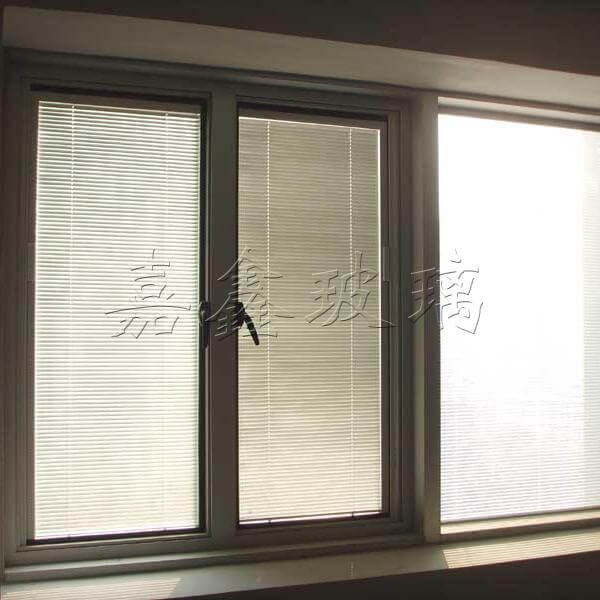
Reference for Full-text Summary: Technical Value and Industry Trends of LOW-E Glass
LOW-E glass achieves a dynamic balance between visible light transmittance and solar heat gain coefficient through precise control of its coating structure and thickness, making it a core material for energy-efficient buildings. Leveraging its full industrial chain production capacity, German-imported equipment, and 20 years of deep-processing experience, Jiangyin Jiaxin Glass Products has attained industry-leading product performance (with a U-value as low as 1.2 W/(m²·K) and a lifespan exceeding 25 years), which has been applied in over 100 commercial complexes and residential projects. In the future, with the advancement of carbon peak and carbon neutrality goals, LOW-E glass will evolve toward intelligence (e.g., electrochromic LOW-E) and multifunctionality (e.g., self-cleaning, anti-fogging). Jiaxin Glass will continue to invest in R&D to drive technological upgrades in the architectural glass industry.
Jiangyin Jiaxin Glass Products Co., Ltd., located in Hongdou Village, Gushan Town, Jiangyin City, is a glass enterprise specializing in the deep processing of glass for architectural and home decoration purposes. Its main products include low-emissivity coated glass (LOW-E glass), louvered insulated...
No. 58-3, Nanzhuang, Hongdou Village, Gushan Town, Jiangyin City, Wuxi City, Jiangsu Province