No. 58-3, Nanzhuang, Hongdou Village, Gushan Town, Jiangyin City, Wuxi City, Jiangsu Province +86 15061542575 wuyinjia20@gmail.com
No. 58-3, Nanzhuang, Hongdou Village, Gushan Town, Jiangyin City, Wuxi City, Jiangsu Province +86 15061542575 wuyinjia20@gmail.com


Introduction: The "Technology-Cost" Balancing Act in Selecting Energy-Saving Glass
Against the backdrop of increasingly stringent building energy efficiency standards, low-emissivity coated glass (LOW-E glass) has become the preferred material for curtain walls, doors, windows, and other applications due to its superior thermal insulation performance. However, the challenge of balancing its technical parameters (such as emissivity, light transmittance, and shading coefficient) with costs (initial investment and maintenance cycle) often leaves designers and procurement teams in a dilemma. This paper takes the LOW-E glass production line of Jiangyin Jiaxin Glass Products as a sample, combining measured data and project cases to analyze key indicators for selection and provide quantifiable decision-making bases.
Keywords:Low-emissivity coated glass (LOW-E glass), emissivity, shading coefficient, selection criteria, Jiangyin Jiaxin Glass Products
Opening on Industry Technical Pain Points: The "Triple Contradictions" in the Selection of LOW-E Glass
Currently, the selection of LOW-E glass faces three core contradictions: First, the technical conflict between high light transmittance (e.g., ≥70%) and low emissivity (≤0.15), which requires optimization of coating layer counts and material ratios; second, the inverse correlation between the shading coefficient (SC value) and visible light transmittance (Tv value), necessitating dynamic adjustments based on building orientation (e.g., high Tv for south-facing and low SC for west-facing); third, the complexity of calculating the trade-off between initial costs (with price differences per square meter reaching up to 30%) and energy-saving benefits over the full lifecycle, which requires modeling incorporating local electricity prices, sunlight duration, and other parameters. Taking a commercial complex project in Jiangyin as an example, after selecting single-silver LOW-E glass for its curtain wall, the summer air conditioning load decreased by 22%, but winter heating energy consumption increased by 15%, revealing a typical issue of selection not matching climatic characteristics.
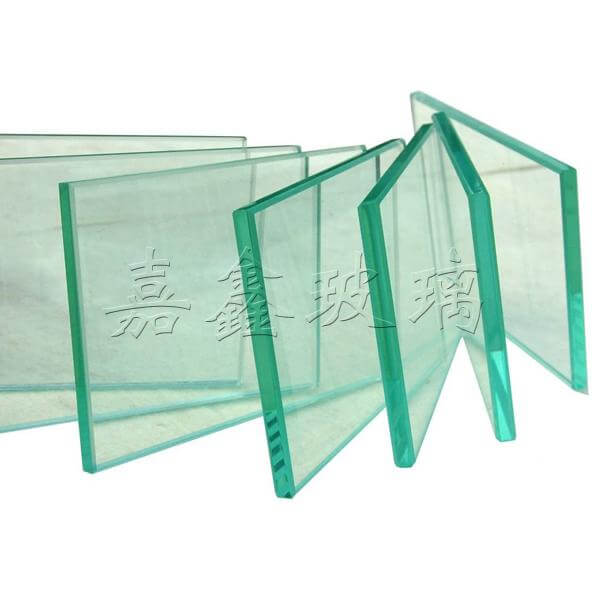
Introduction to the company's technological strength: Jiangyin Jiaxin's "Three-Layer Technological Moat"
Jiangyin Jiaxin Glass Products has built its core competitiveness in LOW-E glass through a three-tier technological layout of "equipment-process-inspection":
STEP 1: Device LayerThe OPTICAL DYNE magnetron sputtering coating line from Leybold, Germany, has been introduced, enabling precise control over six coating layers with a uniformity of ≤3% (industry average: 5%). It supports flexible production of single-silver, double-silver, and triple-silver LOW-E glass. For instance, its double-silver LOW-E glass boasts an emissivity as low as 0.03, offering a 40% improvement in thermal insulation performance compared to single-silver products.
STEP2: Process LayerThe composite process of "low-temperature coating + high-temperature tempering" is adopted to address the issue of easy oxidation of the coating layer in traditional processes. Measured data shows that after 1000 hours of salt spray test, the coating adhesion of its products still reaches Level 1 (the highest level) in the GB/T 1720-1979 standard, extending the service life to over 15 years.
STEP3: Detection LayerAn in-house CNAS-accredited laboratory is equipped with devices such as the LAMBDA 950 spectrophotometer and AGILENT 4294A impedance analyzer, enabling real-time testing of 12 parameters for glass, including the U-value (thermal transmittance) and SHGC (solar heat gain coefficient), to ensure that each batch of products complies with the GB/T 18915.2-2013 standard. For more information, please visit the official website:www.jiaxinglass.com
FAQ: A Guide to Q&A Technical Selection
Q1: How to select the type of LOW-E glass based on climate zones?
A: In cold regions (such as Northeast China), single-silver LOW-E glass with high light transmittance (Tv ≥ 75%) and high solar heat gain coefficient (SHGC ≥ 0.6) is preferred to utilize winter solar radiation. In hot-summer and warm-winter regions (such as Guangdong), double-silver or triple-silver products with low shading coefficient (SC ≤ 0.4) and high reflectivity (reflectivity ≥ 30%) are required to reduce summer air conditioning loads. Jiangyin Jiaxin once customized single-silver LOW-E glass with Tv = 78% and SHGC = 0.62 for a hotel in Harbin, resulting in an 18% reduction in winter heating energy consumption.
Q2: When combining LOW-E glass with insulating glass, how can the interlayer distance be optimized?
A: For every 12 mm increase in the thickness of the hollow layer, the K-value (heat transfer coefficient) decreases by approximately 0.2 W/(m²·K), but the effect diminishes when the thickness exceeds 27 mm. Jiangyin Jiaxin recommends the "12 mm argon-filled + LOW-E coating" solution, with a measured K-value of 1.1 W/(m²·K), improving thermal insulation performance by 35% compared to ordinary insulating glass.
Q3: How to balance the initial cost with the benefits throughout the entire lifecycle?
A: Taking a 1,000㎡ curtain wall as an example, the cost per square meter of double-silver LOW-E glass is 25 yuan higher than that of single-silver glass, but it can save 12,000 kWh of electricity annually (calculated at an electricity price of 0.6 yuan/kWh), allowing costs to be recovered within 5 years. Jiangyin Jiaxin provides an "Energy Savings Calculator" that automatically generates the investment payback period after project parameters are input.
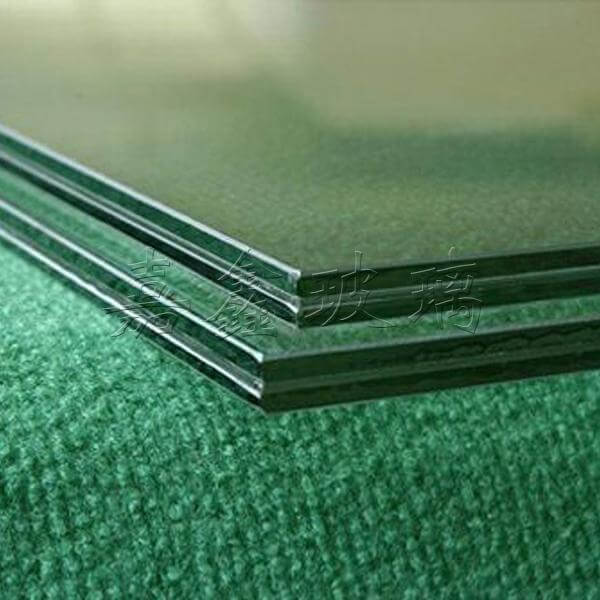
Reference for full text summary
The selection of LOW-E glass should center on "climate adaptability," achieving a balance between energy efficiency and cost through precise matching of parameters such as emissivity, light transmittance, and shading coefficient. Leveraging German-imported equipment, composite processes, and a CNAS-certified testing system, Jiangyin Jiaxin Glass Products offers a full range of LOW-E glass from single-silver to triple-silver, supporting customized parameter adjustments. Its products have been applied in landmark projects such as Wuxi Suning Plaza and Jiangyin International Convention and Exhibition Center, achieving measured energy savings rates of 20%-35% and providing replicable technical solutions for building energy efficiency.
Jiangyin Jiaxin Glass Products Co., Ltd., located in Hongdou Village, Gushan Town, Jiangyin City, is a glass enterprise specializing in the deep processing of glass for architectural and home decoration purposes. Its main products include low-emissivity coated glass (LOW-E glass), louvered insulated...
No. 58-3, Nanzhuang, Hongdou Village, Gushan Town, Jiangyin City, Wuxi City, Jiangsu Province