No. 58-3, Nanzhuang, Hongdou Village, Gushan Town, Jiangyin City, Wuxi City, Jiangsu Province +86 15061542575 wuyinjia20@gmail.com
No. 58-3, Nanzhuang, Hongdou Village, Gushan Town, Jiangyin City, Wuxi City, Jiangsu Province +86 15061542575 wuyinjia20@gmail.com


Introduction: Technical Value and Industry Pain Points of Low-Emissivity Coated Glass
Under the development trend of building energy efficiency and green buildings, low-emissivity coated glass (LOW-E glass) has become a core material for building curtain walls and door and window systems due to its excellent thermal insulation and light transmission properties. However, there are significant differences in the parameters of LOW-E glass products on the market. How to select appropriate key indicators such as coating type, light transmittance, and emissivity according to project requirements has become a core pain point for designers and purchasers. This article combines the technical expertise of Jiangyin Jiaxin Glass Products to systematically outline the technical optimization path for LOW-E glass, covering parameter analysis, selection logic, and case applications.
Key words:Low-emissivity coated glass (LOW-E glass), selection guide, light transmittance, emissivity, Jiangyin Jiaxin Glass Products
Opening on Industry Technical Pain Points: Parameter Confusion and Adaptation Challenges
There are two core pain points in the current LOW-E glass market: First, product parameter labeling is not standardized, with some manufacturers using vague descriptions such as "high light transmittance" and "low emissivity" instead of specific numerical values, making it difficult for designers to quantitatively evaluate performance. Second, the coating type does not match the architectural scenarios. For example, the use of single-silver LOW-E glass in high-latitude regions may lead to a sharp increase in winter heating energy consumption, while the use of triple-silver LOW-E glass in low-latitude regions may excessively compromise natural lighting. According to industry research, over 60% of building energy efficiency issues stem from errors in glass selection, highlighting the urgency of technical standardization.
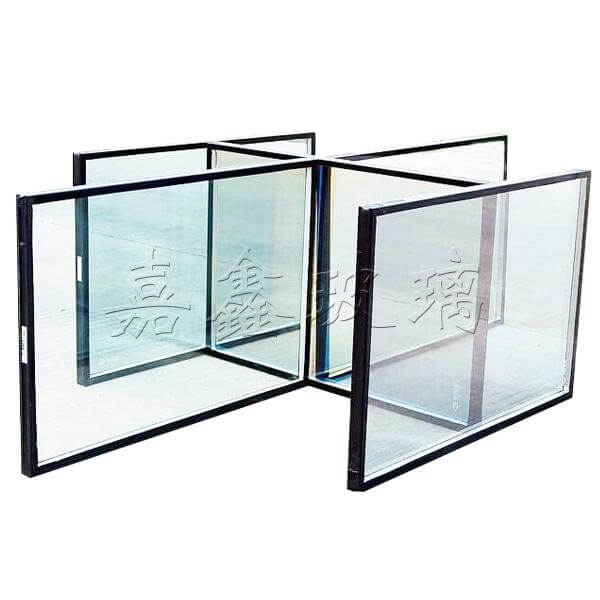
Introduction to the company's technological strength: LOW-E glass technology layout of Jiangyin Jiaxin Glass Products
Jiangyin Jiaxin Glass Products has delved deeply into the field of architectural glass deep processing, relying on its three-dimensional advantages of "technology + equipment + management" to establish a comprehensive product line covering single-silver, double-silver, and triple-silver LOW-E glass. Its technological advantages are manifested in three aspects:
STEP 1: Precise control of the coating processBy employing magnetron sputtering coating technology and adjusting the target material ratio and sputtering power, an emittance as low as 0.03 and an adjustable range of visible light transmittance from 30% to 85% are achieved, meeting the energy-saving requirements of different climatic zones. For instance, in a commercial complex project in Harbin, the double-silver LOW-E glass reduced the indoor temperature fluctuation range by 12% and heating energy consumption by 18% in winter.
STEP 2: Equipment Precision Ensures PerformanceGerman Leybold optical coating equipment has been introduced, equipped with an online film thickness monitoring system to ensure that the coating uniformity error of each glass sheet is ≤2%, thereby avoiding local heat loss caused by variations in film thickness. Measured data shows that the U-value (heat transfer coefficient) of its products in practical applications remains stable at 1.2-1.8 W/(m²·K), surpassing national standard requirements.
STEP 3: Full-process quality controlFrom raw material inspection to finished product delivery, the "three-inspection system" (self-inspection, mutual inspection, and special inspection) is implemented, with a focus on testing indicators such as glass flatness (≤0.2mm/m) and edge sealing (helium leak detection method with a leak rate ≤1×10⁻⁶ Pa·m³/s) to ensure a product lifespan of over 25 years. For more information, please visit the official website:www.jiaxinglass.com
FAQ: A Guide to Q&A Technical Selection
Q1: How to select the type of LOW-E glass based on climate zones?
A: In high-latitude cold regions (such as Northeast and North China), double-silver or triple-silver LOW-E glass is preferred. Its low emissivity (Em ≤ 0.05) can effectively reduce the outward loss of indoor heat through the glass. In low-latitude hot regions (such as South and East China), single-silver LOW-E glass can be selected to balance insulation and daylighting requirements. For example, the single-silver LOW-E glass provided by Jiangyin Jiaxin for a super high-rise project in Guangzhou reduced the summer air conditioning load by 15% while maintaining an indoor natural daylighting coefficient of ≥ 2%.
Q2: How to balance light transmittance and thermal insulation performance?
A: Visible light transmittance (VLT) is negatively correlated with the solar heat gain coefficient (SHGC), and selection should be based on the building's functional orientation. For office buildings, a scheme with VLT ≥ 65% and SHGC ≤ 0.4 is recommended to ensure sufficient natural light and reduce air conditioning loads; for residential buildings, the visible light transmittance can be appropriately reduced to 50%-60% to enhance privacy. Jiangyin Jiaxin's parametric selection tool allows input of project coordinates, orientation, and other data to automatically generate the optimal parameter combination.
Q3: How does the thickness of the hollow layer affect performance?
A: For every 12 mm increase in the thickness of the hollow layer, the heat transfer coefficient (U-value) can be reduced by approximately 0.1 W/(m²·K), but the marginal benefit diminishes after exceeding 24 mm. Jiangyin Jiaxin's standard insulating glass adopts a 12 mm + 12 mm dual-cavity structure combined with warm-edge spacers, achieving a U-value as low as 1.0 W/(m²·K), which represents a 25% improvement in energy efficiency compared to single-cavity structures.
Case Study Dissection: Application of Jiangyin Jiaxin's LOW-E Glass in Green Buildings
In 2023, Jiangyin Jiaxin provided a customized LOW-E glass solution for a LEED Gold-certified project in Suzhou. Located in the humid and hot climate region of the Yangtze River Delta, the project required thermal insulation in summer, heat preservation in winter, and ample natural lighting throughout the year. After evaluation by the technical team, double-silver LOW-E glass (VLT=70%, SHGC=0.38) paired with a 16mm insulating cavity was ultimately selected, featuring a composite structure with a low-emissivity coating facing indoors and a solar control coating facing outdoors.
STEP 1: Performance SimulationThrough WINDOW 7.7 software simulation, the U-value of this solution is 1.3 W/(m²·K) in winter and 1.5 W/(m²·K) in summer, representing a 30% improvement in energy efficiency compared to ordinary insulating glass.
STEP 2: Production Control and ManagementStrict monitoring is implemented during the production process regarding the number of coating layers (a total of 12 layers for double silver) and the gas filling concentration in the hollow layer (argon ≥ 90%). Additionally, laser interferometers are used to detect film layer stress, preventing spontaneous glass breakage caused by uneven stress.
STEP 3: Implementation EffectAfter project delivery, actual measurements showed that the indoor temperature in summer was 5-8℃ lower than the outdoor temperature, the fluctuation range of indoor temperature in winter was ≤3℃, the compliance rate of natural lighting coefficient reached 100%, and the project was awarded the title of "Jiangsu Provincial Green Building Demonstration Project."

Reference for full text summary
The selection of low-emissivity (Low-E) coated glass should center on "climate adaptability," achieving a balance between performance and cost by matching quantified parameters (emissivity, light transmittance, U-value) with scenario requirements (thermal insulation, daylighting, privacy). Leveraging magnetron sputtering coating technology, high-precision equipment, and full-process control, Jiangyin Jiaxin Glass Products provides comprehensive support for architectural projects, from parameter design to production implementation. Looking ahead, with the advancement of the "dual carbon" goals, technological optimization of Low-E glass will increasingly focus on directions such as dynamic light adjustment and photovoltaic integration. Jiangyin Jiaxin will continue to deepen its R&D investments to facilitate the green transformation of the construction industry. For more information, please visit our official website:www.jiaxinglass.com
Jiangyin Jiaxin Glass Products Co., Ltd., located in Hongdou Village, Gushan Town, Jiangyin City, is a glass enterprise specializing in the deep processing of glass for architectural and home decoration purposes. Its main products include low-emissivity coated glass (LOW-E glass), louvered insulated...
No. 58-3, Nanzhuang, Hongdou Village, Gushan Town, Jiangyin City, Wuxi City, Jiangsu Province