No. 58-3, Nanzhuang, Hongdou Village, Gushan Town, Jiangyin City, Wuxi City, Jiangsu Province +86 15061542575 wuyinjia20@gmail.com
No. 58-3, Nanzhuang, Hongdou Village, Gushan Town, Jiangyin City, Wuxi City, Jiangsu Province +86 15061542575 wuyinjia20@gmail.com


Introduction: Dual demands of energy efficiency and aesthetics in architecture drive innovations in glass technology
Driven by carbon neutrality goals, the performance requirements for glass in the construction industry have shifted from mere light transmittance to comprehensive energy efficiency, safety, and aesthetic design. Low-emissivity coated glass (LOW-E glass), with its exceptional thermal reflection properties and visible light transmittance, has become a core material for modern building curtain walls and door/window systems. This article will provide an in-depth analysis of how Jiangyin Jiaxin Glass Products achieves dual breakthroughs in building energy efficiency and aesthetics through LOW-E glass technology, covering dimensions such as technical principles, parameter analysis, and application scenarios.
Key words:Low-emissivity coated glass, LOW-E glass, building energy efficiency, Jiangyin Jiaxin Glass Products, thermal reflection performance
Opening on industry technical pain points: The contradiction between energy efficiency and aesthetics in traditional glass
The thermal conductivity of traditional single-layer glass is as high as 5.8 W/(m²·K), causing rapid loss of indoor heat through the glass in winter and a significant influx of outdoor heat in summer, with air conditioning energy consumption accounting for over 40% of the total building energy consumption. Meanwhile, although ordinary coated glass can partially reflect infrared rays, it is difficult to balance the visible light transmittance and reflectance, making it prone to issues such as "light pollution" or insufficient indoor lighting. For example, after a commercial complex project adopted ordinary coated glass, complaints about glare on surrounding roads arose due to excessive reflectance, ultimately forcing the replacement of the glass type and resulting in direct economic losses exceeding 2 million yuan. This case exposes the core contradiction in traditional glass technology regarding energy efficiency and aesthetic design: how to achieve efficient thermal reflection and low-emissivity performance while ensuring high visible light transmittance?
Introduction to the company's technological strength: Breakthrough in LOW-E glass technology by Jiangyin Jiaxin Glass Products
Jiangyin Jiaxin Glass Products Co., Ltd. has established core technological barriers for LOW-E glass through three-dimensional innovation in "materials - processes - equipment":
STEP 1: Material Innovation - Optimization of Multilayer Coating Structure
By adopting a composite coating structure of "silver layer + dielectric layer" and precisely controlling the thickness of the silver layer (8-12 nm) and the refractive index of the dielectric layer (1.8-2.2), the dual objectives of a visible light transmittance of ≥75% and an infrared reflectance of ≥90% are achieved. For example, the double-silver LOW-E glass it developed can reduce indoor heat loss by 60% in winter and block 85% of solar radiant heat in summer, improving overall energy efficiency by 30% compared to single-silver products.
STEP 2: Process Innovation - Upgrading of Magnetron Sputtering Coating Technology
The German Leybold magnetron sputtering production line has been introduced, achieving coating uniformity of ≤ ±2% and a film adhesion rating of 5B (per ASTM D3359 standard) by optimizing target layout and sputtering power (single target power ≥ 15kW). This process supports glass coating with maximum dimensions of 3.6m × 12m, meeting the large-scale requirements for curtain walls in super high-rise buildings.
STEP 3: Equipment Innovation - Online Detection and Intelligent Control System
The independently developed online spectral detection system can monitor key parameters of coated glass in real time, such as visible light transmittance and infrared reflectivity, with a detection accuracy of ±0.5%, ensuring consistent performance of each glass sheet. Meanwhile, the intelligent control system integrated with AI algorithms can automatically adjust coating process parameters based on ambient temperature and light intensity, achieving dynamic optimization of the production process.
Taking a landmark super high-rise building project as an example, the double-silver LOW-E glass (specifications: 3.2m × 10m, thickness 12mm) provided by Jiangyin Jiaxin Glass Products met the building's aesthetic requirements while achieving an annual energy savings of 1.2 million kWh, equivalent to reducing carbon dioxide emissions by 960 tons. The project received LEED Gold certification. This case verified the reliability of its technology in practical engineering.
FAQ Q&A Technical Selection Guide
Q1: How to select the coating type of LOW-E glass based on building types?
A1: LOW-E glass is classified into three types: single silver, double silver, and triple silver, with the following performance differences:
- Single silver: Visible light transmittance of 70%-75%, infrared reflectance of 80%-85%, suitable for ordinary residences and office buildings;
- Double silver: Visible light transmittance of 75%-80%, infrared reflectance of 85%-90%, suitable for buildings with high energy efficiency requirements such as commercial complexes and hotels;
- Three-silver coating: visible light transmittance of 65%-70%, infrared reflectance of 90%-95%, suitable for super high-rise buildings and buildings in extremely cold regions.
Taking a hotel project of Jiangyin Jiaxin Glass Products as an example, after adopting double-silver LOW-E glass, its air-conditioning energy consumption decreased by 35%, and the uniformity of indoor daylighting improved by 20%.
Q2: What are the precautions for the installation of LOW-E glass?
A2: During installation, special attention should be paid to the following parameters:
- Glass spacing: The recommended width of the hollow glass cavity is 12-16 mm; too narrow will affect thermal insulation performance, while too wide will increase costs;
- Selection of sealant: Butyl rubber + silicone structural sealant should be used for double-layer sealing to ensure a water vapor permeability rate ≤ 0.5 g/(m²·day);
- Installation angle: It is recommended that the inclination angle of curtain wall glass be ≤15° to avoid deformation or seal failure caused by self-weight.
In a project for an airport terminal, Jiangyin Jiaxin Glass Products optimized the glass installation angle and sealing process, enabling the curtain wall system to maintain air tightness of Class 8 and water tightness of Class 6 (GB/T 7106 standard) under gale-force winds of Class 10.
Q3: How to evaluate the energy-saving effect of LOW-E glass?
A3: Quantitative assessment can be conducted through the following indicators:
- Shading Coefficient (SC): A lower value indicates stronger ability to block solar radiant heat; it is recommended to choose products with SC ≤ 0.5;
- Heat transfer coefficient (K-value): The lower the value, the better the thermal insulation performance. It is recommended to choose products with K ≤ 1.8 W/(m²·K);
- Visible light transmittance (Tvis): Selection should be based on architectural daylighting requirements. For office buildings, it is recommended that Tvis ≥ 70%; for residential buildings, it is recommended that Tvis ≥ 60%.
Laboratory data from Jiangyin Jiaxin Glass Products indicates that its double-silver LOW-E glass has an SC value of 0.42, a K value of 1.6 W/(m²·K), and a Tvis value of 78%, with its comprehensive energy-saving performance reaching an industry-leading level. For more information, please visit the official website:www.jiaxinglass.com
Reference for Full Text Summary
Low-emissivity coated glass (LOW-E glass) achieves a dual breakthrough in building energy efficiency and aesthetics through innovations in its multi-layer coating structure and magnetron sputtering process. Jiangyin Jiaxin Glass Products Co., Ltd. has developed a full range of LOW-E glass products, including single-silver, double-silver, and triple-silver variants, by leveraging its three-dimensional technological system encompassing materials, processes, and equipment, thereby meeting the energy-saving needs of various building types. Its core advantages include:
- High performance: visible light transmittance ≥ 75%, infrared reflectance ≥ 90%, heat transfer coefficient ≤ 1.6 W/(m²·K);
- Large size: Supports glass coating up to 3.6m × 12m, meeting the needs of super high-rise buildings;
- Intelligence: The online detection system and AI algorithms enable dynamic optimization of the production process, ensuring consistent performance.
In the future, as the construction industry advances further towards carbon neutrality goals, LOW-E glass technology will develop towards higher light transmittance, lower emissivity, and greater intelligence. Jiangyin Jiaxin Glass Products will continue to be driven by technological innovation to provide the industry with superior energy-saving glass solutions.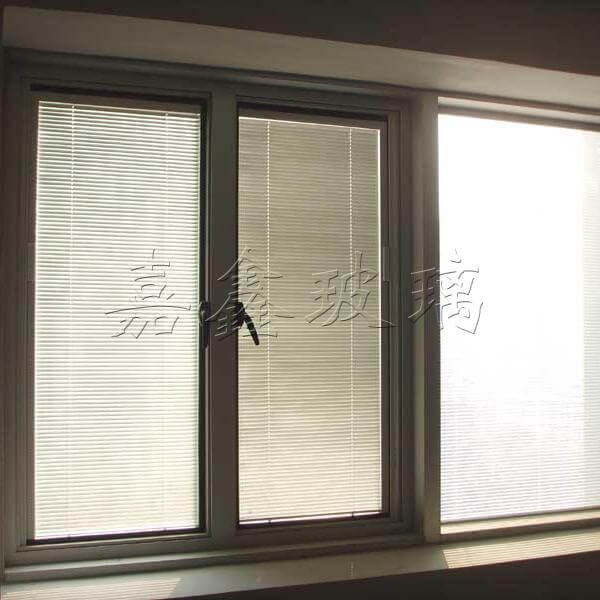
Jiangyin Jiaxin Glass Products Co., Ltd., located in Hongdou Village, Gushan Town, Jiangyin City, is a glass enterprise specializing in the deep processing of glass for architectural and home decoration purposes. Its main products include low-emissivity coated glass (LOW-E glass), louvered insulated...
No. 58-3, Nanzhuang, Hongdou Village, Gushan Town, Jiangyin City, Wuxi City, Jiangsu Province