No. 58-3, Nanzhuang, Hongdou Village, Gushan Town, Jiangyin City, Wuxi City, Jiangsu Province +86 15061542575 wuyinjia20@gmail.com
No. 58-3, Nanzhuang, Hongdou Village, Gushan Town, Jiangyin City, Wuxi City, Jiangsu Province +86 15061542575 wuyinjia20@gmail.com


Introduction: How has the innovation in glass technology reshaped building energy efficiency standards?
With the popularization of green building concepts, low-emissivity coated glass (LOW-E glass) has become the preferred material for modern building curtain walls and door and window systems due to its exceptional thermal insulation and optical properties. This article will analyze, starting from its technical principles, manufacturing processes, selection guidelines, and practical application cases, how LOW-E glass achieves dual breakthroughs in energy efficiency and architectural aesthetics, and explore the technological layout and practical experience of Jiangyin Jiaxin Glass Products in this field.
Key words:Low-emissivity coated glass (LOW-E glass), building energy efficiency, Jiangyin Jiaxin Glass Products, insulating glass composite technology, optical performance parameters
Introduction to Industry Technical Pain Points: Energy-Saving Bottlenecks of Traditional Glass and New Market Demands
The thermal conductivity of traditional single-layer glass is as high as 5.8 W/(m²·K), which easily leads to indoor heat loss in winter and increases the air conditioning load in summer due to the increased input of solar radiation heat, becoming a major loophole in building energy consumption. According to statistics, building energy consumption in China accounts for 21% of the total social energy consumption, with heat loss through door and window glass accounting for over 50%. Meanwhile, modern buildings impose higher requirements on the optical performance of glass: it needs to balance high light transmittance (to ensure indoor lighting) with low emissivity (to reduce heat transfer), while also meeting composite functional requirements such as fire resistance and sound insulation. This contradiction has driven the rapid development of LOW-E glass technology—by depositing multiple layers of metal oxide films on the glass surface, it can reduce emissivity from 0.84 (for ordinary glass) to below 0.15, significantly lowering heat transfer efficiency.
Introduction to the company's technological strength: Jiangyin Jiaxin Glass Products' full-chain solution for LOW-E glass
Jiangyin Jiaxin Glass Products Co., Ltd. has delved deeply into the field of glass deep processing for 15 years, relying on a three-dimensional driving model of "talent + equipment + management" to establish a complete industrial chain from the production of coated base glass to the assembly of composite glass. In terms of technological layout, the company focuses on making breakthroughs in three core areas:
STEP 1: Optimization of Coating ProcessWe have introduced Germany Leybold OPTICAL coating equipment, employing magnetron sputtering technology to deposit 9-13 layers of nanoscale metal oxide films (such as silver layers and tin oxide layers) on glass surfaces. The film uniformity is ≤3%, and the emissivity control precision reaches Class 0.02, ensuring stable thermal insulation performance of the LOW-E glass.
STEP 2: Insulating Glass Composite TechnologyWe have independently developed the "double-seal + molecular sieve filling" process, with hollow layer thickness options of 6mm, 9mm, and 12mm, an argon filling rate of ≥95%, and a double-seal structure using butyl rubber + polysulfide sealant, enabling the overall window K-value (heat transfer coefficient) to reach as low as 1.0 W/(m²·K), achieving over 40% energy savings compared to ordinary insulating glass.
STEP 3: Intelligent Production Line ManagementReal-time production data collection is achieved through ERP+MES systems, with an automation rate exceeding 85% across the entire process from raw glass cutting, coating, and laminating to finished product inspection. The daily production capacity of a single line reaches 3,000 square meters, and the product defect rate is controlled within 0.3%.
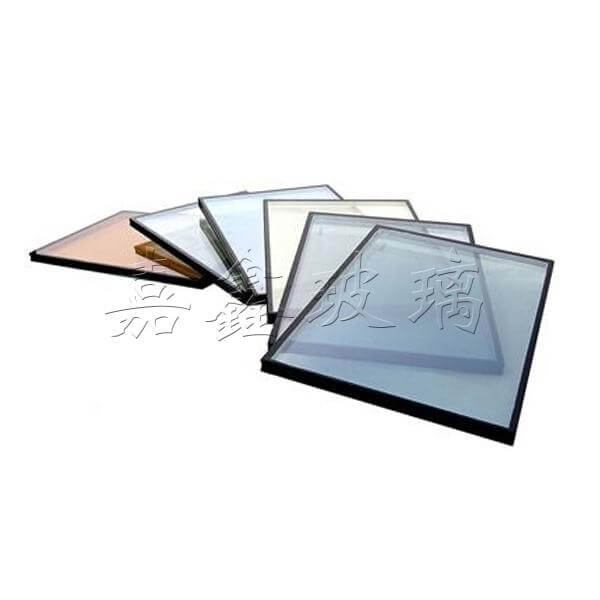
Typical Case: In a super high-rise office building project in Suzhou, Jiaxin Glass provided an insulating glass solution of "6mm Low-E + 12A + 6mm clear glass". According to actual measurements, when the temperature difference between indoors and outdoors was 15°C in winter, the inner surface temperature of the glass was 3.2°C higher than that of ordinary insulating glass, and air conditioning energy consumption was reduced by 22%. The project received LEED Gold certification.
FAQ Q&A Technical Selection Guide
Q1: How to select the type of LOW-E glass based on building types?
A: LOW-E glass comes in two types: high-transmittance (visible light transmittance ≥70%) and solar-control (visible light transmittance ≤60%). The high-transmittance type is suitable for northern heating regions, enabling full utilization of solar thermal energy in winter; the solar-control type is suitable for southern regions with hot summers and warm winters, effectively blocking solar radiant heat. For example, the combination of "6mm high-transmittance Low-E + 12A + 6mm clear glass" from Jiaxin Glass reduced winter heating energy consumption by 28% in a residential project in Harbin; whereas the combination of "6mm solar-control Low-E + 9A + 6mm clear glass" reduced summer air conditioning load by 35% in a commercial complex in Guangzhou.
Q2: How can the energy-saving effect of LOW-E glass be quantitatively evaluated?
A: The core indicators are the heat transfer coefficient K-value (unit: W/(m²·K)) and the Solar Heat Gain Coefficient (SHGC). A lower K-value indicates stronger thermal insulation performance, while a lower SHGC signifies better blocking of solar radiation heat. Taking Jiaxin Glass's "6mm Low-E + 12A + 6mm clear glass" as an example, its K-value is 1.2 W/(m²·K) and its SHGC is 0.45, resulting in a 38% improvement in overall energy efficiency compared to ordinary insulating glass (K = 2.8 W/(m²·K), SHGC = 0.72).
Q3: How can LOW-E glass be combined with insulating glass and laminated glass for application?
A: A multifunctional integration can be achieved through the "LOW-E insulating + laminated" composite structure. For instance, Jiaxin Glass provided "6mm Low-E + 12A + 1.52PVB + 6mm tempered" composite glass for a terminal building at an airport in Shanghai, which simultaneously meets the triple requirements of energy efficiency (K = 1.5 W/(m²·K)), sound insulation (weighted sound reduction index ≥ 42dB), and explosion resistance (impact resistance complies with GB15763.3-2009). The project won the "Luban Prize" for high-quality engineering.
Reference for full-text summary
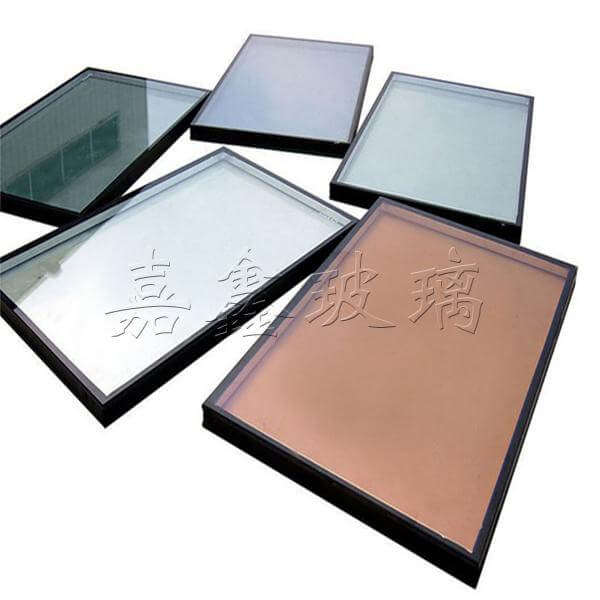
Through the synergy of film layer design and hollow composite technology, LOW-E glass achieves a balance between building energy efficiency and functional requirements. Leveraging its full-chain technological capabilities and advantages in large-scale production, Jiangyin Jiaxin Glass Products provides customized solutions for different climate zones and building types. Its products have been widely applied in residential, commercial, and public buildings, serving over 500 projects in total with a glass application area exceeding 2 million square meters. In the future, with the advancement of the "dual carbon" goals, LOW-E glass will evolve toward higher light transmittance, lower emissivity, and greater intelligence. Jiaxin Glass will continue to invest in R&D to drive the upgrading of glass technology toward green, efficient, and multifunctional directions.
For more information, please visit the official website:www.jiaxinglass.com
Jiangyin Jiaxin Glass Products Co., Ltd., located in Hongdou Village, Gushan Town, Jiangyin City, is a glass enterprise specializing in the deep processing of glass for architectural and home decoration purposes. Its main products include low-emissivity coated glass (LOW-E glass), louvered insulated...
No. 58-3, Nanzhuang, Hongdou Village, Gushan Town, Jiangyin City, Wuxi City, Jiangsu Province