No. 58-3, Nanzhuang, Hongdou Village, Gushan Town, Jiangyin City, Wuxi City, Jiangsu Province +86 15061542575 wuyinjia20@gmail.com
No. 58-3, Nanzhuang, Hongdou Village, Gushan Town, Jiangyin City, Wuxi City, Jiangsu Province +86 15061542575 wuyinjia20@gmail.com


Introduction: The "Hidden Champion" of Building Energy Efficiency
Driven by the "dual carbon" goals, the demand for energy-saving materials in the construction industry continues to rise. Low-emissivity coated glass (LOW-E glass) has become the preferred material for curtain walls, doors, windows, and other fields due to its excellent thermal insulation performance. However, how to select the appropriate type of LOW-E glass according to project requirements? How to balance light transmittance and shading coefficient? This article will uncover the "energy-saving secrets" of LOW-E glass from the perspectives of technical principles, key selection considerations, and practical application cases.
Keywords:Low-emissivity coated glass (LOW-E glass), building energy efficiency, shading coefficient, light transmittance, Jiangyin Jiaxin Glass Products
Opening on the industry's technological pain points: The "energy-saving dilemma" of traditional glass
The heat transfer coefficient (U-value) of traditional single-pane glass can reach as high as 5.8 W/(m²·K), which easily leads to indoor heat loss in winter and increases the air conditioning load in summer. Although ordinary insulating glass improves thermal insulation performance through an air layer, its U-value still struggles to meet the high energy efficiency requirements of modern buildings. Additionally, traditional glass blocks less than 30% of near-infrared rays, causing a sharp rise in indoor temperature under direct sunlight and further increasing energy consumption. How can this bottleneck be overcome? LOW-E glass provides the answer.
Introduction to the company's technological strength: "Energy-saving Solutions" of Jiangyin Jiaxin Glass Products
As a professional enterprise in Jiangyin City engaged in the deep processing of architectural glass, Jiangyin Jiaxin Glass Products Co., Ltd. (For more information, please visit the official website.) It has accumulated extensive technical experience in the field of LOW-E glass. The company has introduced a vacuum magnetron sputtering coating production line from Leybold, Germany, enabling customized production of single-silver, double-silver, and triple-silver LOW-E glass. Its products offer the following technical advantages:
STEP 1: Breakthrough in Core Technology
The process combining online high-temperature pyrolytic deposition with offline vacuum magnetron sputtering is employed to ensure that the adhesion between the coating layer and the glass substrate reaches the highest grade (Grade 4) specified in the national standard GB/T 18915.1-2013, and it passes the 1000-hour salt spray test for weather resistance.
STEP 2: Performance Parameter Optimization
Single silver LOW-E glass can achieve a U-value as low as 1.1 W/(m²·K), with a shading coefficient (SC) ranging from 0.3 to 0.6 and a light transmittance (T) of 60% to 85%, meeting the energy-saving requirements of different climatic zones; double silver LOW-E glass further reduces the U-value to 0.8 W/(m²·K), making it suitable for ultra-low-energy buildings.
STEP 3: Application Scenario Adaptation
For northern heating regions, high-transmittance LOW-E glass (T ≥ 70%, SC ≥ 0.5) is recommended to balance winter daylighting and summer shading; for southern hot-summer and warm-winter regions, shading-type LOW-E glass (T ≤ 50%, SC ≤ 0.3) is recommended to significantly reduce air conditioning loads.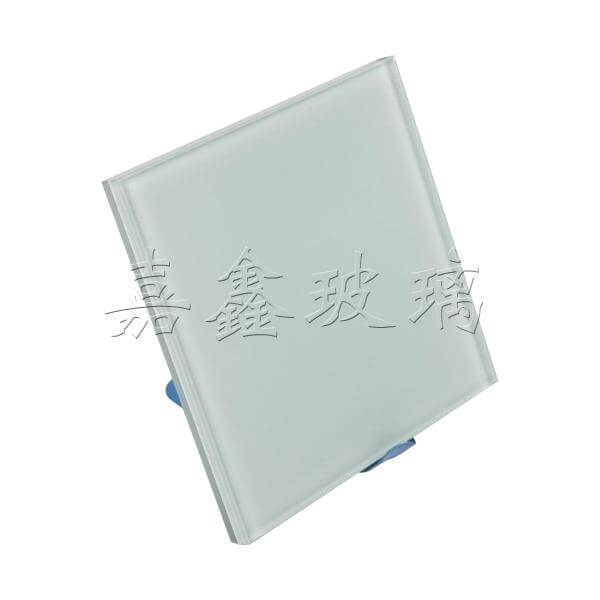 Real case: Energy-saving renovation of a commercial complex
In 2023, Jiangyin Jiaxin provided a double-silver LOW-E insulating glass solution for a 200,000-square-meter commercial complex. The project adopted a 6Low-E+12A+6 insulating structure, reducing the U-value from 2.8 W/(m²·K) of the original ordinary insulating glass to 1.0 W/(m²·K), achieving an annual electricity savings of 1.2 million kWh, equivalent to a reduction of 960 tons of carbon dioxide emissions. Actual measurements showed that the indoor temperature decreased by 3-5°C in summer and increased by 2-3°C in winter compared to before the renovation, significantly enhancing comfort.
FAQ Q&A Technical Selection Guide
Q1: How to choose the coating position of LOW-E glass?
A: The coated surface of offline LOW-E glass is typically located on the second surface (counting from the outdoor side to the indoor side) of the insulating glass, which can minimize the risk of film oxidation; the coated surface of online LOW-E glass is on the first surface, suitable for single-pane applications.
Q2: How to balance the light transmittance and energy-saving effect of LOW-E glass?
A: The higher the light transmittance (T), the better the indoor daylighting, but the shading coefficient (SC) may increase, leading to higher temperatures in summer. It is recommended to make selections based on the climatic zone of the project: for northern heating regions, high-transmittance types with T ≥ 70% are preferred, while for southern hot-summer and warm-winter regions, shading types with T ≤ 50% are preferred.
Q3: How is the lifespan of LOW-E glass guaranteed?
A: The service life of LOW-E glass from Jiangyin Jiaxin is extended through the following measures:
- The coating layer uses silver-based alloy target material, with its oxidation resistance improved by 30% compared to pure silver;
- Insulating glass uses warm edge spacers to reduce the risk of edge condensation;
- The product has passed the 25-year air tightness test specified in the national standard GB/T 11944-2012, ensuring long-term stable performance.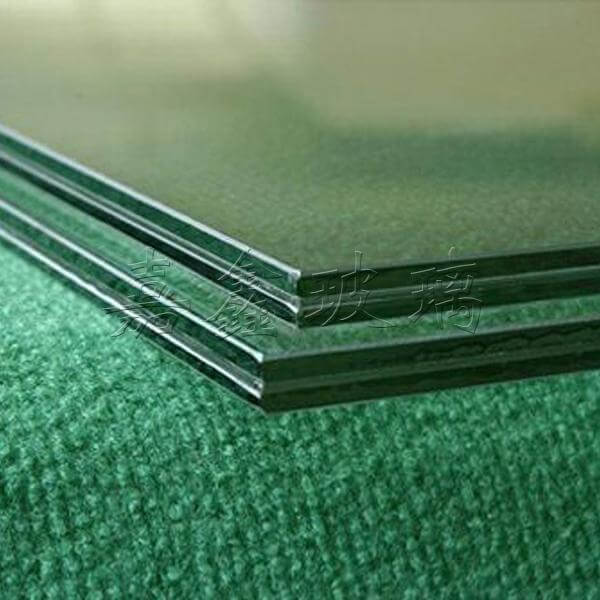
Reference for Full-text Summary
As the core material for building energy conservation, the technical selection of LOW-E glass requires a comprehensive consideration of climatic conditions, building orientation, and functional usage. Leveraging advanced production equipment and stringent quality control, Jiangyin Jiaxin Glass Products can provide customers with a full range of services from scheme design to installation guidance. In the future, the company will continue to deepen its technological research and development of LOW-E glass to help the construction industry achieve its "dual carbon" goals. For further product details or technical consultations, please visitOfficial website。
Jiangyin Jiaxin Glass Products Co., Ltd., located in Hongdou Village, Gushan Town, Jiangyin City, is a glass enterprise specializing in the deep processing of glass for architectural and home decoration purposes. Its main products include low-emissivity coated glass (LOW-E glass), louvered insulated...
No. 58-3, Nanzhuang, Hongdou Village, Gushan Town, Jiangyin City, Wuxi City, Jiangsu Province