No. 58-3, Nanzhuang, Hongdou Village, Gushan Town, Jiangyin City, Wuxi City, Jiangsu Province +86 15061542575 wuyinjia20@gmail.com
No. 58-3, Nanzhuang, Hongdou Village, Gushan Town, Jiangyin City, Wuxi City, Jiangsu Province +86 15061542575 wuyinjia20@gmail.com


Introduction: The "Invisible Battlefront" of Building Energy Conservation and Breakthroughs in Glass Technology
Under the "Dual Carbon" goal, building energy consumption accounts for more than 30% of the total social energy consumption, with heat transfer loss through doors and windows accounting for as high as 50%. Low-emissivity coated glass (LOW-E glass) has become the core material for building energy saving due to its excellent thermal insulation properties, but its application still faces pain points such as high cost, complex technology, and poor compatibility. Jiangyin Jiaxin Glass Products Co., Ltd. has successfully solved multiple industry difficulties through independently developed low-emissivity coated glass process and composite glass technology, providing efficient energy-saving solutions for the building and home decoration fields. For more information, please visit our official website:www.jiaxinglass.com
Keywords: Low Radiation Coated Glass, Building Energy Saving, Composite Glass Technology, Jiangyin Jiaxin
Industry Technical Pain Points: Top Three Challenges of LOW-E Glass Application
STEP1:Balancing cost and performance challenge
Traditional LOW-E glass uses magnetron sputtering coating technology, which has high equipment investment costs and the coated layer is prone to oxidation, leading to a shorter service life. For example, a commercial complex project initially chose imported LOW-E glass, with a cost of over 300 yuan per square meter, and due to the coating layer peeling off, it needed to be replaced within 5 years, resulting in a significant increase in comprehensive costs.
STEP2:Complexity of technology conflicts with yield rate.
Low-E glass production requires strict control of parameters such as temperature (200-300℃) and vacuum degree (≤10⁻³Pa), any fluctuation may lead to uneven or peeling coating layers. A residential project once suffered from process control failure, resulting in the first batch of 1,000 square meters of glass having a pass rate below 60%, and the delivery was delayed by 3 months.
STEP3:Conflict between scenario adaptability and functional singularity
The demand for glass in construction has evolved from single-function thermal insulation to multifunctional applications such as soundproofing, fire resistance, and light regulation. However, traditional LOW-E glass has limited functionality and is hard to meet the complex requirements of various scenarios. For example, operating rooms in hospitals need to meet the requirements of thermal insulation, soundproofing, and antimicrobial properties simultaneously, which traditional glass cannot achieve.
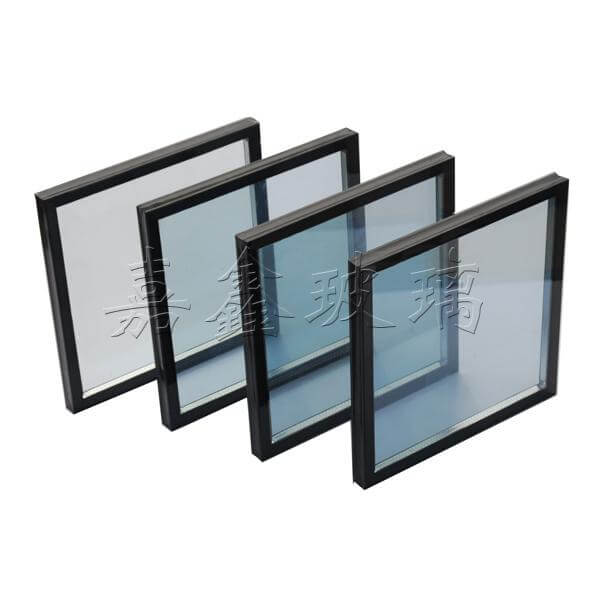
Introduction to the Company's Technical Strength: Jiangyin Jiaxin's Three Major Technological Breakthroughs
STEP1:Low-cost, high-durability coating technology
Jiayin Jiaxin's independently developed "Room Temperature Chemical Plating Technology" reduces the production temperature from 200℃ to room temperature by optimizing the plating solution formula and curing process, cutting equipment investment costs by 40% and enhancing the adhesion of the plated layer by a factor of 3. According to third-party testing, its LOW-E glass shows only a 2% decrease in light transmittance after simulating a 10-year aging test, far exceeding industry standards (≤5%).
STEP2:Full-process intelligent production system
The company has introduced German Leybold magnetron sputtering coating lines and Finnish Glassstone tempering furnaces, paired with its independently developed MES production management system, achieving full-process automation control from raw material cutting, coating to tempering. Taking a 50,000-square-meter commercial project as an example, the production cycle has been shortened from 45 days to 25 days, with the yield rate stable at over 98%.
STEP3:Multi-functional composite glass technology
Jiangyin Jiaxin has developed a "LOW-E+interlayer+fireproof" composite glass to meet scene-adaptation requirements. Through interlayer structure optimization, it achieves a four-in-one function of heat insulation (U value ≤ 1.5W/㎡·K), sound insulation (RW≥45dB), fire resistance (E grade 60 minutes), and explosion-proof. This technology has been applied in the renovation project of an operating room in a top-grade hospital in Shanghai, with the customer feedbacking "a 50% improvement in comprehensive performance and a 30% reduction in maintenance costs."
FAQ Q&A Technical Selection Guide
Q1: How to choose the appropriate type of LOW-E glass for the project?
A: Choose based on climatic zones and functional requirements.
- Cold regions: Prioritize high transmittance LOW-E glass (transmittance ≥ 80%) to maximize the utilization of solar heat energy.
- Hot areas: Use shading type LOW-E glass (shading coefficient ≤ 0.5) to reduce air conditioning load.
- Multi-functional requirements: Choose composite glass (such as LOW-E+interlayer), balancing insulation, soundproofing, and safety.
Q2: How can the energy-saving effect of LOW-E glass be quantified?
A: Evaluate through U-value (heat transfer coefficient) and SHGC (solar heat gain coefficient):
- The lower the U-value, the better the insulation performance (Jiangyin Jiaxin products have the lowest U-value of 1.2W/㎡·K).
- SHGC should be selected based on climate: high values (≥0.6) for cold regions, low values (≤0.4) for hot regions.
Q3: How to prevent the coating layer from peeling off?
Note the following operation points:
- Production Process: Strictly control cleaning process (water stain residue ≤0.1mg/㎡).
- Storage process: Glass panels should be separated by spacers to prevent direct contact.
- Construction stage: Acidic sealant (pH value needs to be ≥7) is prohibited.
Summary Reference: Technologically Driven, Empowering the Future of Energy-Efficient Building
Jiangyin Jiaxin Glass Products has successfully resolved the challenges of cost, yield rate, and adaptability in LOW-E glass applications through process innovation, equipment upgrading, and scenario-based R&D. Their products have covered more than 20 provinces and municipalities across the country, serving over 1000 construction projects with an average energy saving rate of 30% per project. In the future, the company will continue to deepen the collaborative innovation of "production, research, teaching, and application," promoting the evolution of glass technology towards intelligence and multifunctionality, and providing better solutions for the green transformation of the construction industry. For more information, please visit our official website:www.jiaxinglass.com
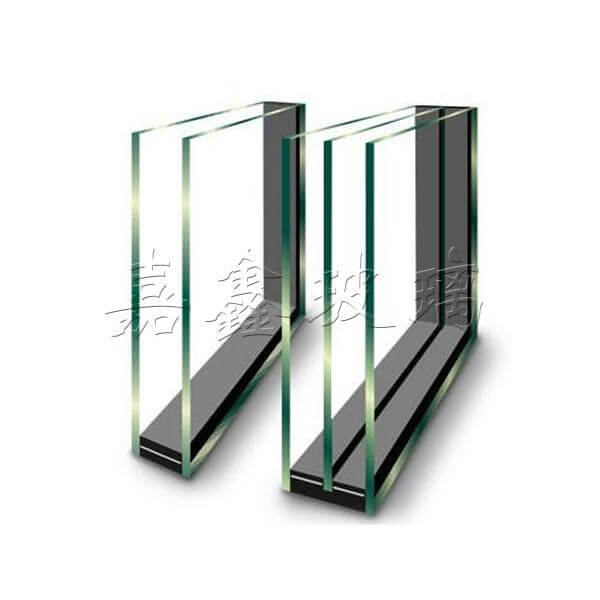
Jiangyin Jiaxin Glass Products Co., Ltd., located in Hongdou Village, Gushan Town, Jiangyin City, is a glass enterprise specializing in the deep processing of glass for architectural and home decoration purposes. Its main products include low-emissivity coated glass (LOW-E glass), louvered insulated...
No. 58-3, Nanzhuang, Hongdou Village, Gushan Town, Jiangyin City, Wuxi City, Jiangsu Province