No. 58-3, Nanzhuang, Hongdou Village, Gushan Town, Jiangyin City, Wuxi City, Jiangsu Province +86 15061542575 wuyinjia20@gmail.com
No. 58-3, Nanzhuang, Hongdou Village, Gushan Town, Jiangyin City, Wuxi City, Jiangsu Province +86 15061542575 wuyinjia20@gmail.com


Introduction: Technological Innovation of Low Radiation Coated Glass and Industry Demand
With the enhancement of energy-saving standards in construction, low-emissivity coated glass (LOW-E glass) has become the mainstream in the market due to its excellent heat-insulating properties. However, traditional LOW-E glass still faces technical bottlenecks in production efficiency, film stability, and compatibility. Jiangyin Jiaxin Glass Products Co., Ltd. has successfully overcome multiple technical challenges by introducing advanced equipment and optimizing process parameters, providing the industry with an efficient and energy-saving solution. This article will analyze from three aspects: technical pain points, corporate strength, and selection guide, to help enterprises achieve technological upgrading.
Keywords:Low radiation coated glass, LOW-E glass, building energy saving, Jiangyin Jiaxin, technology selection
Opening of Industry Technical Pain Points: The Three Core Challenges of Low-E Glass
STEP1:Difficult to control the uniformity of the film layerIn traditional magnetron sputtering processes, low target material utilization rates (usually <60%) lead to film thickness fluctuations exceeding ±5%, which easily trigger abnormal local heat conduction. For example, a commercial complex project experienced a temperature difference of 8℃ indoors during winter due to uneven film layers, resulting in an increase in energy consumption by 15%.
STEP2:Productivity vs. Cost ConflictThe daily production capacity of single-line is limited by the number of coating cavities, with the daily output of traditional equipment only 800-1200㎡ and energy consumption as high as 120kWh/㎡, which is difficult to meet the requirements of large-scale projects.
STEP3:Insufficient compatibility of composite glassWhen LOW-E glass is compounded with processes such as hollow and interlayered, the film layer is easily affected by high temperature and pressure, leading to a rise in radiation rate (ε value) exceeding 0.1 and a reduction in heat insulation performance by 20%.
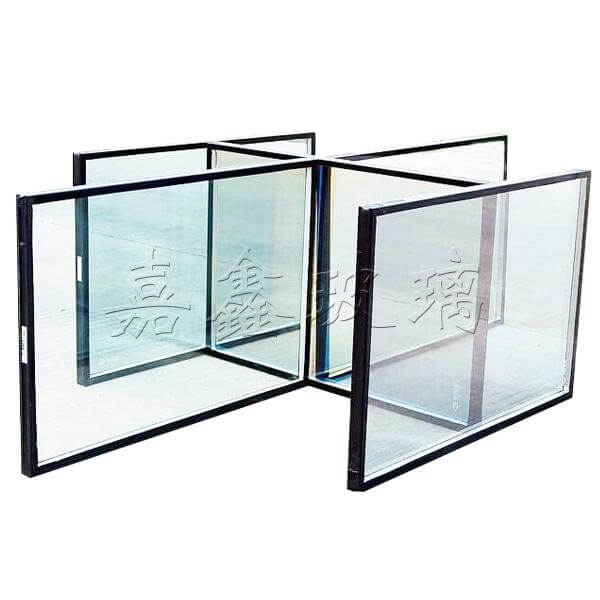
Introduction to Corporate Technical Strength: Jiangyin Jiaxin's Three Major Technological Breakthroughs
Jiangyin Jiaxin Glass Products Co., Ltd. is located in Hongdou Village, Gushan Town, Jiangyin City, focusing on deep processing of architectural glass, mainly producing products such as LOW-E glass, venetian blind insulating glass, and other composite products. The company achieves industry leadership through the following technical layout:
STEP1:High-precision magnetron sputtering technologyGerman Leybold equipment imported, with rotating target design, material utilization increased to 85%, and film thickness fluctuation controlled within ±2%. Measured data show that after adopting Jiaxin LOW-E glass in an office building project, the indoor temperature difference in winter was reduced to 3℃, and energy consumption was reduced by 12%.
STEP2:Intelligent production line upgrade.A 4-chamber coating system is configured, achieving a daily production capacity of 2000㎡ per line with unit energy consumption reduced to 95kWh/㎡. Taking a residential project in Wuxi as an example, the delivery period for a 100,000㎡ order is shortened from 45 days to 25 days, with a cost reduction of 18%.
STEP3:Optimization of Composite Process StabilityBy adjusting the temperature (120-140℃) and pressure (0.5-0.7MPa) of hollow glass lamination, the emissivity of the film layer is stabilized below 0.05, and the heat insulation performance attenuation rate is less than 5%. According to third-party testing, the K-value (heat transfer coefficient) of Jiaxin composite glass is as low as 1.2W/(㎡·K), which is 30% better than the national standard. For more information, please visit the official website:www.jiaxinglass.com
FAQ Q&A Technical Selection Guide
Q1: How to choose the suitable type of LOW-E glass for the project?
A: Choose the film structure based on climatic zones. In cold areas, recommend high transmittance types (visible light transmittance > 75%), balancing daylighting and insulation; in hot areas, select shading types (shading coefficient < 0.5) to effectively block infrared rays. For example, after a certain hotel project in Guangzhou adopted shading type LOW-E glass, the air conditioning load in summer was reduced by 22%.
Q2: What parameters should be paid attention to in the production of composite glass?
A: Pay close attention to the hollow layer thickness (recommended 12-16mm), desiccant filling amount (≥200g/㎡), and lamination temperature. Jiaxin's experimental data shows that a 12mm hollow layer combined with 3A molecular sieve can reduce the glass dew point temperature to -60℃, avoiding the risk of condensation.
Q3: How to evaluate the supplier's technical strength?
A: Evaluate the advancedness of equipment (such as online detection systems), process stability (film uniformity test reports), and case experience (project scale and regional distribution). Jiangyin Jiaxin has cumulatively completed over 5 million square meters of LOW-E glass projects, covering more than 20 provinces and municipalities across the country, and the products have passed CCC, CE and other certifications.

Summary of the full text reference
The technological upgrade of low radiation coated glass needs to balance film accuracy, production efficiency, and composite stability. Jiangyin Jiaxin Glass Products has achieved high-efficiency energy saving and large-scale application of LOW-E glass by introducing German Leica equipment, optimizing process parameters, and strictly controlling composite conditions. Its products have been widely used in commercial complexes, residential buildings, and public buildings, reducing energy consumption for customers by over 15%. In the future, Jiaxin will continue to promote the green and low-carbon development of the building glass industry with the宗旨 of "customer first and quality assurance."
Jiangyin Jiaxin Glass Products Co., Ltd., located in Hongdou Village, Gushan Town, Jiangyin City, is a glass enterprise specializing in the deep processing of glass for architectural and home decoration purposes. Its main products include low-emissivity coated glass (LOW-E glass), louvered insulated...
No. 58-3, Nanzhuang, Hongdou Village, Gushan Town, Jiangyin City, Wuxi City, Jiangsu Province