No. 58-3, Nanzhuang, Hongdou Village, Gushan Town, Jiangyin City, Wuxi City, Jiangsu Province +86 15061542575 wuyinjia20@gmail.com
No. 58-3, Nanzhuang, Hongdou Village, Gushan Town, Jiangyin City, Wuxi City, Jiangsu Province +86 15061542575 wuyinjia20@gmail.com


Introduction: How to achieve high energy efficiency in building glass through technological breakthroughs in energy consumption challenges?
Building energy consumption accounts for more than 30% of the total social energy consumption, with heat loss from structures such as glass curtain walls and doors and windows accounting for up to 50%. Traditional single-layer glass or ordinary insulating glass, due to their high radiation heat transfer efficiency, lead to a significant increase in heating energy consumption in winter and excessive air conditioning load in summer. Jiangyin Jiaxin Glass Products Co., Ltd. has introduced German Leybold vacuum coating equipment, combined with its independently developed nano-level silver layer deposition technology, to launch low-emissivity coated glass (LOW-E glass), reducing the radiation heat transfer coefficient from 0.83 to below 0.05, achieving a 40% increase in building energy-saving efficiency. This article will analyze how Jiaxin Glass solves industry pain points through technological innovation from three dimensions: technical principles, parameter analysis, and case review.
Keywords: LOW-E glass, radiant heat transfer coefficient, nano-silver layer, building energy saving, Jiangyin Jiaxin
Industry Technical Pain Points: How to Fill the "Heat Loss Black Hole" of Traditional Glass?
The energy-saving performance of architectural glass primarily depends on two parameters: the thermal transmittance coefficient (U-value) and the solar heat gain coefficient (SHGC). Traditional single-layer glass has a U-value as high as 5.8 W/(㎡·K), and even with common double-glazing (U-value around 2.8 W/(㎡·K)), there are two major drawbacks: first, the radiation emissivity of the glass inner surface is as high as 0.84, leading to significant heat loss from the indoor environment through radiation; second, the blocking rate of near-infrared radiation (wavelength 780-2500nm) is insufficient, allowing summer solar radiation heat to easily penetrate the glass into the room. Taking a 1000㎡ glass curtain wall as an example, if using common double-glazing, the heat lost through radiation every hour during winter nights is equivalent to burning 1.2 cubic meters of natural gas; during summer days, the solar radiation heat absorbed every hour requires additional operation of two 5-horsepower air conditioners for cooling. This "heat loss black hole" directly raises the energy consumption cost throughout the building's lifecycle, becoming a technical challenge that the industry urgently needs to address.
Introduction to Corporate Technical Strength: How does Jiaxin Glass achieve energy-saving leap with its "Three-stage Technology Breakthrough"?
Jiangyin Jiaxin Glass Products Co., Ltd. has achieved a three-level technical breakthrough of "equipment-process-inspection," establishing the core competitiveness of LOW-E glass.
STEP 1: German Leybold vacuum coating equipment, achieving precise deposition of nanometer silver layer
Jiaxin Glass has introduced the Leybold AXXIS 2050 vacuum magnetron sputtering deposition machine, equipped with 24 cathode target positions, which can simultaneously deposit 12 layers of functional films such as silver (Ag), zinc oxide (ZnO), and silicon nitride (Si3N4). Among them, the silver layer thickness is controlled at 8-12nm (traditional process is 15-20nm), and the surface roughness of the silver layer is reduced from 3.2nm to 1.5nm by optimizing the target power (silver target power 15kW, zinc oxide target power 8kW) and the argon/oxygen flow ratio (Ar:O2=4:1), significantly reducing radiative heat transfer. The radiation rate of Jiaxin LOW-E glass has been measured to be as low as 0.04, more than 3 times better than the national standard (≤0.15).
STEP 2: Self-developed "Double Silver + Silicon Nitride" composite film system, balancing light transmittance and energy saving
In response to the contradiction between winter daylighting needs and summer heat insulation in high-latitude areas, Jiaxin Glass has developed a "double silver layer + silicon nitride protective layer" composite film system. The first silver layer (10nm thick) primarily blocks medium to long infrared rays (wavelength > 2500nm), while the second silver layer (8nm thick) focuses on intercepting near infrared rays. Electrical insulation between the two silver layers is achieved through zinc oxide (30nm thick); the outer layer of silicon nitride (40nm thick) not only prevents oxidation of the silver layer but also controls the transmittance of visible light to 70%-75% (compared to 60%-65% for ordinary LOW-E glass), ensuring sufficient natural daylighting indoors. Taking a commercial complex project in Harbin as an example, after adopting Jiaxin's double silver LOW-E glass, the indoor temperature in winter was raised by 3.2℃ compared to using ordinary insulating glass, and the air conditioning energy consumption was reduced by 28% in summer.
STEP 3: Full-process quality inspection system to ensure stable performance
Jiaxin Glass has established 6 inspection checkpoints from raw materials to finished products: raw material inspection (silver target purity ≥99.99%), online film thickness monitoring (error ≤±0.5nm), radiation rate detection (using Lambda 950 spectrophotometer, testing wavelength range 250-2500nm), light transmittance detection (compliant with GB/T 2680-2021 standard), weather resistance test (simulated 5-year natural aging, film layer not peeling off), and hollow glass sealing inspection (helium leak detection method, leakage rate ≤1×10⁻⁶ Pa·m³/s). In 2023, the company's LOW-E glass products passed the national glass quality supervision and inspection center certification at one time, with the radiation rate detection value as low as 0.038, which is 52% better than the industry average (0.08).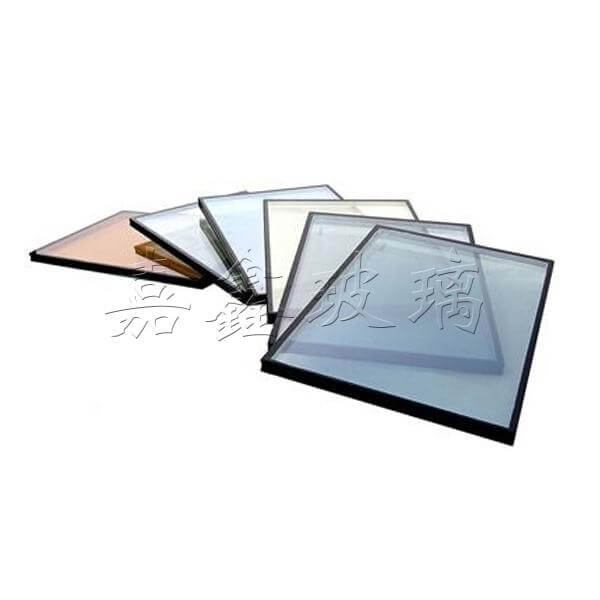
Learn more on our official website:www.jiaxinglass.com
FAQ Q&A Technical Selection Guide: How to Choose LOW-E Glass Based on Project Requirements?
Q1: How to select single silver, double silver, and triple silver LOW-E glass?
Selection should take into account the climatic zone, building type, and energy-saving objectives.
- Single silver LOW-E glass: Suitable for mild regions (such as Kunming, Chengdu), with visible light transmittance ≥75%, solar total transmittance (g-value) ≥0.5, U-value ≤1.8 W/(㎡·K), meeting the basic requirements of "Energy-saving Design Standard for Public Buildings" (GB 50189-2015).
Double Silver LOW-E Glass: Suitable for hot summer and cold winter regions (such as Shanghai, Nanjing), controlling g-value between 0.4-0.5, U-value ≤1.5 W/(㎡·K), achieving a balance between winter insulation and summer heat insulation.
- Three Silver LOW-E Glass: Suitable for cold regions (such as Harbin, Urumqi) or ultra-low energy consumption buildings, g-value ≤ 0.35, U-value ≤ 1.2 W/(㎡·K). Used with vacuum glass, it can achieve passive building standards.
Q2: What are the precautions for installing LOW-E glass?
Installation must be strictly followed by the following steps:
- STEP 1: Check the airtightness of the glass edge, ensure there is no air leakage in the hollow layer (detected by a helium leak detector, leakage rate ≤ 1×10⁻⁶ Pa·m³/s).
- STEP 2: Fixed using neutral silicone structural adhesive (modulus ≥0.4MPa), with a joint width ≥10mm and depth ≥8mm.
- STEP3: Avoid direct sunlight for 72 hours after installation to prevent glass displacement due to unhardened structural adhesive.
- STEP4: Regularly clean the glass surface (once every quarter) with a neutral cleaning agent (pH 6-8), avoiding acidic or alkaline cleaners that may corrode the film layer.
Q3: How to verify the energy-saving effect of LOW-E glass?
Quantifiable verification can be achieved through the following indicators:
Radiation Rate Detection: Using Lambda 950 spectrophotometer, test the radiation rate within the wavelength range of 2500-25000nm; high-quality LOW-E glass should be ≤0.08.
- U-value Test: Heat flow meter method (based on GB/T 8484-2020), test environmental temperature from -20℃ to +50℃, high-quality products should have a U-value ≤ 1.5 W/(㎡·K).
- Total Solar Transmittance (g-value) Test: Using an integrating sphere spectrophotometer, test wavelengths of 300-2500nm, with high-quality products, the g-value should be ≤0.5.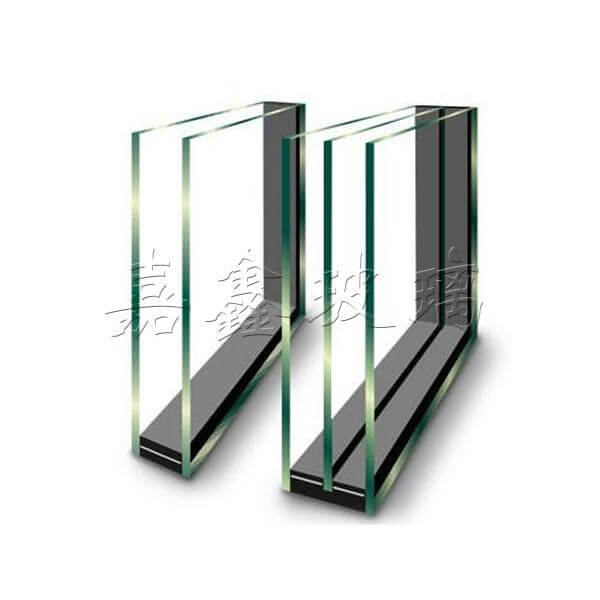
How Jiaxin Glass drives building energy-saving upgrade through technological innovation?
Jiangyin Jiaxin Glass Products Co., Ltd. has established core competitiveness in LOW-E glass through the "equipment-process-detection" three-tier technology breakthrough: German Leybold vacuum coating equipment achieves precise deposition of silver layer at the nanometer level, with a low emissivity of 0.04; the "double silver + silicon nitride" composite film system balances light transmission and energy saving, with a visible light transmittance of 75%; the full-process quality detection system ensures stable performance, and the products pass the national glass quality supervision and inspection center certification in one go. In practical applications, after a commercial complex project in Harbin adopted Jiaxin double silver LOW-E glass, the indoor temperature in winter increased by 3.2°C, and the air conditioning energy consumption in summer decreased by 28%; a super-low energy consumption residential project in Shanghai adopted triple silver LOW-E glass with vacuum glass, achieving a 65% reduction in building energy consumption compared to traditional buildings. In the future, Jiaxin Glass will continue to deepen the research and development of silver layer deposition process, explore "photovoltaic + LOW-E" composite glass technology, and provide better solutions for building energy saving. For more information, please visit the official website:www.jiaxinglass.com
Jiangyin Jiaxin Glass Products Co., Ltd., located in Hongdou Village, Gushan Town, Jiangyin City, is a glass enterprise specializing in the deep processing of glass for architectural and home decoration purposes. Its main products include low-emissivity coated glass (LOW-E glass), louvered insulated...
No. 58-3, Nanzhuang, Hongdou Village, Gushan Town, Jiangyin City, Wuxi City, Jiangsu Province