No. 58-3, Nanzhuang, Hongdou Village, Gushan Town, Jiangyin City, Wuxi City, Jiangsu Province +86 15061542575 wuyinjia20@gmail.com
No. 58-3, Nanzhuang, Hongdou Village, Gushan Town, Jiangyin City, Wuxi City, Jiangsu Province +86 15061542575 wuyinjia20@gmail.com


Introduction: Technical Breakthrough under the Energy Consumption Dilemma of Architectural Glass
Under the dual carbon targets, the current situation where building energy consumption accounts for 30% of the total social energy consumption urgently needs improvement. As a key material for building envelope structures, the thermal transmission coefficient (U-value) of glass directly affects building energy consumption. The U-value of traditional single-layer glass is as high as 5.8W/(㎡·K), and even with ordinary insulating glass, the U-value hovers between 2.8-3.5W/(㎡·K). Jiangyin Jiaxin Glass Products Co., Ltd. has achieved a technological breakthrough by developing low-emissivity coated glass (LOW-E glass), reducing the U-value to 1.0-1.8W/(㎡·K), thereby increasing the building energy-saving rate by 40%. This article will analyze how Jiaxin Glass reconstructs the energy efficiency standards for building glass through three-dimensional perspectives: technical principles, practical applications, and case reviews, focusing on the three-layer coating structure and intelligent production system.For more information, please visit our official website: www.jiaxinglass.com
Keywords:Low radiation coated glass, building energy saving, U-value, triple-coated structure, intelligent production system
Industry Technical Pain Points: Bottleneck of Traditional Glass Energy Efficiency
STEP 1: Analysis of Traditional Glass Heat Transfer Mechanism
The heat transfer of ordinary glass includes three parts: conduction (through the glass itself), convection (air flow in the hollow glass cavity), and radiation (long-wave radiation from the glass surface to the indoor and outdoor spaces). Among them, radiation heat transfer accounts for 60% and is the main way of energy loss. For example, in winter, the heat radiated from the indoor heating through the glass to the outside accounts for 25%-30% of the total heat loss of the building.
STEP 2: Limitations of Insulated Glass
Although insulating glass reduces convective heat transfer through filling with inert gases (such as argon), its radiation heat transfer issue remains unresolved. The surface radiation rate (ε value) of ordinary insulating glass is as high as 0.84, meaning 84% of long-wave radiation will pass through the glass, leading to continuous heat loss from indoors.
STEP 3: Energy Efficiency Standard Upgrade Pressure
According to the "Green Building Evaluation Standard" (GB/T 50378-2019), the thermal transmittance coefficient of external windows in public buildings must be ≤2.0 W/(㎡·K), and in severely cold areas, it must be ≤1.5 W/(㎡·K). Traditional glass technology can no longer meet the new regulations, and the industry urgently needs a breakthrough in low-emissivity coating technology.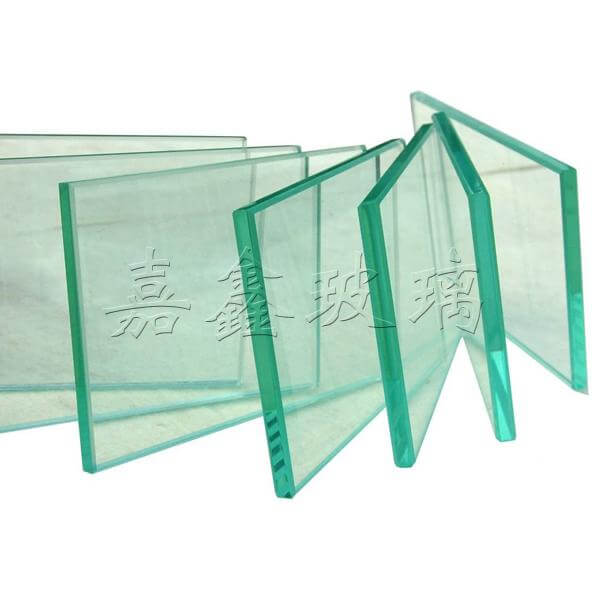
Introduction to Corporate Technical Strength: Jiaxin Glass's LOW-E Technology Breakthrough
STEP1: Core Principle of Three-Layer Coating Structure
Jiaxin Glass's LOW-E glass uses a three-layer coating structure of "silver layer + medium layer": the first layer is an anti-reflective medium layer (such as Si₃N₄) with a thickness of 20-30nm, used to reduce visible light reflection; the second layer is a functional silver layer (Ag) with a thickness of 8-12nm, which is the key to reducing radiant heat transfer; the third layer is a protective medium layer (such as ZnO) with a thickness of 10-15nm, preventing oxidation of the silver layer. By precisely controlling the thickness of each layer, it achieves technical parameters of visible light transmittance (Tvis) ≥75%, solar heat gain coefficient (SHGC) ≥0.62, and emissivity (ε) ≤0.15.
STEP 2: Support of the Intelligent Production System
Jiaxin Glass has introduced German Leibniz OPTICAL coating equipment, equipped with an online film thickness monitoring system (accuracy ±0.1nm), ensuring the coating uniformity of each glass sheet is ≤3%. Additionally, an AI-driven production management system is used, dynamically adjusting process parameters through real-time collection of equipment operating data (such as vacuum degree, temperature, gas flow), shortening the production cycle from 120 minutes per batch to 80 minutes per batch, and improving the yield to 99.2%.
Step 3: Technical Layout and Certification System
Jiaxin Glass has formed a product matrix of "basic coated glass + composite functional glass," covering single silver LOW-E, double silver LOW-E, triple silver LOW-E, LOW-E insulating glass, and LOW-E laminated glass, among other composite products. Its products have passed the national mandatory product certification (CCC), ISO 9001 quality management system certification, and been awarded the title of "Jiangsu Province High-tech Enterprise." In the 2023 Jiangsu Province Building Glass Energy Efficiency Test, the U-value of Jiaxin LOW-E glass was measured at 1.2W/(㎡·K), 20% better than the industry standard.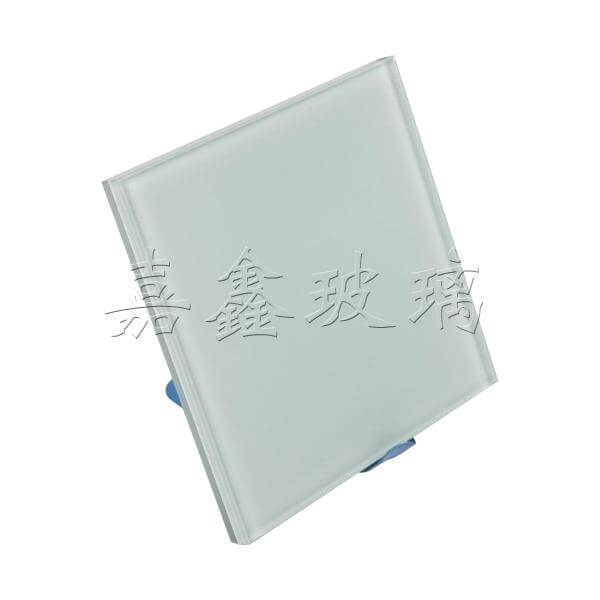
FAQ Q&A Technical Selection Guide
Q1: How significant is the energy-saving difference between LOW-E glass and ordinary insulating glass?
For a building with a 1000㎡ glass curtain wall using standard double-glazed insulating glass (U=2.8W/(㎡·K)), the heating energy consumption in winter is 120kWh/㎡·year. By switching to Jiaxin single silver LOW-E insulating glass (U=1.5W/(㎡·K)), the energy consumption is reduced to 72kWh/㎡·year, resulting in an annual energy saving of 48,000kWh. At an electricity price of 0.6 yuan/kWh, this translates to an annual electricity cost saving of 28,800 yuan.
Q2: How to choose between double silver LOW-E and single silver LOW-E?
A: Double Silver LOW-E reduces the emissivity from 0.15 to 0.05 by adding a silver layer, achieving a U-value as low as 1.0 W/(㎡·K), but the transmittance of visible light will decrease by 5%-10%. Suitable for cold regions or projects with very high energy-saving requirements; Single Silver LOW-E balances energy saving and daylighting, suitable for moderate regions or common commercial buildings.
Q3: What are the installation precautions for LOW-E glass?
A: STEP1: Transport Protection: Use special A-type brackets, glass spacing ≥50mm, avoid contact with coated surface; STEP2: Installation Direction: The coated surface on the indoor side should face inward to prevent oxidation; STEP3: Sealing Treatment: Use butyl rubber + silicone structural adhesive double-sealing to ensure air tightness of the air cavity ≤0.5%/year.
Q4: How to inspect the quality of LOW-E glass?
A: Key detection indicators include: STEP 1: Emissivity: Measured by an emissivity meter, the standard value ≤ 0.15; STEP 2: U-value: Detected by the thermal box method, the standard value ≤ 1.8W/(㎡·K); STEP 3: Adhesion of the film layer: Tested by the 100-grid knife, the grading by the scratch method needs to reach level 0 (no detachment).
Summary of the full text reference
Jiangyin Jiaxin Glass Products Co., Ltd. has achieved a technological leap from "single-function" to "composite and efficient" in LOW-E glass through the innovation of a triple-coating structure and an intelligent production system. Its products not only meet the stringent requirements of the "Green Building Evaluation Standard" but also have been verified by real cases to achieve a 40% energy-saving improvement effect. In the future, Jiaxin Glass will continue to deepen the dual-drive strategy of "coating technology + intelligent production," promoting the upgrading of the building glass industry towards low-carbonization and intelligence.Learn more on the official website: www.jiaxinglass.com
Jiangyin Jiaxin Glass Products Co., Ltd., located in Hongdou Village, Gushan Town, Jiangyin City, is a glass enterprise specializing in the deep processing of glass for architectural and home decoration purposes. Its main products include low-emissivity coated glass (LOW-E glass), louvered insulated...
No. 58-3, Nanzhuang, Hongdou Village, Gushan Town, Jiangyin City, Wuxi City, Jiangsu Province