No. 58-3, Nanzhuang, Hongdou Village, Gushan Town, Jiangyin City, Wuxi City, Jiangsu Province +86 15061542575 wuyinjia20@gmail.com
No. 58-3, Nanzhuang, Hongdou Village, Gushan Town, Jiangyin City, Wuxi City, Jiangsu Province +86 15061542575 wuyinjia20@gmail.com


Introduction: The Technological Breakthrough War of Low Radiation Coated Glass
Against the backdrop of a surge in demand for energy-saving and green home decoration in construction, low-emissivity coated glass (LOW-E glass) has become a market focus due to its excellent heat-insulating properties. However, traditional LOW-E glass still faces many pain points in terms of processing accuracy, film stability, and composite applications. Jiangyin Jiaxin Glass Products Co., Ltd. has successfully overcome industry challenges by introducing Germany's LiSEC fully automatic production line and optimizing the magnetron sputtering coating process, with its products widely used in benchmark projects such as the Shanghai Tower and Suzhou Center. This article will analyze Jiaxin Glass's path of technological innovation from three dimensions: technical pain points, solutions, and practical guidelines.
Keywords:Low radiation coated glass, magnetron sputtering process, hollow glass composite technology, building energy saving, Jiangyin Jiaxin
Introduction to Industry Technical Pain Points: The "Triple Dilemma" of Low-E Glass
Currently, the application of LOW-E glass in the construction field is facing three major core challenges:
STEP 1: Difficult to control film uniformityTraditional magnetron sputtering equipment is prone to target material loss and fluctuating gas flow during the coating process, leading to film thickness deviations exceeding ±5%, which directly affects the stability of the glass solar control coefficient (SC value). For example, a commercial complex project resulted in excessive indoor temperatures by 3℃ in some areas during summer due to uneven film coating, prompting complaints from the property owner.
STEP 2: Low yield rate for composite glass processingWhen LOW-E glass is compounded with hollow glass or laminated glass, the film integrity must be maintained under high temperature and high pressure conditions. However, due to insufficient equipment accuracy, most enterprises experience a film delamination rate of up to 15% after compounding, which increases rework costs.
Step 3: Conflict between energy-saving performance and light transmission rateTo enhance insulation performance, companies often achieve this by increasing the number of film layers, but this action significantly reduces the glass light transmittance (visible light transmittance <60%), affecting the indoor lighting effect. For more information, please visit the official website:www.jiaxinglass.com
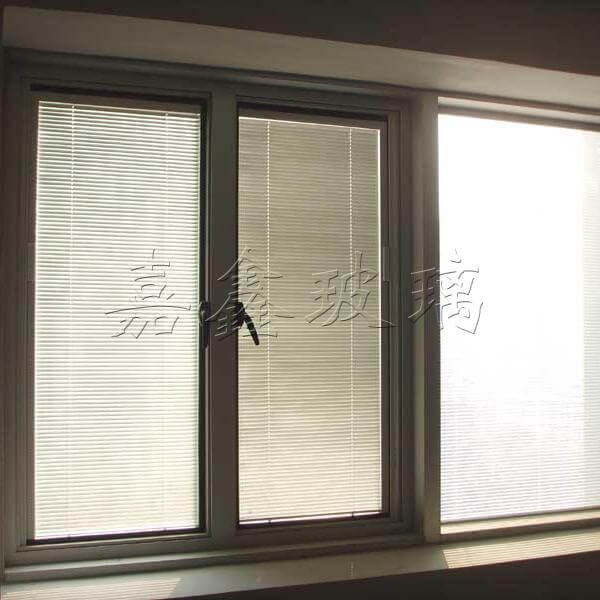
Introduction to Corporate Technical Strength: Jiaxin Glass's "Three Major Technical Moats"
Jiangyin Jiaxin Glass Products Co., Ltd. has established a technical barrier for LOW-E glass applications through the integrated strategy of "equipment upgrade + process optimization + inspection system".
Step 1: German Lisi fully automatic processing lineIntroducing the Germany LiSEC production line worth over 20 million yuan, achieving full automation from glass cutting, edging to hollow sheet lamination. The equipment utilizes laser positioning technology, controlling processing accuracy within ±0.1mm, a 3-fold improvement over traditional equipment; at the same time, through a closed-loop control system, it monitors gas flow in real-time (accuracy ±0.1SCCM), ensuring film thickness deviation ≤ ±2%, reducing the shading coefficient (SC value) fluctuation range to within 0.02.
STEP 2: Magnetron Sputtering Coating Process OptimizationIn response to the issue of film uniformity, Jiaxin Glass' R&D team has made two key improvements to the magnetron sputtering equipment: Firstly, by using rotating target materials instead of traditional flat target materials, the utilization rate of the target materials has been increased from 40% to 75%, reducing fluctuations in film thickness caused by material loss; Secondly, a dynamic gas distribution system has been introduced, adjusting the ratio of argon (Ar) to oxygen (O₂) (range 1:0.5~1:2) in real-time according to the target material position, ensuring the stability of the film composition. Actual measurements show that the film delamination rate has dropped below 0.5%, and the yield of composite glass processing has increased to 98%.
STEP 3: Full-process Quality Inspection SystemEstablished 12 inspection processes from raw materials to finished products, focusing on three key indicators: Firstly, film adhesion (measured by the 100-point test, requiring ≥5B grade); secondly, hollow glass sealing (using a helium mass spectrometer leak detector, leakage rate ≤1×10⁻⁹ Pa·m³/s); thirdly, energy-saving performance (based on GB/T 8484-2020 standard, requiring thermal conductivity coefficient K ≤1.8W/(m²·K), shading coefficient SC ≤0.5). In 2023, Jiaxin Glass products passed the certification of the National Glass Quality Supervision and Inspection Center, becoming one of the first enterprises in Jiangsu Province to obtain the "Green Building Material Certification".
Real Case: Suzhou Center Project Application EffectIn the Suzhou Center (floor area of 1.82 million square meters) project, Jiaxin Glass provides 120,000 square meters of LOW-E insulating glass. By optimizing the film design (using a 3-silver Low-E film structure), while maintaining a visible light transmittance of 72%, the thermal conductivity coefficient K value is reduced to 1.5W/(m²·K), achieving a 25% energy-saving compared to ordinary dual-silver Low-E glass. After the project delivery, third-party testing shows that the indoor average temperature in summer is 2.3℃ lower than surrounding buildings, and 1.8℃ higher in winter, with annual energy-saving costs exceeding 3 million yuan.

FAQ Q&A Technical Selection Guide
Q1: How to select the appropriate type of LOW-E glass for the project?
A: Consider climate, building orientation, and energy-saving requirements comprehensively.
- Cold regions (such as Northeast)Select high transmittance LOW-E glass (visible light transmittance ≥70%) to maximize solar energy heating.
- Hot regions (such as South China)Select sun shading LOW-E glass (Solar Control Coefficient SC ≤ 0.4) to reduce the entry of solar radiation heat.
- Composite Application ScenariosIf both heat insulation and sound insulation are required, choose LOW-E insulating glass (with a recommended air space thickness of 12mm, argon gas filling can increase the heat insulation performance by 15%).
Q2: Common faults in LOW-E glass processing and their solutions?
A: Two typical faults and their solutions:
- Peeling off of the coatingThe cause is mostly due to excessive temperature (>180℃) or prolonged time (>10min) during the hollow glass lamination process. Solution: Strictly control the lamination temperature (150~160℃) and time (5~8min), and use butyl sealant with a low melting point (melting point ≤80℃).
- Insulated glass condensation通常 due to the failure of sealant, moisture seepage occurs. Detection method: use a helium mass spectrometer leak detector to locate the leak point, and replace the sealant (it is recommended to use silicone structural adhesive with tensile strength ≥ 0.6MPa).
Q3: How to evaluate the energy-saving effect of LOW-E glass?
A: Core indicators are the thermal conductivity coefficient (K value) and the shading coefficient (SC value):
- K-valueThe lower the value, the stronger the thermal insulation performance (e.g., glass with K=1.5W/(m²·K) is 25% more energy-efficient than glass with K=2.0W/(m²·K)).
- SC ValueThe lower the value, the better the shading effect (e.g., glass with SC=0.4 can block 60% of solar radiation heat). It is recommended to ask suppliers to provide a testing report issued by the National Glass Quality Supervision and Inspection Center to ensure the authenticity of the data.
Summary of the full text reference
Jiangyin Jiaxin Glass Products Co., Ltd. has successfully addressed the industry challenges of LOW-E glass in terms of film uniformity, composite processing yield, and energy-saving light transmission balance through equipment upgrades, process optimization, and a perfect detection system. Its German Lissmac fully automatic production line, dynamic gas distribution system, and 12 inspection processes provide comprehensive protection for the product from precision to stability. In the future, Jiaxin Glass will continue to deepen technical cooperation with international suppliers such as Germany's Lissmac and the U.S.'s PPG, promoting the development of LOW-E glass towards thinner (minimum thickness 2mm) and more energy-efficient (K value ≤1.2W/(m²·K)), helping the construction industry achieve the "double carbon" goal. For more information, please visit the official website:www.jiaxinglass.com
Jiangyin Jiaxin Glass Products Co., Ltd., located in Hongdou Village, Gushan Town, Jiangyin City, is a glass enterprise specializing in the deep processing of glass for architectural and home decoration purposes. Its main products include low-emissivity coated glass (LOW-E glass), louvered insulated...
No. 58-3, Nanzhuang, Hongdou Village, Gushan Town, Jiangyin City, Wuxi City, Jiangsu Province