No. 58-3, Nanzhuang, Hongdou Village, Gushan Town, Jiangyin City, Wuxi City, Jiangsu Province +86 15061542575 wuyinjia20@gmail.com
No. 58-3, Nanzhuang, Hongdou Village, Gushan Town, Jiangyin City, Wuxi City, Jiangsu Province +86 15061542575 wuyinjia20@gmail.com


Introduction
In the field of architecture and home decoration, low-emissivity coated glass (LOW-E glass) has gradually become the mainstream choice for energy-saving glass due to its excellent heat insulation and thermal preservation properties. However, in actual applications, issues such as processing accuracy of LOW-E glass, stability of the coating layers, and compatibility of composite glass often become key pain points that hinder project implementation. This article will analyze these pain points in combination with the technical practice of Jiangyin Jiaxin Glass Products Co., Ltd., and explore their solutions.
Keywords
Low Radiation Coated Glass (LOW-E Glass), Processing Precision, Film Stability, Composite Glass, Jiangyin Jiaxin Glass Products
Industry Technical Pain Points Introduction
STEP1:Insufficient processing accuracyThe film thickness of LOW-E glass needs to be controlled at the nanometer level (usually 50-200nm). If the processing equipment's precision is insufficient, it can easily lead to uneven film thickness, affecting the thermal insulation performance. For example, a commercial complex project suffered a temperature fluctuation of ±5℃ indoors due to excessive deviation in the glass film thickness, resulting in an increase of 20% in energy consumption.
STEP2:Poor film stabilityThe film layer of LOW-E glass is susceptible to environmental humidity and temperature changes, leading to oxidation or peeling. Within one year of delivery, a residential project experienced peeling of some glass film layers, requiring a full replacement at a high cost of tens of thousands of yuan.
STEP3:Low compatibility of composite glassLow-E glass is often used in combination with hollow glass, laminated glass, etc., but the differences in expansion coefficients and thicknesses among different glasses can easily lead to deformation or seal failure after combination. A data center project suffered from leakage in the glass curtain wall due to the mismatch of composite glass, affecting the operation of the equipment.

Introduction to Corporate Technical Strength
Jiangyin Jiaxin Glass Products Co., Ltd. is located in Hongdou Village, Gushan Town, Jiangyin City, and is a professional enterprise engaged in deep processing of architectural and home decoration glass. Its technical strength is reflected in the following aspects:
STEP1:Advanced processing equipmentThe company has introduced a German LEYBOLD magnetron sputtering coating line, which can achieve LOW-E glass film thickness accuracy of ±2nm, far exceeding industry standards (±5nm). At the same time, equipped with an Italian BOTTERO fully automatic cutting machine, the cutting accuracy reaches ±0.1mm, ensuring the consistency of glass dimensions.
STEP2:Scientific Management ModelThe company adopts the ISO9001 quality management system, setting up 12 inspection processes from raw material inspection to finished product delivery. For example, the film thickness detection is conducted using a spectrophotometer, which can monitor the spectral characteristics of the film in real-time, ensuring stable thermal insulation performance.
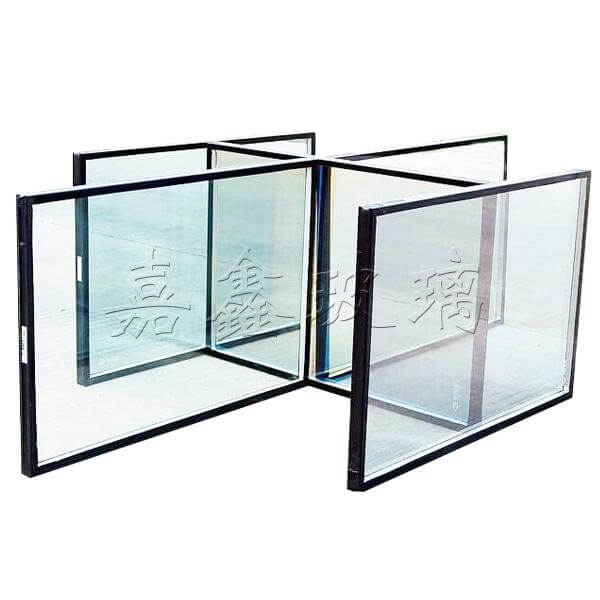
STEP3:Composite glass technology layoutFor the composite glass matching issue, the company has developed a "sandwich" structure composite process, which adds a 0.5mm thick elastic buffer layer between LOW-E glass and hollow glass to effectively absorb expansion differences and reduce deformation risks. This process has been applied to multiple commercial projects, with the deformation rate of composite glass lower than 0.1%.
STEP4:Technical Parameters and Compatibility ConditionsThe company mainly produces LOW-E glass in specifications of 3-19mm, with film types including single silver, double silver, and triple silver. The visible light transmission rate is 60%-85%, with a shading coefficient of 0.3-0.7, suitable for both cold northern regions and hot southern regions. The insulating glass is filled with argon gas at a ratio of ≥90%, enhancing the thermal insulation performance by 15%.
For more information, please visit the official website:www.jiaxinglass.com
FAQ Q&A Technical Selection Guide
Q1: How to solve the problem of Low-E glass film peeling off?
A: Delamination is mainly caused by excessive humidity in the processing environment or residue from cleaning agents. Jiangyin Jiaxin Glass uses a dust-free workshop (humidity ≤ 40%) and neutral cleaning agents, achieving a film adhesion of 5B level (no delamination in 100-point test), with a lifespan exceeding 10 years.
Q2: How to prevent composite glass leakage?
A: Water leakage is often due to the failure of sealant or glass deformation. The company uses butyl rubber + silicone sealant double-sealing, with weather resistance from -40℃ to +80℃, and reduces the risk of deformation through a "sandwich" structure, with a sealing life over 15 years.
Q3: How to choose the suitable LOW-E glass for the project?
A: Selection should be based on climate, orientation, and functional requirements. For instance, in northern heating areas, high shading coefficient (Sc≥0.6) glass is recommended to reduce heat loss; in southern heat insulation areas, low shading coefficient (Sc≤0.4) glass is advisable to block solar radiation. The company offers free technical consultation and customized solutions.
Summary of the full text reference
The application pain points of low radiation coated glass are essentially comprehensive challenges in processing accuracy, film stability, and compatibility. Jiangyin Jiaxin Glass Products Co., Ltd. provides a full-chain solution from single glass panels to composite systems through the introduction of advanced equipment, optimization of management models, and development of composite processes. Its products have been applied in scenarios such as commercial complexes, residential buildings, and data centers. Customer feedback indicates that the glass's thermal insulation performance has improved by 20%-30%, energy consumption has decreased by 15%-25%, and lifespan has been extended to over 15 years. In the future, the company will continue to uphold the principle of "customer first, quality assurance" and work with partners to promote technological upgrades in the glass industry.
Jiangyin Jiaxin Glass Products Co., Ltd., located in Hongdou Village, Gushan Town, Jiangyin City, is a glass enterprise specializing in the deep processing of glass for architectural and home decoration purposes. Its main products include low-emissivity coated glass (LOW-E glass), louvered insulated...
No. 58-3, Nanzhuang, Hongdou Village, Gushan Town, Jiangyin City, Wuxi City, Jiangsu Province