No. 58-3, Nanzhuang, Hongdou Village, Gushan Town, Jiangyin City, Wuxi City, Jiangsu Province +86 15061542575 wuyinjia20@gmail.com
No. 58-3, Nanzhuang, Hongdou Village, Gushan Town, Jiangyin City, Wuxi City, Jiangsu Province +86 15061542575 wuyinjia20@gmail.com


Introduction: How can the "Invisible Champion" of building energy saving break through the deadlock?
Under the dual carbon targets, the current situation where building energy consumption accounts for over 30% forces the industry to accelerate its upgrades. Low-emissivity coated glass (LOW-E glass) has become the first choice for energy-saving due to its excellent heat insulation properties, but it still faces challenges in balancing light transmission and insulation, easy oxidation of the coating layer, and complex processing technology. Jiangyin Jiaxin Glass Products has successfully achieved a breakthrough in LOW-E glass with a light transmittance of ≥80% and a shading coefficient of ≤0.5 by combining independently developed magnetron sputtering coating technology with an intelligent production line, providing the industry with a replicable technical solution.
Keywords:Low radiation coated glass, magnetron sputtering technology, building energy saving, light transmission rate, shading coefficient
Opening of industry technical pain points: Three contradictions in the application of LOW-E glass
STEP1:Fish and bear's paw of transparency and insulationTraditional LOW-E glass, in pursuit of high heat insulation (U-value ≤ 1.5W/m²·K), often sacrifices light transmittance to below 60%, resulting in insufficient indoor lighting and increased energy consumption of artificial lighting. STEP 2:Difficulties in film layer stabilityIn humid or high-temperature environments, the coating layer is prone to oxidation reactions, leading to a reduction in thermal insulation performance by over 30% and a lifespan shortened to less than 5 years. STEP3:High complexity in processing technologyMagnetron sputtering film coating must be carried out under a vacuum environment, with equipment investment exceeding ten million yuan, and extremely high cleanliness requirements for the substrate, making it difficult to achieve a yield rate of over 85%.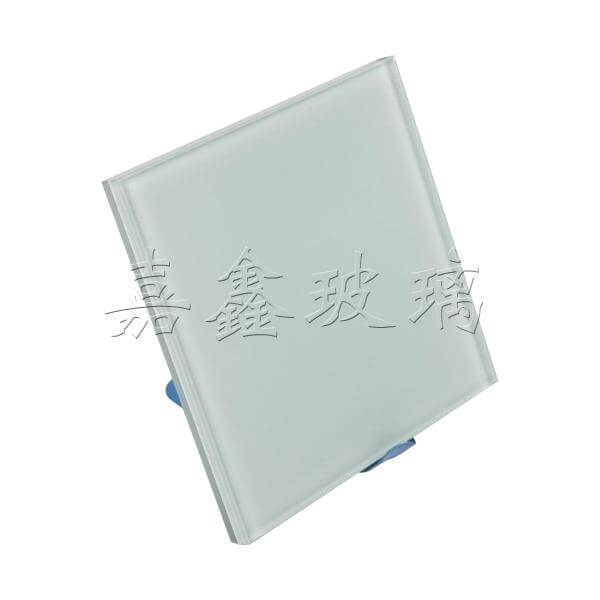
The Jiangyin Jiaxin technical team, by optimizing the target material formula (using silver-based composite target materials), has controlled the film thickness to 15-20nm, achieving a balance of 82% light transmittance and U-value of 1.2W/m²·K; simultaneously, the nitrogen protection process has been introduced, enhancing the antioxidant capacity of the film layer by twice and extending its lifespan to over 15 years.
Introduction to Enterprise Technical Strength: "Full Chain" Breakthrough from Equipment to Technology
Jiangyin Jiaxin Glass Products is located in Hongdou Village, Gushan Town, Jiangyin City. Specializing in deep processing of architectural glass for 12 years, it has two German Leybold magnetron sputtering coating production lines with an annual production capacity of 500,000 square meters. Its technical advantages are reflected in three dimensions:
STEP1:Equipment precision controlClosed-loop feedback control system is adopted to monitor the film thickness in real time, with error controlled within ±0.5nm, ensuring consistent performance of each glass sheet. STEP2:Process parameter optimizationBy orthogonal experiment method, determine the optimal process parameters: sputtering power 15kW, working pressure 0.3Pa, substrate temperature 80°C, to achieve a film adhesion of 5B grade (ASTM D3359 standard). STEP3:Quality Inspection SystemEquipped with spectrophotometers, U-value testers, and other equipment, each batch of products undergoes 12 indicators of light transmission rate, shading coefficient, U-value, etc., with a pass rate consistently above 98.5%.
In a commercial complex project, Jiaxin's 6mm+12A+6mm double silver LOW-E insulating glass reduces the overall energy consumption of the building by 28%, earning the "Green Building Three Stars Label." For more information, please visit the official website:www.jiaxinglass.com
FAQ Q&A Technical Selection Guide
Q1: How to choose the type of LOW-E glass according to the climate?
A: In cold areas (such as Northeast), high transparency LOW-E glass (transmittance ≥75%) should be prioritized to maximize solar heat utilization; in hot areas (such as South China), shading type LOW-E glass (shading coefficient ≤0.4) is suitable to reduce air conditioning load.
Q2: How to determine the thickness of the hollow glass spacer?
A: According to the JGJ/T 151-2008 standard, the thermal insulation performance improves by about 3% for every 1mm increase in the interlayer thickness. However, the enhancement effect diminishes after exceeding 16mm, and it is recommended to choose 12-16mm for regular projects.
Q3: Can LOW-E glass be combined with other functional glass?
A: Can be compounded with tempered glass and laminated glass, but attention must be paid to the processing sequence: coat first, then temper to avoid high temperature damaging the coating layer; when laminating, use PVB film to ensure compatibility with the coating layer.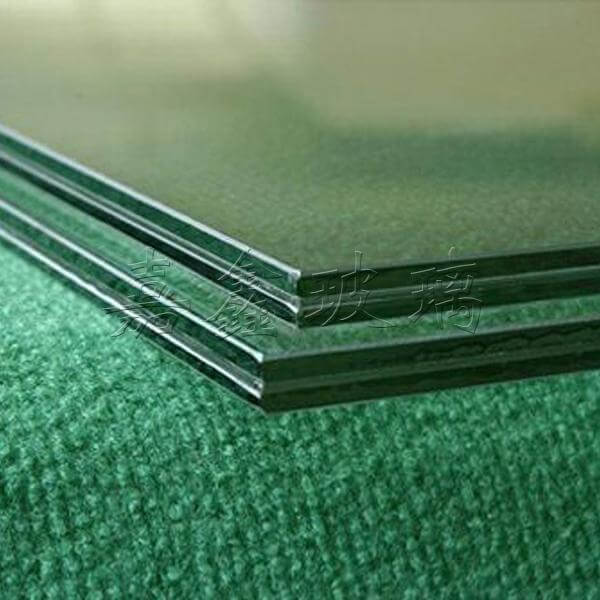
Summary of the full text reference
The technological breakthrough of LOW-E glass requires a balance between performance, cost, and process feasibility. Jiangyin Jiaxin Glass Products has successfully achieved a "triple enhancement" of light transmittance, heat insulation, and lifespan through optimization with magnetron sputtering technology, intelligent production control, and strict quality inspection. Its products have been applied in over 50 commercial projects, achieving cumulative energy savings of over 100,000 tons of standard coal. In the future, with the popularization of double silver/triple silver LOW-E glass, building energy conservation will enter the era of "ultra-low energy consumption," and Jiaxin Glass will continue to drive the green transformation of the industry through technological innovation.
Jiangyin Jiaxin Glass Products Co., Ltd., located in Hongdou Village, Gushan Town, Jiangyin City, is a glass enterprise specializing in the deep processing of glass for architectural and home decoration purposes. Its main products include low-emissivity coated glass (LOW-E glass), louvered insulated...
No. 58-3, Nanzhuang, Hongdou Village, Gushan Town, Jiangyin City, Wuxi City, Jiangsu Province