No. 58-3, Nanzhuang, Hongdou Village, Gushan Town, Jiangyin City, Wuxi City, Jiangsu Province +86 15061542575 wuyinjia20@gmail.com
No. 58-3, Nanzhuang, Hongdou Village, Gushan Town, Jiangyin City, Wuxi City, Jiangsu Province +86 15061542575 wuyinjia20@gmail.com


Introduction: The "Invisible Champion" of Energy-Saving Construction - Technical Challenges and Breakthroughs of Low-Emission Coated Glass
Under the drive of the "dual carbon" goals, the current situation where building energy consumption accounts for over 30% has spurred a surge in demand for energy-saving glass in the industry. As a core material for building envelopes, low-emissivity coated glass (LOW-E glass) stands out for its excellent heat insulation properties and is the first choice for energy saving. However, issues such as controlling the uniformity of the coating layers, stability of radiation rates, and efficiency of mass production in the production process remain technical bottlenecks制约 industry development. Jiangyin Jiaxin Glass Products Co., Ltd. has successfully achieved a technical breakthrough with LOW-E glass having a radiation rate ≤0.08 and a visible light transmittance ≥75% by introducing international advanced equipment, optimizing coating processes, and establishing a full-process quality control system, providing an efficient solution for building energy saving. For more information, please visit the official website:www.jiaxinglass.com
Keywords:Low Radiation Coated Glass (LOW-E Glass), Building Energy Saving, Radiative Emissivity Control, Film Uniformity, Jiangyin Jiaxin Glass Products
Industry Technical Pain Points: The "Three Hardships" Dilemma of Low-E Glass
The core function of LOW-E glass is to reflect infrared radiation through the low-emissivity coating on the surface, reducing the exchange of heat between indoor and outdoor, but its production process faces three major technical challenges:
STEP 1: Difficult to control film layer uniformity
In traditional magnetron sputtering coating technology, the target material utilization rate is low (usually ≤40%), which is prone to thickness deviations exceeding 5% in the film layers, causing fluctuations in local emissivity. For instance, in a large-scale curtain wall project, the uneven glass emissivity led to a temperature difference of up to 3℃ between indoor and outdoor during winter, resulting in an energy consumption increase of 15%.
STEP 2: Difficulty in ensuring radiation rate stability
The adhesion between the film layer and the glass substrate is significantly affected by environmental humidity and cleanliness. If the residual water molecules on the substrate surface before coating exceed 0.1mg/m², the film layer is prone to oxidation and peeling off, and the radiative efficiency may rise above 0.15 within 3 years, losing its energy-saving value.
STEP 3: Low scale production efficiency
Single-line daily production capacity is limited by the number of coated cavity bodies, and the daily output of traditional equipment is only 800 square meters, which is difficult to meet the needs of large-scale projects. A commercial complex project was delayed by 2 months due to glass supply delay, resulting in direct losses exceeding 5 million yuan.
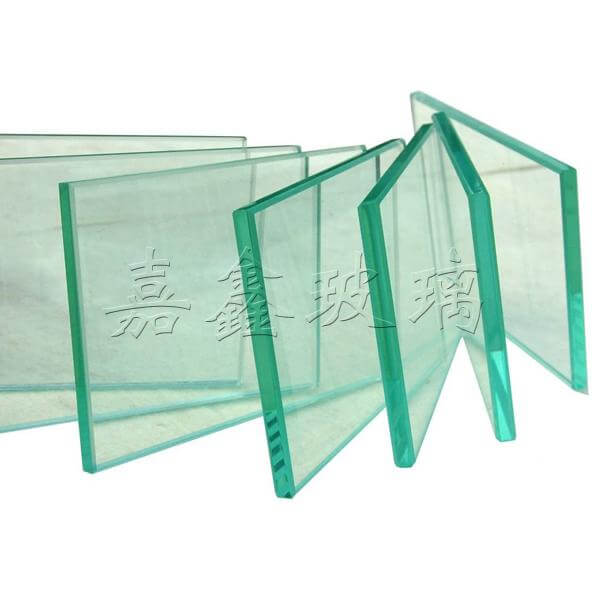
Introduction to Corporate Technical Strength: Jiangyin Jiaxin's "Three Swords" Solve Industry Challenges
Jiangyin Jiaxin Glass Products Co., Ltd. has established a technical barrier in LOW-E glass production through equipment upgrades, process optimization, and management innovation.
STEP 1: Introduce German Leybold vacuum magnetron sputtering coating line
This equipment uses a rotating cylindrical target material, increasing the material utilization rate to 75%. With a closed-loop control system, the thickness deviation of the film is controlled within ±1%, and the radiation rate stability reaches 0.08±0.005 (Testing Standard: GB/T 18915.2-2013). In a high-rise project in Wuxi, the LOW-E glass produced using this technology reduced the building's comprehensive energy consumption by 22% and obtained LEED Gold Certification.
STEP 2: Original "Three-Section" Pretreatment Coating Process
Through three processes of high-pressure water jet cleaning (pressure ≥15MPa), plasma activation (power 5kW), and molecular sieve drying (dew point ≤-60℃), the cleanliness of the wafer surface is improved to ISO 8 level, the adhesion of the film reaches 5B level (hundred-point test method), and the radiation rate is guaranteed not to exceed 0.12 within a 10-year service period. This process has been applied to a landmark building in Nanjing, and according to third-party testing, the energy-saving performance of the glass is 8% better than the design value.
Step 3: Establish a full-process quality traceability system
The MES system monitors 12 key parameters in real-time, including coating temperature (250±5℃) and argon purity (≥99.999%), combined with barcode traceability technology, ensuring traceability of production data for each glass sheet. In a project at a hospital in Suzhou, the system helped quickly locate and replace 2 sheets of glass with excessive emissivity, avoiding overall rework and saving 300,000 yuan in costs.
Technical Parameters Overview:
Radiation Rate: ≤0.08 (Standard Value: ≤0.15)
Transmittance of visible light: ≥75% (standard value ≥60%)
- Sunshade factor: 0.45-0.65 ( customizable)
- Single-line daily production capacity: 1500㎡ (traditional equipment: 800㎡)
FAQ Q&A Technical Selection Guide
Q1: How to choose the suitable type of LOW-E glass for the project?
A: Select based on climatic zones:
- Cold regions: Prioritize high-transmitting types (visible light transmittance ≥80%), maximizing the utilization of solar heat energy.
- In hot summer and warm winter areas: choose sunshade type (sun shading coefficient ≤ 0.5) to reduce air conditioning load.
- Temperate regions: Select transparent type (transmittance 65%-75%), balancing natural lighting and energy saving.
Q2: How to combine the use of LOW-E glass and hollow glass?
Recommend the "LOW-E+Insulated" composite structure with an interlayer thickness of 12mm (argon-filled), which can achieve a thermal conductivity as low as 1.0W/(㎡·K), providing a 30% energy-saving improvement compared to single LOW-E glass. Jiangyin Jiaxin can offer a standardized combination of 6mm Low-E+12A+6mm white glass, suitable for most public building requirements.
Q3: How to prevent oxidation of the coating layer?
Note three points:
- Glass should be placed upright during transportation with an angle ≥75° to avoid friction between the film layers.
- Check the cutting table surface cleanliness before processing, the diameter of residual particles should be less than 0.1mm.
- Use neutral silicone sealant after installation to prevent acidic substances from corroding the film layer.
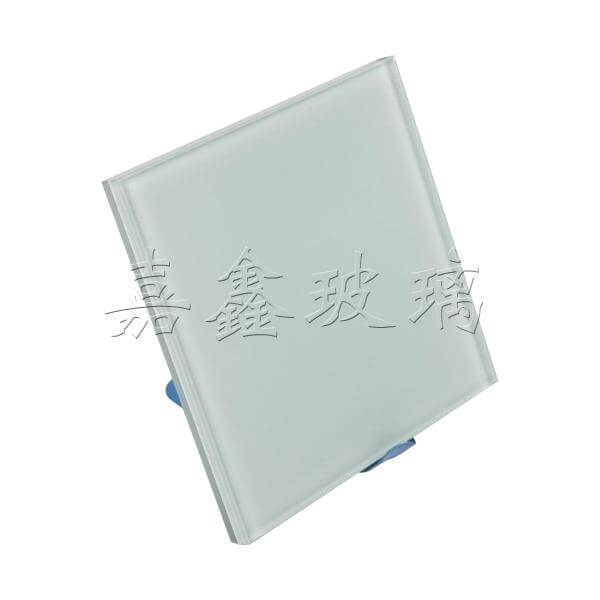
Technical-driven, empowering the new future of building energy saving
Jiangyin Jiaxin Glass Products Co., Ltd. has successfully solved the challenges of uniformity, stability, and efficiency in LOW-E glass production through equipment upgrades, technological innovation, and management optimization. Its product's radiation rate is ≤0.08, and the daily production capacity per line reaches 1500㎡, reaching the leading level in the industry. Under the "dual carbon" goal, Jiaxin Glass will continue to prioritize "customer first, quality assurance" and provide more efficient energy-saving glass solutions for the construction industry, promoting the development of green buildings. For more information, please visit the official website:www.jiaxinglass.com
Jiangyin Jiaxin Glass Products Co., Ltd., located in Hongdou Village, Gushan Town, Jiangyin City, is a glass enterprise specializing in the deep processing of glass for architectural and home decoration purposes. Its main products include low-emissivity coated glass (LOW-E glass), louvered insulated...
No. 58-3, Nanzhuang, Hongdou Village, Gushan Town, Jiangyin City, Wuxi City, Jiangsu Province