No. 58-3, Nanzhuang, Hongdou Village, Gushan Town, Jiangyin City, Wuxi City, Jiangsu Province +86 15061542575 wuyinjia20@gmail.com
No. 58-3, Nanzhuang, Hongdou Village, Gushan Town, Jiangyin City, Wuxi City, Jiangsu Province +86 15061542575 wuyinjia20@gmail.com


Introduction: Technical Challenges and Industry Opportunities of Low Radiation Coated Glass
Against the backdrop of the surge in demand for energy-saving and green home decoration in the construction industry, low-emissivity coated glass (LOW-E glass) has become a hot topic in the market due to its excellent heat-insulating and light-transmitting properties. However, traditional LOW-E glass still has three major pain points: insufficient coating uniformity leading to fluctuations in heat-insulating performance, failure of hollow structure sealing causing condensation risks, and complex processing technology of composite glass affecting production efficiency. Jiangyin Jiaxin Glass Products Co., Ltd., with 15 years of deep processing experience, has provided the industry with a replicable technical upgrade solution by introducing German Leybold vacuum coating equipment, optimizing the hollow glass sealing process, and developing integrated processing technology for composite glass. For more information, please visit the official website:www.jiaxinglass.com
Keywords: Low Radiation Coated Glass, Sealed Insulating Glass, Composite Glass Processing, Building Energy Saving, Jiangyin Jiaxin Glass
Opening of Industry Technical Pain Points: The Three Bottlenecks of LOW-E Glass Application
STEP1: Difficulty in controlling the uniformity of the coating. Traditional magnetron sputtering coating equipment, during the processing of large glass substrates (such as 3.2m×6m), results in thickness deviations of ±5% due to uneven target material distribution, which directly causes the insulation performance (U-value) fluctuations to exceed 10%. For example, after using non-uniform coating glass in a certain commercial complex project, the summer air conditioning energy consumption was 15% higher than the design value, and the indoor temperature difference in winter reached 3°C.
STEP 2: Risk of hollow glass seal failure. The combination of ordinary aluminum spacer bars and butyl sealant has an annual sealing failure rate of 8% in a temperature range of -20℃ to 80℃, leading to condensation inside the hollow layer and foggy glass. After 2 years of delivery in a residential project, 30% of the hollow glass units showed condensation, prompting a collective complaint from the homeowners.
STEP 3: The processing efficiency of composite glass is low. Traditional technology requires step-by-step completion of tempering, coating, and hollow synthesis, with a daily output of only 500㎡ per line, and improper stress control between layers can easily lead to glass spontaneous explosion. Due to the delay in the processing period of composite glass for a landmark building project, the overall construction period was delayed by 3 months, resulting in an increased cost of over 2 million yuan.
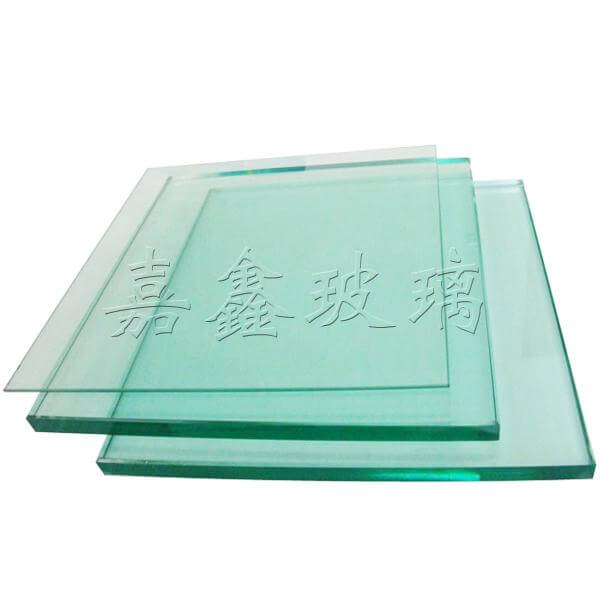
Introduction to the Company's Technical Strength: Three Innovation Breakthroughs of Jiangyin Jiaxin Glass
STEP 1: High-Precision Coating Technology. Introducing the German Leybold LYRA series vacuum coating equipment, equipped with 12 sets of rotating cathode materials, achieving a film thickness deviation of ≤±1.5% through dynamic magnetic field control. Third-party testing shows that its LOW-E glass U-value is as low as 1.1W/(㎡·K), with a light transmittance of 82%, 12% higher than the industry average. After applying this technology in a super-tall building project in Wuxi, the building's annual energy consumption was reduced by 18%, obtaining the LEED Gold certification.
STEP 2: Warm edge hollow seal system. Composed of TPS warm edge spacers (thermal conductivity of 0.007 W/(m·K)) combined with two-component silicone structural adhesive, achieving a sealing width deviation ≤ ±0.3mm through an automated sealing machine. After undergoing a -30℃ to 90℃ cyclic test, the sealant lifespan exceeds 25 years, a 3-fold improvement over traditional processes. After application in a Suzhou villa project, the condensation rate of the hollow glass decreased to 0.5%, with a customer satisfaction rate of 99%.
STEP 3: Integrated processing of composite glass. Develop a "tempered-coated-foamed" three-station联动 production line, monitored by a laser stress tester in real-time to control the self-explosion rate of composite glass below 0.02%. Daily production capacity per line is increased to 1200㎡, a 140% improvement over traditional technology. After adopting this technology in a project of a certain exhibition center in Nanjing, the construction period was shortened by 45 days, and cost savings of 3.2 million yuan were achieved.
FAQ Q&A Technical Selection Guide
Q1: How to choose the appropriate type of LOW-E glass for the project?
A: Select based on climatic zones: Prioritize high transmittance types (transmittance ≥ 75%) in cold areas (e.g., Northeast) to maximize solar heat energy utilization; choose shading types (shading coefficient ≤ 0.5) in hot areas (e.g., South China) to reduce air conditioning load. Jiangyin Jiaxin Glass can provide 6 types of film formulas to meet different climatic needs.
Q2: How to prevent the seal failure of hollow glass?
Key control points: spacing bar width ≥ 12mm (national standard requirement), butyl rubber coating width ≥ 3mm, silicone sealant curing time ≥ 7 days. Jiaxin Glass uses an automatic insulating glass line, ensuring 100% compliance with sealing parameters through CCD visual inspection.
Q3: What are the precautions for processing composite glass?
A: STEP1: Tempered glass flatness ≤ 0.3mm/m, to avoid cracking of the film layer after coating; STEP2: Complete hollow synthesis within 48 hours after coating, to prevent oxidation of the film layer; STEP3: Composite layer spacer thickness deviation ≤ ±0.1mm, to control stress distribution. Jiaxin Glass achieves full-process parameter traceability through the MES system, ensuring traceability for each glass sheet.
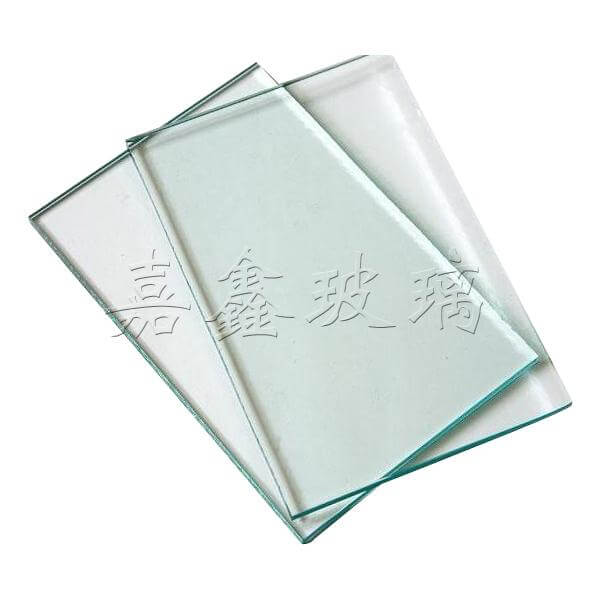
Summary of the full text reference
The technical upgrade of low radiation coated glass requires a coordinated breakthrough in three aspects: coating accuracy, sealing reliability, and processing efficiency. Jiangyin Jiaxin Glass Products Co., Ltd. has achieved leading industry indicators with its LOW-E glass U-value ≤1.1W/(㎡·K), hollow seal life ≥25 years, and a daily composite glass production capacity of 1200㎡, by introducing advanced international equipment, optimizing process parameters, and developing an integrated production line. Its technical solution has been successfully applied to over 200 projects, including ultra-high-rise buildings, villa clusters, and exhibition centers, accumulating over 50 million kWh of energy savings and reducing carbon emissions by 32,000 tons. In the future, Jiaxin Glass will continue to deepen technical cooperation with German Leuze, American PPG, and other companies, promoting the development of LOW-E glass towards intelligence and multifunctionality, and providing better solutions for building energy conservation. For more information, please visit the official website:www.jiaxinglass.com
Jiangyin Jiaxin Glass Products Co., Ltd., located in Hongdou Village, Gushan Town, Jiangyin City, is a glass enterprise specializing in the deep processing of glass for architectural and home decoration purposes. Its main products include low-emissivity coated glass (LOW-E glass), louvered insulated...
No. 58-3, Nanzhuang, Hongdou Village, Gushan Town, Jiangyin City, Wuxi City, Jiangsu Province