No. 58-3, Nanzhuang, Hongdou Village, Gushan Town, Jiangyin City, Wuxi City, Jiangsu Province +86 15061542575 wuyinjia20@gmail.com
No. 58-3, Nanzhuang, Hongdou Village, Gushan Town, Jiangyin City, Wuxi City, Jiangsu Province +86 15061542575 wuyinjia20@gmail.com


Introduction: Why does thermal insulation of architectural glass become the industry's "hard nut to crack"?
Under the dual carbon targets, the current situation where building energy consumption accounts for over 30% urgently needs improvement. Traditional glass, due to its high thermal conductivity and radiation coefficient, leads to a significant increase in air conditioning load in summer and severe heat loss through heating in winter. Statistics show that the heat transfer coefficient (U-value) of ordinary single-layer glass is as high as 5.8W/(㎡·K), and more than 40% of the total building heat loss occurs through windows in winter. How to achieve over 50% energy saving through glass technology upgrade? Jiangyin Jiaxin Glass Products' LOW-E glass technology provides a breakthrough solution for the industry.
Keywords: LOW-E glass, building energy conservation, thermal conductivity, emissivity, Jiangyin Jiaxin
Industry Technical Pain Points: The "Three Highs" Dilemma of Traditional Glass
STEP1:High thermal conductivity—— The U-value of ordinary glass is generally above 5.0W/(㎡·K), leading to rapid heat exchange between indoors and outdoors, resulting in an increase of 30%-50% in cooling energy consumption during summer.
STEP2:High radiation rate—— The radiation rate of the glass surface reaches 0.84, with significant far-infrared heat radiation loss, and the proportion of indoor heat radiating through the glass in winter exceeds 60%.
STEP3:High maintenance costs—— Traditional coated glass is prone to oxidation and peeling, with a lifespan of only 5-8 years, leading to a significant increase in the total lifecycle cost due to frequent replacement.
Real CaseAfter adopting ordinary hollow glass in a commercial complex project, the heating energy consumption in winter reaches 120 kWh/㎡, while the cooling energy consumption in summer exceeds 85 kWh/㎡, far beyond the requirements of the "Energy-saving Design Standard for Public Buildings."

Introduction to Corporate Technical Strength: Jiangyin Jiaxin's LOW-E Glass "Triple Protection"
As a professional glass deep-processing enterprise in Jiangyin City, Jiangyin Jiaxin Glass Products introduces the German Leybold vacuum magnetron sputtering production line, with an annual production capacity of 2 million square meters. Its LOW-E glass technology achieves energy-saving breakthrough through three core processes:
STEP1:Nano-coating layer—— Utilizing silver-based low radiation coating with a thickness of only 15-20nm, the radiation rate is as low as 0.05, the far infrared thermal reflection rate exceeds 90%, effectively blocking heat radiation loss.
STEP2:Double-chamber hollow structure——Glass spacing optimized to 16mm, filled with 90% argon, combined with butyl rubber + polysulfide rubber double-sealing, the thermal conductivity (U-value) as low as 1.0W/(㎡·K), saving energy by 80% compared to single glass.
STEP3:Tempered composite process——Through 695℃ high-temperature quenching treatment, the surface compressive stress of the glass exceeds 95MPa, with impact resistance improved by 5 times, suitable for complex scenarios such as curtain walls and doors and windows.
Technical ParametersJiaxin LOW-E glass has a visible light transmittance of 70%-85%, a shading coefficient Sc of 0.3-0.6, and can be customized in specifications such as 6mm+12A+6mm, 8mm+16A+8mm, etc., to meet the different climatic needs of cold northern regions and warm southern regions in winter.
On-site CaseAfter adopting Jiaxin LOW-E glass in a high-rise project in Wuxi, the winter heating energy consumption has dropped to 45kWh/㎡, the summer cooling energy consumption to 32kWh/㎡, with an annual energy saving rate of 62%, and has obtained the two-star green building certification.
FAQ Q&A Technical Selection Guide
Q1: How to distinguish LOW-E glass from ordinary coated glass?
A: Spectrophotometer detection shows that LOW-E glass reflects over 90% in the 8-14μm far infrared band, while ordinary coated glass is only 30%-50%. Jiaxin products come with third-party inspection reports, which can verify key parameters such as radiation rate and U-value.
Q2: How to select single silver, double silver, and triple silver LOW-E glass?
A: Single silver LOW-E glass (U-value ≤ 1.8W/(㎡·K)) is suitable for southern regions; dual silver (U-value ≤ 1.5W/(㎡·K)) for transitional areas; triple silver (U-value ≤ 1.0W/(㎡·K)) for northern cold regions. Jiaxin can provide customized solutions based on the climate data of the project location.
Q3: What are the precautions for installing LOW-E glass?
A: STEP1: Use a dedicated A-type frame for transportation, ensuring glass spacing ≥50mm to prevent damage to the coating layer; STEP2: Check for air leakage in the hollow layer before installation, which can be detected using a helium mass spectrometer leak detector; STEP3: Select neutral silicone sealant for sealing, with a curing time ≥7 days to ensure airtightness.
For more information, please visit the official website:www.jiaxinglass.com
Summary of the full text reference
The upgrade of building glass insulation technology requires a coordinated breakthrough in thermal conduction, thermal radiation, and structural sealing. Jiangyin Jiaxin Glass Products, through its three core technologies of nano-coating, double-chambered hollow, and tempered composite, reduces the U-value of LOW-E glass to below 1.0W/(㎡·K) and the emissivity to as low as 0.05, providing comprehensive energy-saving solutions for commercial buildings and residential projects throughout their life cycle. In the future, Jiaxin will continue to deepen technical cooperation with international suppliers such as Germany's Leuze and the US PPG, promoting the application of LOW-E glass in Building Integrated Photovoltaics (BIPV) and helping the construction industry achieve carbon peak goals.
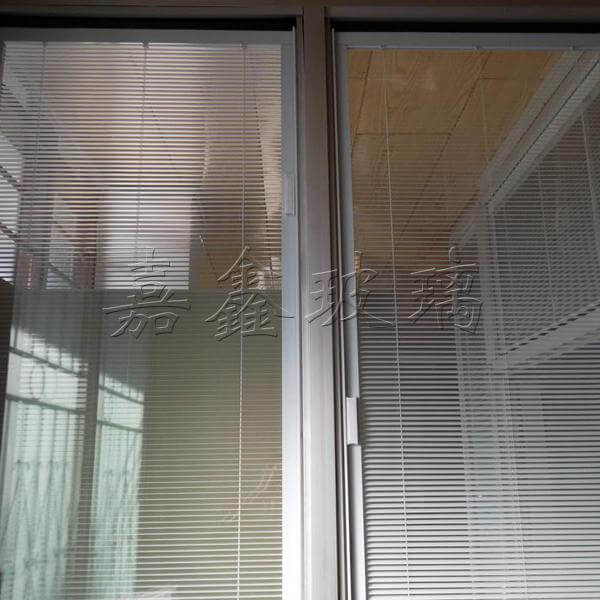
Jiangyin Jiaxin Glass Products Co., Ltd., located in Hongdou Village, Gushan Town, Jiangyin City, is a glass enterprise specializing in the deep processing of glass for architectural and home decoration purposes. Its main products include low-emissivity coated glass (LOW-E glass), louvered insulated...
No. 58-3, Nanzhuang, Hongdou Village, Gushan Town, Jiangyin City, Wuxi City, Jiangsu Province