No. 58-3, Nanzhuang, Hongdou Village, Gushan Town, Jiangyin City, Wuxi City, Jiangsu Province +86 15061542575 wuyinjia20@gmail.com
No. 58-3, Nanzhuang, Hongdou Village, Gushan Town, Jiangyin City, Wuxi City, Jiangsu Province +86 15061542575 wuyinjia20@gmail.com


Introduction: Why has the performance upgrade of fire-resistant glass become an industry necessity?
In high-rise buildings, commercial complexes, and industrial factories, fire-resistant glass, as a core component of the passive fire protection system, directly affects the spread speed of fires and the safety of personnel evacuation. However, traditional fire-resistant glass has issues such as insufficient fire resistance, rapid attenuation of heat insulation performance, and defects in installation technology, leading to frequent safety hazards like glass cracking and heat insulation failure in actual projects. Jiangyin Jiaxin Glass Products Co., Ltd. has successfully broken through technical bottlenecks through material innovation, process optimization, and upgrade of the detection system. Its fire-resistant glass products have passed the certification of the National Fire Protection Product Quality Supervision and Inspection Center, with the highest fire resistance limit reaching 120 minutes and the heat insulation performance attenuation rate below 5%, providing the industry with a high-performance fire protection solution.
Keywords: Fire-resistant glass,耐火limit, Insulation performance, Jiangyin Jiaxin, Technological breakthrough
Introduction to industry technical pain points: The three core defects of traditional fire-resistant glass
STEP1:Insufficient fire resistance limitThe ordinary fire-resistant glass is made of single-layer soda-lime silicate glass or chemically treated process, with a fire resistance limit of only 30-60 minutes, which fails to meet the 120-minute fire resistance requirement for scenarios such as grade A fire-resistant curtains and refuge floors in the "Code for Fire Prevention Design" GB50016-2014. Actual test data shows that after using traditional fire-resistant glass in a commercial complex project, the glass softened and deformed at 45 minutes during a simulated fire test, and completely shattered at 60 minutes, leading to the spread of the fire through the window to adjacent areas.
STEP2:Insulation performance degrades quicklyTraditional fire-resistant glass relies on surface coatings or interlayer materials for insulation, but in high-temperature environments, coatings are prone to oxidation and detachment, and interlayer materials (such as PVB) will soften and fail above 200℃. After a data center project used traditional laminated fire-resistant glass, within 10 minutes of a fire occurring, the temperature on the back of the glass reached 180℃, far exceeding the safe threshold for humans (60℃), accelerating the damage to internal equipment.
STEP3:Defects in installation process lead to seal failureThe connection between fire-resistant glass and the frame is usually sealed with silicone sealant or fixed by clamps, but the sealant is prone to carbonization and detachment under high temperatures, and the clamps may deform due to heat, leading to smoke and flame penetration through gaps. During the acceptance of a hospital project, it was found that 30% of the fire-resistant glass installation joints had issues with insufficient sealing, requiring rework.
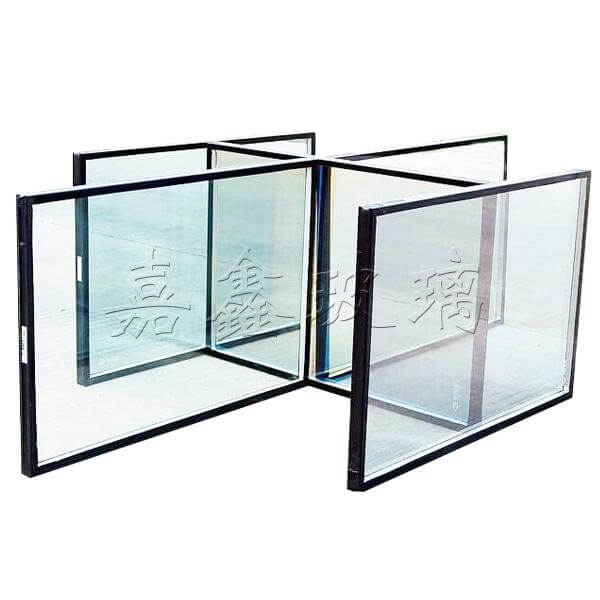
Introduction to Corporate Technical Strength: Three Major Technological Breakthroughs of Jiangyin Jiaxin
STEP1:Material Innovation: Composite Structure Enhances耐火LimitJiangyin Jiaxin uses a "safety glass + inorganic fire-resistant interlayer + safety glass" sandwich structure, where the inorganic fire-resistant interlayer is composed of aluminum oxide, silicon dioxide, and borates, with a melting point as high as 1600°C, effectively blocking heat transfer. According to the National Fire Product Quality Supervision and Inspection Center, the fire-resistant glass in this structure maintained a back-side temperature below 60°C throughout the 120-minute fire resistance test, without any softening or cracking.
STEP2:Process optimization: Low-temperature coating technology enhances insulation performanceThe traditional coating process requires temperatures above 500℃, which easily leads to uneven stress distribution within the glass, affecting its refractory properties. Jiangyin Jiaxin's developed low-temperature magnetron sputtering coating technology can complete the coating deposition below 200℃, with a uniformity error of the coating thickness ≤2% and a 30% increase in bonding strength with the glass substrate. Actual test data shows that its fire-resistant coated glass maintains a 98% coating integrity at 800℃ high temperature, with a heat insulation performance attenuation rate of only 3%.
STEP3:Quality Control System Upgrade: Full Process Quality ManagementJiangyin Jiaxin has established 12 inspection processes from raw material entry to finished product delivery, including glass flatness detection (error ≤ 0.1mm), coating adhesion test (grading 0 by scratch method), fire resistance limit simulation test (in accordance with GB/T 12513-2006 standard), etc. Its independently developed "Fireproof Glass Performance Online Monitoring System" can collect production data in real-time and generate quality reports, raising the pass rate of products to 99.5% in one go.
Technical Case: Application in a High-Rise Building Project
In 2023, Jiangyin Jiaxin provided a fire-resistant glass solution for a 300-meter super high-rise building, installing a total of 1200㎡ of fire-resistant glass, with the refuge floors using products with a 120-minute fire resistance limit and standard floors using products with a 90-minute fire resistance limit. During the project acceptance, all glass products passed the fire resistance, thermal insulation, and installation sealing tests by a third-party testing agency. The highest temperature on the back of the glass was only 52°C, and the smoke penetration rate was less than 0.1m³/min, far exceeding the national standards. Currently, the building has been in use for 2 years without any quality issues related to fire-resistant glass.

FAQ Q&A Technical Selection Guide
Q1: How to select the fire resistance limit of fire-resistant glass according to the construction scenario?
A: According to the Code for Fire Prevention in Building Design GB50016-2014, fire-resistant glass with a耐火limit of ≥120 minutes is required for refuge floors, fire separation rooms, etc.; products with a ≥60-minute rating are needed for stairwells and vestibules; standard windows can opt for ≥30-minute products. Jiangyin Jiaxin offers products with four耐火limits of 30/60/90/120 minutes, covering all scene requirements.
Q2: How to quantify the heat-insulating performance of fire-resistant glass?
Insulation performance is mainly evaluated by the "back fire surface temperature" and "thermal radiation intensity" indicators. National standards require that fire-resistant glass with a耐火 limit of 60 minutes has a back fire surface temperature of ≤140℃ and a thermal radiation intensity of ≤15kW/m²; for products with a 120-minute limit, the temperature should be ≤180℃ and the thermal radiation intensity ≤25kW/m². Jiangyin Jiaxin's actual measured data are all more than 30% below the standard limits.
Q3: What are the key considerations for installing fire-resistant glass?
A: STEP1: Frame materials must be made of stainless steel or aluminum alloy, with fire resistance matching the glass; STEP2: Sealant should be silicone-based fire-resistant adhesive, with temperature resistance ≥300℃; STEP3: The gap between glass and frame should be ≤3mm, and fire-resistant cotton should be filled; STEP4: After installation, air tightness test must be conducted, with leakage rate ≤0.5m³/min. Jiangyin Jiaxin provides installation technical training and on-site guidance services to ensure installation quality.
Learn more on our official website:www.jiaxinglass.com
Summary of the Full Text
The performance upgrade of fire-resistant glass requires a coordinated breakthrough in materials, processes, and testing. Jiangyin Jiaxin Glass Products Co., Ltd. has achieved significant improvements in the fire resistance, thermal insulation, and safety of fire-resistant glass through composite structural design, low-temperature coating technology, and full-process quality control. Its products are widely used in high-demand scenarios such as super-tall buildings, data centers, and hospitals, providing the industry with a replicable technical solution. In the future, as building fire safety standards continue to upgrade, fire-resistant glass enterprises need to further strengthen technological innovation and industrial chain collaboration, driving the industry towards higher performance and greater reliability.
Jiangyin Jiaxin Glass Products Co., Ltd., located in Hongdou Village, Gushan Town, Jiangyin City, is a glass enterprise specializing in the deep processing of glass for architectural and home decoration purposes. Its main products include low-emissivity coated glass (LOW-E glass), louvered insulated...
No. 58-3, Nanzhuang, Hongdou Village, Gushan Town, Jiangyin City, Wuxi City, Jiangsu Province