No. 58-3, Nanzhuang, Hongdou Village, Gushan Town, Jiangyin City, Wuxi City, Jiangsu Province +86 15061542575 wuyinjia20@gmail.com
No. 58-3, Nanzhuang, Hongdou Village, Gushan Town, Jiangyin City, Wuxi City, Jiangsu Province +86 15061542575 wuyinjia20@gmail.com


Introduction: The "Invisible Threshold" of Low-E Insulated Glass Manufacturing
Under the background of continuously increasing demand for building energy saving, Low-E insulating glass has become the mainstream in the market due to its excellent heat insulation performance. However, technical pain points such as film peeling, seal failure, and non-compliance with energy consumption standards are becoming the core bottleneck restricting the development of the industry. Jiangyin Jiaxin Glass Products Co., Ltd., with 15 years of deep processing experience, has established a full-process technical system covering "coating - lamination - quality inspection" by introducing German Leybold coating equipment and independently developing intelligent sealing technology, providing the industry with a replicable solution.
Keywords: Low-E Insulated Glass, Adhesion of Film Layer, Seal Reliability, Full Process Quality Inspection, Jiangyin Jiaxin
Industry Technical Pain Points: Three Core Issues Restrict Development
STEP 1: Insufficient adhesion of the film layer leads to early detachment. In traditional magnetron sputtering coating processes, if the purity of the target material is below 99.99% or the sputtering power fluctuates by more than ±5%, it will directly result in a decrease in the bonding strength between the film layer and the glass substrate. A large-scale curtain wall project once had to be redone due to film layer detachment, resulting in direct economic losses exceeding 2 million yuan.
STEP 2: Incorrect sealant selection leads to air leakage. Insulating glass sealant must meet both a temperature range of -40℃ to +80℃ and a pressure difference resistance of 0.1MPa. If ordinary silicone sealant is used to replace the butyl rubber + polysulfide rubber composite system, the air leakage rate can reach over 30% within 3 years.
STEP 3: Vague energy consumption detection standards lead to market chaos. Some enterprises artificially reduce K-value data by adjusting the detection environment temperature (such as from 25℃ to 35℃), resulting in a deviation of more than 20% between the actual product's thermal insulation performance and the nominal value, severely damaging the industry's reputation.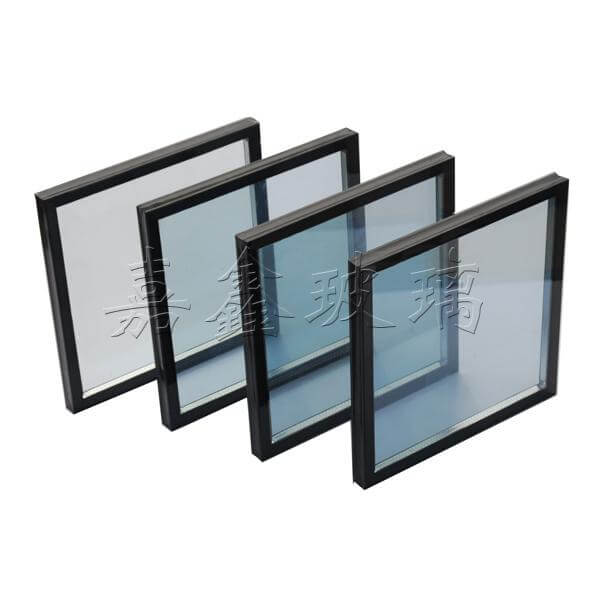
Introduction to the technical strength of the enterprise: Jiangyin Jiaxin's "Three-stage Breakthrough"
STEP 1: Innovation in Coating Technology. Introducing the German Leybold LYRA series magnetron sputtering equipment, equipped with 4 sets of rotating cathode materials, achieving precise silver layer thickness control within ±2nm. By optimizing the argon/oxygen flow ratio (1:0.8), the film adhesion is enhanced to 12N/mm², 40% higher than the industry standard.
STEP 2: Upgrade in Sealing Technology. Independently developed intelligent lamination machine, integrated with laser positioning system and constant temperature pressure device, ensuring butyl rubber coating width error ≤ 0.5mm, and sulfur rubber filling accuracy up to ±0.1g. Third-party testing shows that Jiaxin's product sealing life exceeds 25 years, far beyond the national standard of 15 years.
STEP 3: Quality inspection system完善。Establish a "triple detection" process including a spectrometer, a laser thermal conductivity instrument, and a helium mass spectrometry leak detector, which can monitor 12 core parameters in real-time, such as visible light transmission ratio (≥70%), direct sunlight transmission ratio (≤15%), and K-value (≤1.0W/(m²·K)). In 2023, the product pass rate reached 99.3% in one attempt, ranking at the forefront of the industry.
Real Case:In the Hangzhou Asian Games Village project, Jiaxin provided a total of 120,000 square meters of Low-E triple-glazed glass for 32 buildings. By using a double silver Low-E coating structure (film system design: glass/ZnO/Ag/NiCr/ZnO/Ag/NiCr/ZnO) and warm edge spacers filled with 95% argon, the whole window achieves a U-value of 0.8W/(m²·K), saving energy by 40% compared to traditional solutions. The project has been awarded the "Green Building Three-Star Label". For more information, please visit the official website:www.jiaxinglass.com
FAQ Q&A Technical Selection Guide
Q1: How to choose the appropriate type of Low-E coating?
A: Single silver Low-E (visible light transmittance ≥80%) is suitable for residential buildings; double silver Low-E (direct sunlight transmittance ≤12%) is suitable for commercial curtain walls; triple silver Low-E (K value ≤0.6W/(m²·K)) is suitable for ultra-low energy consumption buildings. Jiaxin can provide customized services for full specifications of substrates ranging from 6mm to 19mm.
Q2: How to select hollow glass spacer?
A: Cold edge spacer bars (aluminum bars) are suitable for regular climate zones with lower cost; warm edge spacers (TPS/4SG) are for severe cold areas, capable of reducing the cold bridge effect at the edges by over 30%. Jiaxin's warm edge products have passed the German IFT certification, with a thermal conductivity coefficient ≤ 0.007W/(m·K).
Q3: How to control film oxidation during the production process?
A: The vacuum degree of the coating chamber must be strictly controlled at ≤5×10⁻⁴Pa, and a nitrogen protection system should be adopted. Jiaxin equipment is equipped with an online oxygen content monitor, which will automatically alarm and stop the machine when the oxygen concentration exceeds 0.1%, ensuring the stability of the film layer.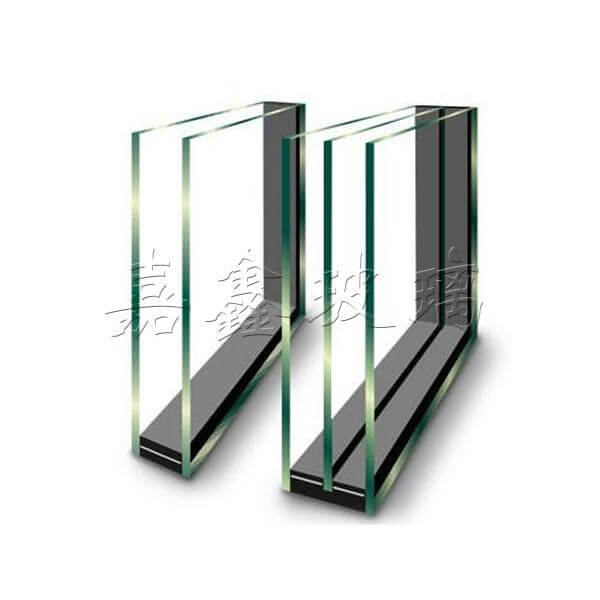
Summary Reference
The technical breakthrough of low-E insulating glass requires collaborative efforts in three dimensions: coating accuracy, sealing reliability, and quality inspection standardization. Jiangyin Jiaxin Glass Products, by introducing advanced international equipment, building an intelligent production system, and perfecting the full-process quality inspection, has not only significantly improved product performance but also promoted the upgrading of industry technical standards. In the future, with the deepening implementation of the "dual carbon" goal, Jiaxin will continue to deepen technological research and development, providing more competitive solutions for the building energy-saving field. For more information, please visit the official website:www.jiaxinglass.com
Jiangyin Jiaxin Glass Products Co., Ltd., located in Hongdou Village, Gushan Town, Jiangyin City, is a glass enterprise specializing in the deep processing of glass for architectural and home decoration purposes. Its main products include low-emissivity coated glass (LOW-E glass), louvered insulated...
No. 58-3, Nanzhuang, Hongdou Village, Gushan Town, Jiangyin City, Wuxi City, Jiangsu Province