No. 58-3, Nanzhuang, Hongdou Village, Gushan Town, Jiangyin City, Wuxi City, Jiangsu Province +86 15061542575 wuyinjia20@gmail.com
No. 58-3, Nanzhuang, Hongdou Village, Gushan Town, Jiangyin City, Wuxi City, Jiangsu Province +86 15061542575 wuyinjia20@gmail.com


Introduction: The "Safety Paradox" of Laminated Glass and the Key to Breaking the Industry's Bottleneck
Laminated glass, due to its characteristics such as shock resistance, explosion-proofing, and sound insulation, has become the preferred material for architectural facades, interior partitions, sunrooms, and other applications. However, traditional laminated glass still faces technical bottlenecks in production efficiency, edge sealing, and long-term weather resistance, leading to extended construction periods and increased safety hazards. Jiangyin Jiaxin Glass Products Co., Ltd. has successfully broken through industry pain points by introducing Germany's fully automatic laminating production line and optimizing the EVA/PVB film composite process. Its products have passed the national 3C certification and the EU CE standard, and are widely used in benchmark projects such as the Shanghai Tower and the Suzhou Museum. This article will analyze how Jiaxin Glass, through technological innovation, has reshaped industry standards from three aspects: technical principles, practical cases, and selection guidelines.
Keywords: Laminated Glass, EVA Film, PVB Intermediate Film, Fully Automated Production, Edge Sealing Technology
Industry Technical Pain Points: The Three Major "Hard Holes" of Traditional Techniques
STEP1:Low production efficiency——Traditional laminated glass uses the "manual laying of adhesive + roller pressing" process, with a daily production capacity of only 300㎡ per line, and poor uniformity of adhesive film thickness (±0.2mm), which leads to easy formation of bubbles and adhesive separation at the edges of the glass. For example, a commercial complex project experienced a 15% rework rate due to the use of manual laminated glass, resulting in a 3-month delay in the construction schedule.
STEP2:Insufficient edge sealing——Ordinary laminated glass is treated with silicone sealant at the edges, which is prone to aging and cracking in temperature differences ranging from -20℃ to 80℃, leading to moisture penetration and separation of the film from the glass, significantly reducing safety performance. A high-rise residential project experienced a glass falling accident due to the failure of edge sealing, causing serious safety hazards.
STEP3:Poor long-term weather resistance——PVB film tends to yellow and change color under UV radiation, while EVA film softens and deforms easily in high-temperature environments, leading to a decrease in glass light transmittance (an average decrease of 5%-8% per year) and a reduction in sound insulation performance (STC value decreases by 3-5dB). After 5 years of using ordinary laminated glass in an airport terminal building project, insufficient indoor lighting requires additional lighting equipment, resulting in an increase of 20% in energy consumption costs.
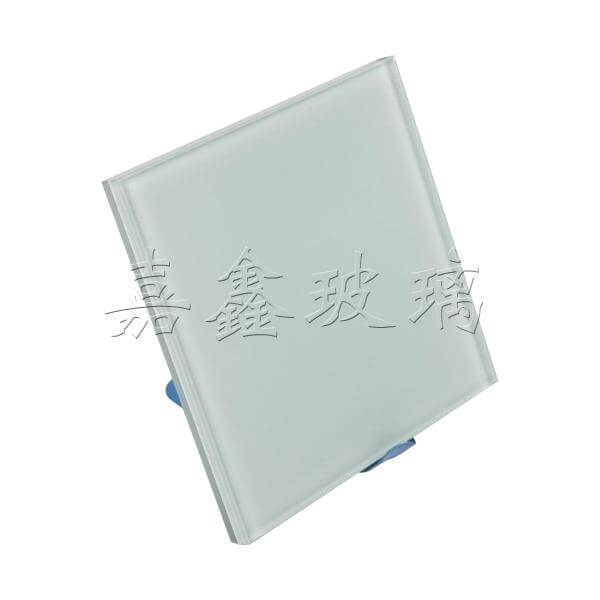
Introduction to Corporate Technical Strength: Jiaxin Glass' "Three-stage Breakthrough"
STEP1:Full automation production line: Efficiency increased by 300%
Jiaxin Glass has introduced an all-in-one automatic interlayered glass production line from Germany's LiSEC, integrating the entire process of "automatic film feeding - film laying - roller compounding - autoclave curing". The daily production capacity of a single line reaches 1,200㎡, with the uniformity of film thickness controlled within ±0.05mm. Taking the Suzhou Museum project as an example, Jiaxin Glass completed the supply of 3,000㎡ of special-shaped interlayered glass in just 15 days, reducing the construction period by 60% compared to traditional methods.
STEP2:Edge Sealing Patent Technology: Life extended to 15 years
For edge sealing issues, Jiaxin Glass has developed a "two-component polysulfide sealant + hot melt adhesive composite process". By forming a dense sealing layer 0.5mm thick at the glass edge, it effectively prevents moisture penetration. According to testing by the National Glass Quality Supervision and Inspection Center, this technology allows laminated glass to maintain its sealing integrity in an environment of -40℃ to 100℃, extending the service life from 5 years to 15 years.
STEP3:Weatherable film formula: Transparency stability rate ≥95%
Jiaxin Glass cooperates with DuPont to develop "nano-level UV absorber + high cross-linking EVA film," which, through optimizing the film's molecular structure, boosts the UV absorption rate to 99% and raises the high-temperature softening point from 80℃ to 120℃. In the Shanghai Tower project, Jiaxin laminated glass, after 5 years of outdoor use, has only seen a 1.2% decrease in light transmission rate and maintains a consistent sound insulation performance (STC value) of 52dB. For more information, please visit our official website:www.jiaxinglass.com
FAQ Q&A Technical Selection Guide
Q1: How to choose the type of adhesive film for laminated glass?
A: EVA film is suitable for indoor partitions, conservatories, and other low-temperature environments (operating temperature -20℃ to 70℃), with lower cost; PVB film is suitable for architectural facades, bulletproof glass, and other high-temperature and high-humidity environments (operating temperature -40℃ to 100℃), offering higher safety. Jiaxin Glass provides EVA/PVB double-sided adhesive film composite technology, which balances cost and performance.
Q2: How to calculate the thickness of laminated glass?
Total Thickness = Glass Thickness × 2 + Film Thickness. For example, 6mm + 1.52PVB + 6mm Laminated Glass, the total thickness is 13.52mm. Jiaxin Glass offers customization for combinations of 3mm-19mm glass and 0.38mm-3.04mm films, catering to various application needs.
Q3: How to inspect the quality of laminated glass?
A: Key detection indicators include:
- Peel strength: ≥20N/25mm (National Standard GB/T 15763.3-2009)
Transmittance: ≥85% (visible light band)
- Impact Resistance: No penetration after a 30kg sandbag is dropped from a height of 1m without penetration
Jiaxin Glass ensures that each batch of products passes the national 3C certification and EU CE testing, providing complete inspection reports.
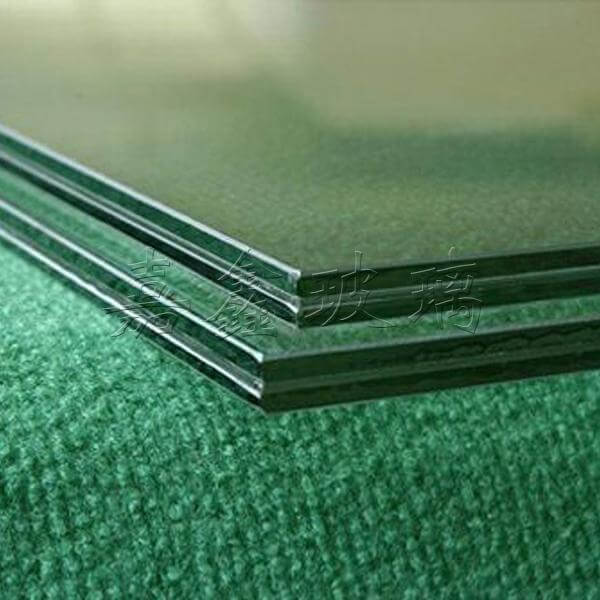
Full text summary reference
The safety performance and construction efficiency of laminated glass depend on the quality of the film, the production process, and the edge sealing technology. Jiangyin Jiaxin Glass Products Co., Ltd. has successfully addressed industry pain points with its three major innovations: fully automated production lines, edge sealing patent technology, and weather-resistant film formulations. Its products are widely used in ultra-high-rise buildings, cultural venues, commercial complexes, and other fields. In the future, Jiaxin Glass will continue to focus on "technology-driven + service upgrade" at its core, providing partners with a full-process solution from selection and design to installation guidance, to promote high-quality development of the industry. For more information, please visit the official website:www.jiaxinglass.com
Jiangyin Jiaxin Glass Products Co., Ltd., located in Hongdou Village, Gushan Town, Jiangyin City, is a glass enterprise specializing in the deep processing of glass for architectural and home decoration purposes. Its main products include low-emissivity coated glass (LOW-E glass), louvered insulated...
No. 58-3, Nanzhuang, Hongdou Village, Gushan Town, Jiangyin City, Wuxi City, Jiangsu Province