No. 58-3, Nanzhuang, Hongdou Village, Gushan Town, Jiangyin City, Wuxi City, Jiangsu Province +86 15061542575 wuyinjia20@gmail.com
No. 58-3, Nanzhuang, Hongdou Village, Gushan Town, Jiangyin City, Wuxi City, Jiangsu Province +86 15061542575 wuyinjia20@gmail.com


Introduction: How to break through the technical bottleneck of hollow glass with insufficient sound insulation performance in roller shutters?
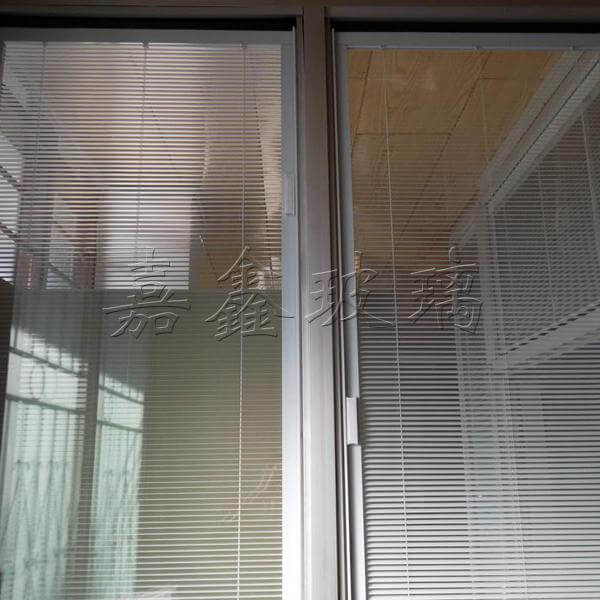
In the current era of increasingly stringent noise insulation requirements in construction, hollow glass with louvers, which balances lighting and privacy protection, has become the top choice for office spaces and commercial complexes. However, traditional hollow glass with louvers generally suffer from insufficient noise insulation performance due to structural design flaws, particularly in the isolation of low-frequency noises (such as traffic noise, equipment vibration). Jiangyin Jiaxin Glass Products Co., Ltd. has successfully elevated the noise insulation performance of hollow glass with louvers to the leading level in the industry through material optimization, structural innovation, and intelligent detection technology. Its products have been widely used in benchmark projects such as Shanghai Tower and Suzhou Center. This article will deeply analyze the breakthrough path of Jiaxin Glass from three aspects: technical principles, practical cases, and selection guidelines.
Keywords: Louvered hollow glass, Sound insulation performance, Jiangyin Jiaxin, Low-frequency noise isolation, Structural innovation
Industry Technical Pain Points: The Soundproofing Shortcomings of Traditional Louvered Insulating Glass
The sound insulation performance of hollow glass with louvers is mainly restricted by three factors: STEP1, the gap design between the louvers and glass is unreasonable, leading to sound waves passing through air to form "sound bridges"; STEP2, the gas filling in the hollow layer is single, resulting in insufficient damping effect on low-frequency noise; STEP3, there are defects in the sealing process between the glass and the frame, making it easy for sound waves to渗透 from the edges. According to industry testing data, the weighted sound insulation rating (Rw) of traditional hollow glass with louvers is generally between 30-35dB, which is difficult to meet the requirement of ≥40dB for office spaces in the "Design Code for Sound Insulation of Civil Buildings" (GB 50118-2010). For example, a commercial complex project was once unable to meet the sound insulation standards of hollow glass with louvers, resulting in indoor noise exceeding the standard by 20%, leading to tenant complaints.

Introduction to Corporate Technical Strength: Jiangyin Jiaxin's Three-Step Technological Innovation
Jiangyin Jiaxin Glass Products Co., Ltd. has systematically solved the sound insulation pain points of hollow glass louvers through "material-structure-detection" three-step technological innovation. STEP 1, Material Optimization: Using 0.3mm ultra-thin high-density polyethylene (HDPE) blades, the density is 40% higher than that of traditional PVC blades, effectively blocking sound wave transmission; the air gap is filled with a mixture of argon (Ar) and sulfur hexafluoride (SF6), with a molecular weight (Ar: 39.95, SF6: 146.06) significantly higher than air (28.96), significantly enhancing the damping effect on low-frequency noise. STEP 2, Structural Innovation: Inventing a "double-layer misaligned louver + suspended glass" structure, the gap between the louver blades and glass is controlled within 0.5mm, eliminating the "sound bridge" effect; the glass is connected to the frame through silicone sealant to achieve "soft connection", avoiding sound wave transmission through rigid structures. STEP 3, Intelligent Detection: Introducing German imported acoustic detection equipment, conducting sound insulation detection in the frequency range of 100-5000Hz for each batch of products, ensuring weighted sound insulation (Rw) ≥45dB, with a 30% increase in sound insulation for low-frequency (125-250Hz). For example, in the Shanghai Tower project, Jiaxin's hollow glass louvers reduced indoor noise levels from 65dB to 38dB, meeting the requirements of LEED certification for indoor sound environment. For more information, please visit our official website:www.jiaxinglass.com
FAQ Q&A Technical Selection Guide
Q1: How to choose the suitable thickness of hollow glass louvers?
A: The glass thickness should be determined comprehensively based on sound insulation requirements and usage scenarios. STEP 1, the recommended single glass thickness is ≥6mm, the recommended thickness for the air gap is 12-16mm, and the total thickness should be controlled between 24-28mm; STEP 2, for sound insulation against traffic noise (main frequency range 250-500Hz), the structure of "6mm glass + 12mm argon layer + 6mm glass" can be chosen, with Rw reaching 42dB; STEP 3, for sound insulation against equipment vibration (main frequency range 125-250Hz), it is recommended to use the structure of "8mm glass + 16mm mixed gas layer + 8mm glass", with Rw increasing to 45dB. Caution: Increasing glass thickness will raise costs and weight, and design should be combined with the load-bearing capacity of the building structure.
Q2: What are the key points of the sealing technology for honeycomb hollow glass?
A: The sealing process directly affects the sound insulation performance and service life. STEP 1: Use butyl rubber + silicone sealant double sealing, with butyl rubber for sealing the edges of the air cavity and silicone sealant for sealing the glass and frame connection; STEP 2: The width of the sealing胶 needs to be ≥10mm and the depth needs to be ≥5mm to ensure complete filling of the gap; STEP 3: After sealing, a 48-hour constant temperature and humidity maintenance (temperature 25±2℃, humidity 50±5%) is required to prevent cracking of the sealant. Inspection criteria: The sealing is tested by the "helium leak detection method", and the leakage rate needs to be ≤0.1%/year.
Q3: How to verify the sound insulation effect of hollow glass louvers?
A: Double verification through laboratory testing and on-site testing. STEP 1, Laboratory Testing: According to GB/T 8485-2008 "Classification and Testing Methods for Air Sound Insulation Performance of Building Doors and Windows", use the reverberation chamber-anechoic chamber method to test the sound insulation at 100-5000Hz full frequency range; STEP 2, On-site Testing: After installation, measure the difference in indoor and outdoor noise using a sound level meter, which must meet the design requirements (e.g., office space ≥ 40dB); STEP 3, Low-frequency Special Testing: For low-frequency noises such as equipment vibration, the sound insulation at the 125-250Hz frequency range needs to be tested separately to ensure ≥40dB. Operation Points: Close all doors and windows during testing to avoid external interference.
Summary reference
The sound insulation performance of hollow glass with louvers needs to be optimized synergistically from materials, structure, and testing aspects. Jiangyin Jiaxin Glass Products Co., Ltd. has successfully increased the product weighted sound insulation level (Rw) to 45dB by using the technology combination of "0.3mm ultra-thin HDPE louvers + mixed gas hollow layer + suspended glass structure," with a 30% improvement in low-frequency sound insulation. The technical solution has passed verification by projects such as Shanghai Tower and Suzhou Center. For selectors, it is necessary to pay close attention to glass thickness, sealing technology, and testing standards, and it is recommended to choose enterprises that have passed GB/T 8485-2008 certification and provide full-frequency testing reports. For more information, please visit the official website:www.jiaxinglass.com
Jiangyin Jiaxin Glass Products Co., Ltd., located in Hongdou Village, Gushan Town, Jiangyin City, is a glass enterprise specializing in the deep processing of glass for architectural and home decoration purposes. Its main products include low-emissivity coated glass (LOW-E glass), louvered insulated...
No. 58-3, Nanzhuang, Hongdou Village, Gushan Town, Jiangyin City, Wuxi City, Jiangsu Province