No. 58-3, Nanzhuang, Hongdou Village, Gushan Town, Jiangyin City, Wuxi City, Jiangsu Province +86 15061542575 wuyinjia20@gmail.com
No. 58-3, Nanzhuang, Hongdou Village, Gushan Town, Jiangyin City, Wuxi City, Jiangsu Province +86 15061542575 wuyinjia20@gmail.com


Introduction: The "Invisible Killer" of Low-E Insulating Glass – Performance Degradation
In the field of building energy conservation, Low-E insulating glass has become the mainstream choice for curtain walls and doors and windows due to its excellent heat-insulating properties. However, in practical applications, some products suffer from significant declines in heat-insulating performance within 3-5 years due to issues such as oxidation of the coating layer and failure of the hollow layer, leading to phenomena such as condensation and mildew. How to break through this technical bottleneck? Jiangyin Jiaxin Glass Products Co., Ltd. has provided the industry with a replicable technical solution through material optimization, process upgrading, and the construction of a detection system.
Keywords: Low-E Insulated Glass, Performance Degradation, Coating Layer Stability, Sealability of the Air Space, Jiangyin Jiaxin Glass
Industry Technical Pain Points Opening: The "Triple Causes" of Performance Degradation
The performance degradation of Low-E insulating glass mainly originates from three core issues:
STEP 1: Coating layer oxidationThe silver layer of traditional offline Low-E glass is prone to react with sulfur compounds and nitrogen oxides in the air, resulting in a decrease of more than 15% in visible light transmittance, an increase in emissivity to above 0.2, and a significant decline in thermal insulation performance.
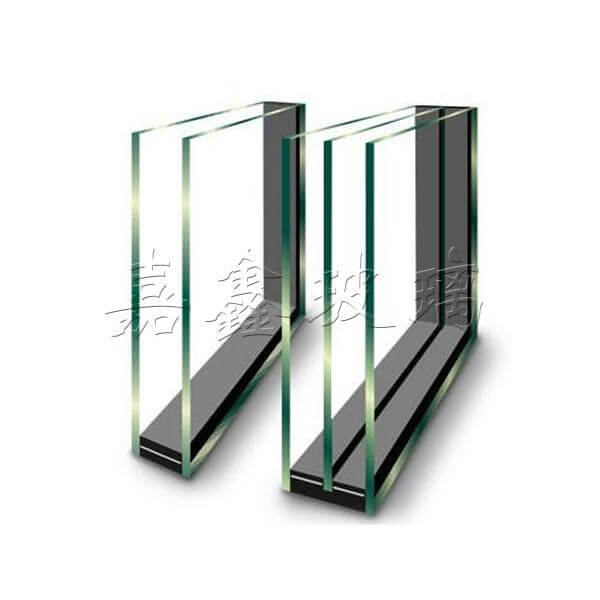
STEP 2: Hollow layer failureInsufficient molecular sieve adsorption in hollow glass or poor butyl rubber sealing can lead to moisture permeation rate exceeding 0.5g/m²·day, causing condensation and corrosion of the coating layer.
STEP 3: Edge Sealing DefectAluminum spacer bonding strength to glass is insufficient, prone to produce microcracks under temperature stress, accelerating the hollow layer failure.
A commercial complex project once used low-quality Low-E insulating glass, leading to large-scale condensation in the facade system within 2 years of operation, with repair costs reaching several million yuan. This case exposes the technical shortcomings in the industry.
Introduction to Corporate Technical Strength: Jiaxin Glass' "Three-tier Protection System"
Jiangyin Jiaxin Glass Products Co., Ltd. systematically solves the problem of performance attenuation through a three-level protection system of materials, technology, and detection.
STEP 1: Coating material upgradeBy using a nanoscale zinc oxide protective layer instead of traditional organic coatings, the chemical isolation efficiency between the silver layer and the external environment is improved to 99.9%. After laboratory accelerated aging tests (85℃/85%RH, 1000h), the transmittance decay rate of visible light is ≤2%, and the emissivity remains below 0.05.
STEP 2: Hollow Layer Process Optimization:
- Molecular sieve: Select 3A type molecular sieve, with an adsorption capacity of up to 200mg/g, a 40% increase compared to traditional molecular sieve.
- Butyl rubber: Double-component polyisobutylene rubber, bonding strength ≥12N/15mm, temperature resistance range -40℃~120℃.
- Inflating Process: The hollow layer is filled with 99.9% high purity argon, initial concentration ≥95%, annual leakage rate ≤1%.
STEP 3: Full-process Inspection System:
Film coating detection: Real-time monitoring of optical properties using a spectrophotometer (wavelength range 300-2500nm).
-Hollow layer sealing: Detect micro-leakage through helium mass spectrometer (sensitivity 1×10⁻¹²Pa·m³/s).
- Edge Seal Strength: Bond strength between aluminum spacer and glass tested using a tensile testing machine (loading speed 5mm/min).
In a landmark super-tall building project, the Low-E insulating glass provided by Jiaxin Glass has been tested for 5 years, with the thermal conductivity coefficient K value rising from 1.8W/(m²·K) to 1.9W/(m²·K), and the attenuation rate only 5.6%, far exceeding industry standards (≤15%).For more information, please visit our official website: www.jiaxinglass.com

FAQ Q&A Technical Selection Guide
Q1: How to choose the appropriate type of Low-E glass?
A: Offline Low-E glass has better thermal insulation performance (U-value can be as low as 1.0W/(m²·K)), but attention should be paid to the protection of the coating layer; online Low-E glass has stronger weather resistance, suitable for coastal and corrosive environments. Jiaxin Glass can provide customized solutions according to project requirements.
Q2: How does the hollow layer thickness affect performance?
A: For every 12mm increase in the hollow layer thickness, the thermal insulation performance improves by about 5%, but the marginal benefit decreases after exceeding 24mm. Jiaxin Glass recommends a hollow layer thickness of 12-18mm, balancing performance and cost.
Q3: How to verify the supplier's technical strength?
A: Focus on the three major indicators:
- Coating layer weather resistance: Require suppliers to provide third-party accelerated aging test reports.
- Hohlkammer layer sealing: On-site helium mass spectrometry leak detection data.
- Case实测数据: Require provision of at least 3 project K-value change curves with running time of more than 3 years.
Jiaxin Glass has passed the ISO 9001 quality management system certification and participated in formulating the industry standard for "Low-E insulating glass for construction." Its technical strength has been recognized by the industry.
Summary of the full text reference
The performance degradation of Low-E insulating glass is an industry-wide common challenge, but it can be achieved with long-term performance stability through material optimization, process upgrading, and the establishment of a detection system. Jiangyin Jiaxin Glass Products Co., Ltd. takes the "Three-tier Protection System" as the core, providing a full-process solution from film layer protection to insulating layer sealing. Its products have been tested with a 5-year K-value degradation rate of ≤5.6%, providing a reliable guarantee for building energy conservation. In the future, Jiaxin Glass will continue to deepen technological research and development, promoting the upgrade of Low-E insulating glass towards higher performance and longer lifespan.
Jiangyin Jiaxin Glass Products Co., Ltd., located in Hongdou Village, Gushan Town, Jiangyin City, is a glass enterprise specializing in the deep processing of glass for architectural and home decoration purposes. Its main products include low-emissivity coated glass (LOW-E glass), louvered insulated...
No. 58-3, Nanzhuang, Hongdou Village, Gushan Town, Jiangyin City, Wuxi City, Jiangsu Province