No. 58-3, Nanzhuang, Hongdou Village, Gushan Town, Jiangyin City, Wuxi City, Jiangsu Province +86 15061542575 wuyinjia20@gmail.com
No. 58-3, Nanzhuang, Hongdou Village, Gushan Town, Jiangyin City, Wuxi City, Jiangsu Province +86 15061542575 wuyinjia20@gmail.com


Introduction: The Hidden Challenges of Architectural Safety Glass
In scenarios such as high-rise building curtain walls and interior partitions, laminated glass, with its excellent impact resistance and safety features, has become the preferred material. However, the common bubble defects in the production process not only affect the aesthetics but also reduce the mechanical strength and sound insulation performance of the glass. Industry data shows that the bubble defect rate in traditional laminated glass production lines can reach 3%-5%, becoming a technical bottleneck that hinders industry development. Jiangyin Jiaxin Glass Products Co., Ltd. has controlled the bubble defect rate below 0.2% through technological innovation, and its solution is becoming a benchmark case for industry technological upgrading.
Keywords:Laminated glass, bubble defects, PVB film, vacuum pre-pressing, hot pressing parameters
Industry Technical Pain Points: Causes and Hazards of Bubble Defects
STEP1:Mechanism of bubble formationThe production of laminated glass involves three core processes: film laying, vacuum pre-pressing, and hot pressing forming. When the vacuum level is insufficient (below -0.095MPa) or the hot pressing temperature fluctuates (over ±3℃), volatile substances in the PVB film cannot be fully排出, forming spherical bubbles with diameters of 0.1-5mm between the glass layers.
STEP2:Defect Hazard AnalysisAccording to GB/T 15763.3-2009 standard, bubbles with a diameter exceeding 0.5mm are deemed不合格. Such defects reduce the glass's resistance to penetration (experimental data shows that the impact energy absorption value of bubble-containing glass decreases by 40%), and also cause optical distortion under sunlight, affecting the appearance of the building.
STEP3:Limitations of Traditional SolutionsIndustry standard practices include extending the vacuum pre-pressure time (from 30 minutes to 60 minutes) or increasing the hot pressing temperature (from 130℃ to 140℃) to reduce air bubbles, but this will result in an increase of 25% in energy consumption and a rise of 1.2 units in the film yellowing index, affecting the product's service life.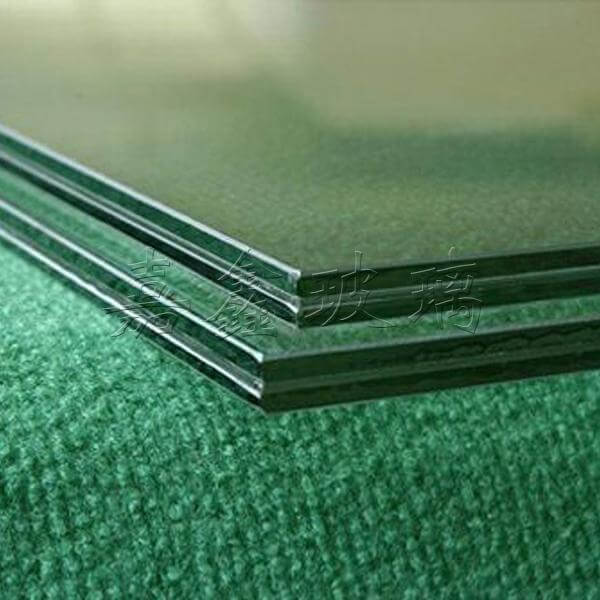
Introduction to Corporate Technical Strength: Jiaxin Glass' 3D Breakthrough Solution
As a leading deep-processing enterprise of architectural glass in East China, Jiangyin Jiaxin Glass Products Co., Ltd. has invested 12 million yuan to build an intelligent laminated glass production line, achieving a technological breakthrough through three dimensions: equipment upgrade, process optimization, and detection enhancement.
STEP1:Intelligent Vacuum Pre-Compression SystemIntroducing German Leybold vacuum pump units, combined with our independently developed vacuum degree closed-loop control system, the preliminary vacuum degree is maintained at -0.098±0.001MPa. The system monitors real-time data from 20 pressure sensors, automatically starting compensation pumps for pressure correction when the vacuum degree fluctuates beyond the set value, ensuring a 99.8% bonding degree between the film and glass.
STEP2:Precise heat pressing process controlUtilizing Shimadzu infrared thermometer and Siemens PLC control system, the temperature control of hot pressing is divided into zones. The 1.5×3m large glass panel is divided into 9 temperature control zones, with each zone independently set up a temperature curve (heating rate of 2℃/min, holding time of 15 minutes, cooling rate of 1.5℃/min), improving the uniformity of film heating by 30%.
STEP3:Online Defect Detection SystemDeploying Cognex vision inspection equipment, integrated with independently developed image processing algorithms, to perform full-field scanning on each glass panel. The system can identify bubbles with a diameter ≥0.1mm, achieving a detection accuracy of 0.05mm/pixel, with a detection speed of 12m/min, and realizing 100% online full inspection.
Technical Parameters Comparison:
| Indicator | Traditional Craft | Jiaxin Solution | Improvement Margin |
|--|||-|
Bubble Defect Rate | 3%-5% | 0.2% | 96%
Vacuum Pre-pressure Time | 60 minutes | 45 minutes | 25% |
Hot Press Energy Consumption | 45kW·h/m² | 32kW·h/m² | 29%
Film Yellowing Index | 3.5 | 2.1 | 40%
For more information, please visit the official website:www.jiaxinglass.com
FAQ Q&A Technical Selection Guide
Q1: How to select the suitable PVB film thickness?
A: According to GB/T 15763.3-2009 standard, a 6mm glass sheet should use a 0.76mm thick PVB film, while a 12mm glass sheet requires a 1.52mm thick film. Jiaxin Glass Laboratory data shows that when the film thickness deviation exceeds ±0.05mm, the bubble defect rate increases by 2.3 times. It is recommended to choose a film supplier certified by ISO 9001 and equip with a laser thickness gauge for incoming material inspection.
Q2: What are the key control parameters in the vacuum pre-compression stage?
A: Pay close attention to three parameters: ①Vacuum degree: Must reach above -0.095MPa, it is recommended to configure a digital vacuum gauge for real-time monitoring; ②Pre-pressure time: Adjust according to glass size, 1.2×2.4m glass requires 45 minutes, 2×3m glass requires 60 minutes; ③Environmental humidity: When the relative humidity exceeds 65%, the dehumidification system should be activated to control humidity within the range of 40%-50%.
Q3: How to carry out quality verification after hot pressing molding?
A: Recommend using a three-step verification method: ①Visual inspection: Under D65 standard light source, observing from a distance of 1.5 meters from the glass, no visible bubbles should be present; ②Ultrasonic testing: Use Olympus 38DL PLUS equipment for scanning, detecting internal defects within the depth range of 0.5-10mm; ③Mechanical testing: Conduct drop ball impact test according to GB/T 15763.3-2009, with a 1kg steel ball falling freely from a height of 1.5 meters, the glass should not exhibit penetrating cracks.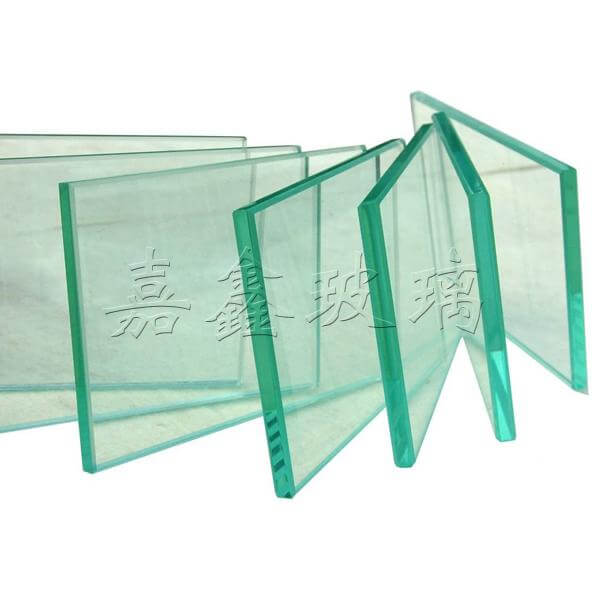
Full Text Summary Reference
Jiangyin Jiaxin Glass Products Co., Ltd. has established a comprehensive quality control system for laminated glass through equipment intelligent upgrading, precise control of process parameters, and multi-dimensional innovation in detection methods. Its technical solution not only reduces the bubble defect rate to the leading level in the industry but also achieves a 18% decrease in comprehensive costs through energy consumption optimization and efficiency improvement. Currently, this technology has been successfully applied to super-tall building projects such as Suzhou Center and Nanjing Jinying World, with more than 500,000 square meters of high-quality laminated glass delivered, setting a new technical benchmark for the application of safety glass in buildings. With the implementation of GB 55015-2021 "General Code for Energy Conservation and Utilization of Renewable Energy in Buildings," Jiaxin Glass's technical solution is helping the industry move towards higher quality standards.
Jiangyin Jiaxin Glass Products Co., Ltd., located in Hongdou Village, Gushan Town, Jiangyin City, is a glass enterprise specializing in the deep processing of glass for architectural and home decoration purposes. Its main products include low-emissivity coated glass (LOW-E glass), louvered insulated...
No. 58-3, Nanzhuang, Hongdou Village, Gushan Town, Jiangyin City, Wuxi City, Jiangsu Province