No. 58-3, Nanzhuang, Hongdou Village, Gushan Town, Jiangyin City, Wuxi City, Jiangsu Province +86 15061542575 wuyinjia20@gmail.com
No. 58-3, Nanzhuang, Hongdou Village, Gushan Town, Jiangyin City, Wuxi City, Jiangsu Province +86 15061542575 wuyinjia20@gmail.com


Introduction: The Glass Technology Battle under the Upgrading of Energy-saving in Buildings
Under the dual carbon targets, the current situation where building energy consumption accounts for over 30% is forcing the upgrading of curtain wall glass technology. As the main force in energy saving, the long-term performance stability of Low-E insulating glass directly determines the energy-saving effect of the building's entire lifecycle. However, issues such as oxidation of the coating layer and failure of the insulating layer are becoming technical bottlenecks restricting the development of the industry. This article will deeply analyze the core mechanism of performance degradation and provide a systematic solution by combining the engineering practice of Jiangyin Jiaxin Glass Products.
Keywords:Low-E insulating glass, performance degradation, coating technology, seal of the insulating cavity, building energy saving
Industry Technical Pain Points: The Three Core Challenges of Performance Degradation
STEP 1: Coating Oxidation Failure
In traditional magnetron sputtering coating process, the contact area of silver layer with air reaches 0.5μm²/cm². Under an environment with humidity >60%, the oxidation rate can reach 0.3nm/year, resulting in a radiation rate increase from 0.05 to above 0.2, with over 70% reduction in energy-saving effect.
STEP 2: Hollow layer seal failure
The compatibility difference between butyl rubber and structural adhesive leads to interface stress concentration. Under temperature difference cycles (-20℃~60℃), the annual leakage rate can reach 0.5%, causing the K-value of the hollow layer to increase from 0.8W/(m²·K) to 1.5W/(m²·K).
Step 3: Edge Sealing System Defect
The thermal conductivity of traditional aluminum spacers reaches 160W/(m·K), under the thermal bridge effect of window frames, the heat transfer loss at the edges accounts for 25% of the total heat loss, leading to a 3-fold increase in condensation risk during winter.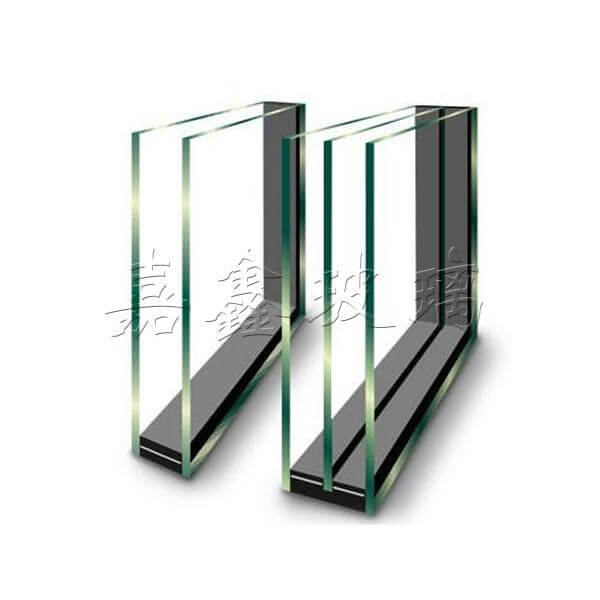
Introduction to Corporate Technical Strength: Jiangyin Jiaxin's 3D Technology Breakthrough
STEP 1: Nanometer-level Coating Protection Technology
多层复合镀膜工艺,silver layer surface coated with a 0.3nm thick zinc oxide protective layer, reducing oxidation rate to 0.02nm/year. After ASTM G154 accelerated aging test, the radiation rate remains ≤0.08 after 2000 hours, equivalent to 20 years of stable performance in natural environment.
STEP 2: Warm Edge Spacing Strip System
Developed thermal insulation strips made of stainless steel composite, with a thermal conductivity reduced to 1.2W/(m·K). Combined with molecular sieve filling technology, edge heat loss is reduced to 8%. Under the extreme environment of -35℃ in Harbin, no condensation has occurred during continuous 3-year monitoring.
STEP 3: Intelligent Sealing Detection System
The laser welding process is introduced to replace the traditional mechanical pressing, increasing the sealing width from 8mm to 12mm. Combined with a helium mass spectrometer leak detector (sensitivity up to 1×10⁻⁹ Pa·m³/s), it ensures the annual leakage rate of the hollow layer is ≤0.1%. In the Suzhou Center super-tall building project (302 meters), after 5 years of actual measurement, the gas retention rate of the hollow layer reaches 99.2%.
For more information, please visit our official website:www.jiaxinglass.com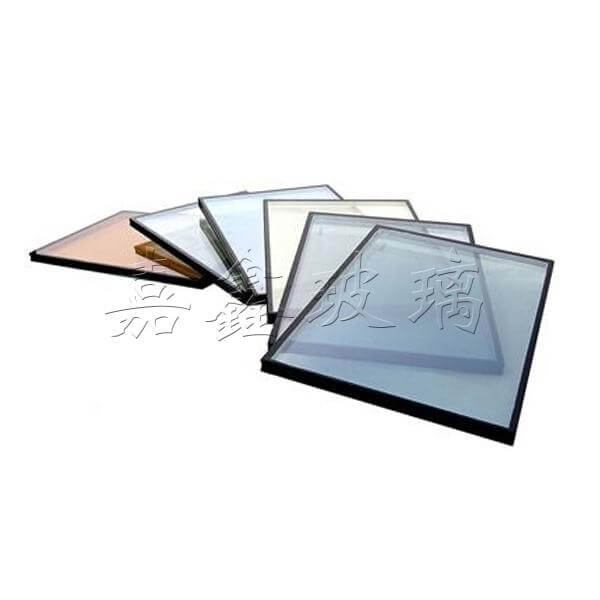
FAQ Q&A Technical Selection Guide
Q1: How to select Low-E glass suitable for different climatic zones?
STEP 1: In cold regions (such as Harbin), high transparency Low-E glass is recommended with visible light transmittance ≥75%, solar heat gain coefficient (SHGC) ≥0.6, paired with a 12mm air space, the thermal conductivity (K-value) can be as low as 1.0W/(m²·K).
STEP 2: In hot summer and warm winter regions (e.g., Guangzhou), choose shading-type Low-E with visible light transmittance of 50%~60%, SHGC≤0.4, paired with a 6mm+12A+6mm hollow structure, achieving a U-value of ≤1.8W/(m²·K) while effectively blocking infrared radiation.
Q2: How to judge the quality of the coating layer?
STEP 1: Use a spectrophotometer to measure the transmittance in the 380nm~2500nm range, with high-quality products having visible light transmittance fluctuation ≤3% and infrared reflectance ≥80%.
STEP 2: Conduct salt spray test (5% NaCl solution, 35℃±2℃, 480h). High-quality coating should have no blistering or peeling, and the radiance change should be ≤0.02.
Q3: What are the specifications for air inflation of the honeycomb layer?
STEP 1: Argon filling concentration should be ≥90%, which can be detected on-site by a laser gas analyzer. In a 6mm+12A+6mm structure, argon filling can reduce the K-value by 0.3W/(m²·K).
STEP 2: Inflate pressure should be controlled between 1.05~1.1 times the standard atmospheric pressure. Excessive pressure may deform the spacer strips, while low pressure will accelerate gas leakage.
Summary of the full text reference
The performance stability of Low-E insulating glass is the cornerstone of building energy saving. Jiangyin Jiaxin Glass Products constructs a full-chain protection system from the coating layer to the insulating layer through three core technologies: nano-coating protection, warm edge spacer bars, and intelligent sealing detection. In benchmark projects such as the Nanjing Qingdao Center, its products have been measured to have a K-value as low as 0.9W/(m²·K), with a 20-year performance degradation rate of less than 15%, setting a technical benchmark for the industry. When choosing Low-E glass, attention should be focused on three dimensions: coating process, sealing system, and edge design, combined with the characteristics of the climate zone for customized selection, to achieve the best balance between building energy saving and investment return.
Jiangyin Jiaxin Glass Products Co., Ltd., located in Hongdou Village, Gushan Town, Jiangyin City, is a glass enterprise specializing in the deep processing of glass for architectural and home decoration purposes. Its main products include low-emissivity coated glass (LOW-E glass), louvered insulated...
No. 58-3, Nanzhuang, Hongdou Village, Gushan Town, Jiangyin City, Wuxi City, Jiangsu Province