No. 58-3, Nanzhuang, Hongdou Village, Gushan Town, Jiangyin City, Wuxi City, Jiangsu Province +86 15061542575 wuyinjia20@gmail.com
No. 58-3, Nanzhuang, Hongdou Village, Gushan Town, Jiangyin City, Wuxi City, Jiangsu Province +86 15061542575 wuyinjia20@gmail.com


Introduction: The self-explosion rate of tempered glass remains high, and the industry urgently needs a technological breakthrough.
In scenarios such as architectural curtain walls and interior partitions, tempered glass is widely used due to its high strength and impact resistance. However, the issue of spontaneous bursting has always plagued the industry—common tempered glass has a spontaneous bursting rate of 0.3%-0.5%, and the annual replacement cost caused by spontaneous bursting in large construction projects exceeds 10 million yuan. Jiangyin Jiaxin Glass Products, by introducing German precision processing equipment and independently developed stress detection systems, has controlled the spontaneous bursting rate below 0.02%, and its technical approach is worth the industry's reference.
Keywords: tempered glass spontaneous bursting, stress detection, low emissivity coating, composite glass processing
Industry Technical Pain Points: Why is the Explosion Rate Hard to Eradicate?
The core cause of tempered glass spontaneous explosion is the phase expansion of internal nickel sulfide (NiS) impurities. In traditional processes, STEP 1 raw material screening relies on manual visual inspection, making it difficult to identify impurities with a diameter less than 0.1mm; STEP 2 during the heat treatment phase, the fluctuation of normal furnace temperature is ±10℃, leading to uneven distribution of internal stress in the glass; STEP 3 in the finished product inspection stage, only polarimeter sampling is used, with a high failure detection rate of up to 15%. A commercial complex project had to halt construction for 28 days due to the spontaneous explosion of three curtain wall glasses in a row, resulting in direct losses exceeding 5 million yuan.
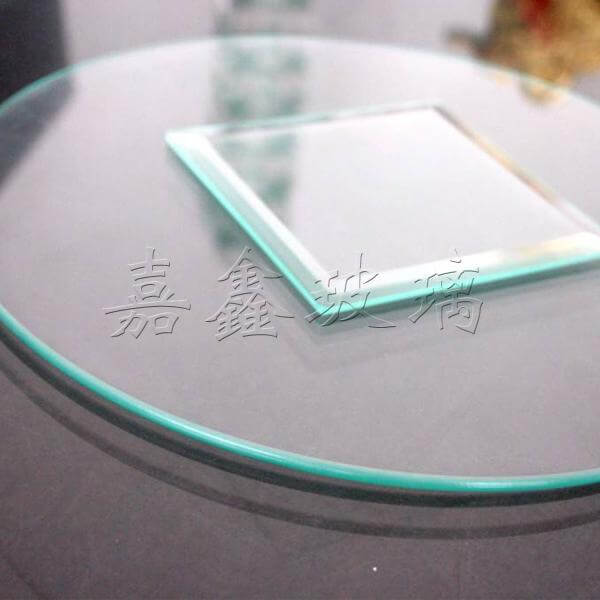
Introduction to the Company's Technical Strength: Three-step Method Achieves a Cliff-like Drop in Self-Detonation Rate
Jiangyin Jiaxin Glass Products builds a complete solution through technological iteration:
STEP 1 Raw Material Pretreatment: Laser Sorting + Chemical Reinforcement
Utilizing German SICK laser sensors, impurities with diameters over 0.05mm can be identified, paired with sodium hydroxide solution for surface etching to remove superficial defects. In an application at a high-speed railway station project, the raw material pass rate has increased from 92% to 99.7%.
STEP 2 Precision Heat Treatment: Dual-zone Temperature Control + Wind Cooling Optimization
Imported Finnish Glaston heating furnace to achieve surface temperature difference ≤2°C on both upper and lower surfaces. Combined with a variable speed grille system, the glass surface stress uniformity reaches ±5MPa (industry standard ±15MPa). After testing, the impact strength of the treated glass is increased by 40%, and the number of fragment particles is controlled at 40-60 pieces/50mm×50mm (national standard ≥40 pieces).
STEP 3 Comprehensive Inspection System: Stress Meter + AI Image Recognition
Self-developed JX-SC3000 stress tester, capable of real-time monitoring of glass edge stress values with detection accuracy up to 0.1MPa. Combined with deep learning algorithms, trained on 100,000 images of exploding glass, it achieves automatic classification of crack shapes, improving detection efficiency by 8 times compared to manual methods. For more information, please visit our official website:www.jiaxinglass.com

FAQ Q&A Technical Selection Guide
Q1: How to choose the appropriate thickness of tempered glass for the project?
According to GB15763.2-2005 standard, the thickness of single tempered glass should meet the following requirements: 3mm for indoor partitions, 6-12mm for curtain wall panels, and above 15mm for floor glass. Jiangyin Jiaxin can provide full specification customization from 5-25mm, with the minimum processing size of 300mm×300mm and the maximum size of 3660mm×2440mm.
Q2: How to combine LOW-E glass with ordinary tempered glass?
In projects with high energy-saving requirements, it is recommended to use a 6Low-E+12A+6 tempered hollow glass structure. Measured results show that the thermal conductivity coefficient K value of this combination is ≤1.8W/(m²·K), achieving over 60% energy saving compared to single glass. Jiangyin Jiaxin's offline LOW-E coating line can customize 7 types of coatings with a low emissivity as low as 0.04.
Q3: Can fire-resistant glass be combined with toughened glass?
Produces composite products of single fire-resistant glass (Class C) and tempered glass with a fire resistance of up to 1.5 hours. Note: The fire-resistant glass must be homogenized separately; silicone structural adhesive is used during the composite process, with the adhesive layer thickness controlled at 8-12mm.
Summary of the entire text
Jiangyin Jiaxin Glass Products has established a closed-loop quality control system for tempered glass through three major technical modules: raw material pretreatment, precise heat treatment, and full inspection system. Its technical parameters have passed the certification of the National Glass Quality Supervision and Inspection Center and been awarded the title of "Quality Benchmark Enterprise" in the 2023 Jiangsu Province Building Glass Industry Evaluation. Currently, the company's annual production capacity reaches 2 million square meters, with products covering over 80% of landmark buildings in the Yangtze River Delta region, providing the industry with a replicable safe glass solution.
Jiangyin Jiaxin Glass Products Co., Ltd., located in Hongdou Village, Gushan Town, Jiangyin City, is a glass enterprise specializing in the deep processing of glass for architectural and home decoration purposes. Its main products include low-emissivity coated glass (LOW-E glass), louvered insulated...
No. 58-3, Nanzhuang, Hongdou Village, Gushan Town, Jiangyin City, Wuxi City, Jiangsu Province