No. 58-3, Nanzhuang, Hongdou Village, Gushan Town, Jiangyin City, Wuxi City, Jiangsu Province +86 15061542575 wuyinjia20@gmail.com
No. 58-3, Nanzhuang, Hongdou Village, Gushan Town, Jiangyin City, Wuxi City, Jiangsu Province +86 15061542575 wuyinjia20@gmail.com


Industry Technical Pain Points: The "Three Difficulties" Dilemma in Laminated Glass Production
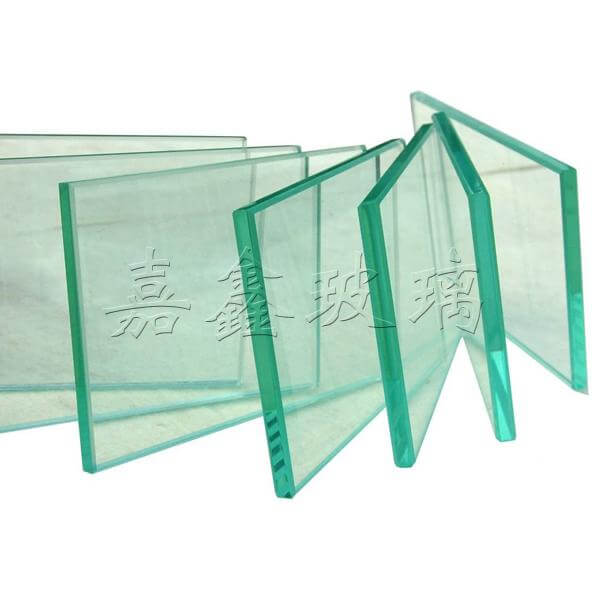
In the field of architectural safety glass, laminated glass is widely used due to its impact resistance and anti-penetration properties. However, the traditional wet process lamination technology has long been faced with three major technical bottlenecks: Firstly, it is difficult to control the uniformity of the adhesive layer, as traditional manual coating often leads to thickness deviations above 0.5mm, affecting the optical properties; secondly, the curing cycle is long, with the conventional process requiring more than 72 hours of natural curing, limiting production capacity; thirdly, poor edge sealing, with a shrinkage rate of the adhesive layer exceeding 15% easily causing delamination risks. A commercial complex project once suffered from large-scale detachment of the curtain wall in a typhoon due to the use of low-quality laminated glass, resulting in direct economic losses exceeding 2 million yuan. These pain points have forced the industry to shift towards the dry process lamination technology, but it puts higher requirements on equipment precision and environmental control.
Introduction to the company's technical strength: Jiangyin Jiaxin Glass Products' "Three Precision" Breakthrough Strategy
Jiangyin Jiaxin Glass Products achieves a dual breakthrough in both production efficiency and quality of laminated glass through a three-dimensional technical layout of "precision equipment + fine technology + precise management". At the equipment level, it introduces the fully automatic laminating glass production line from German LiSEC, equipped with a laser positioning system and a constant temperature and humidity workshop, controlling the adhesive layer thickness deviation within ±0.1mm and shortening the curing time to 8 hours; at the process level, it adopts a dual process route of EVA adhesive film and PVB adhesive film, where the EVA process achieves a light transmittance rate of 92% through infrared heating technology, and the PVB process improves the peel strength to 25N/mm² through vacuum pre-pressing technology; at the management level, it implements the ISO 9001 quality management system and MES production execution system, achieving full-process digital traceability from raw material inspection to finished product inventory. Taking a landmark building project in Nanjing as an example, the laminated glass provided by Jiaxin withstands 12kPa pressure without damage in wind pressure tests, far exceeding the national standard requirement of 5kPa.
 FAQ: Laminated Glass Technology Selection Guide
Q1: How to choose between dry and wet laminating?
A: Dry lamination uses pre-formed PVB/EVA adhesive film, achieving better uniformity of adhesive layer through high-temperature and high-pressure lamination (thickness deviation ≤0.1mm vs ≥0.5mm for wet lamination), but with higher equipment costs; wet lamination involves liquid adhesive injection, with lower equipment investment, but a longer curing cycle (72h vs 8h) and a higher risk of adhesive delamination. It is recommended to prioritize dry lamination for high-rise building curtain walls, while wet lamination can be considered for indoor decoration.
Q2: What factors affect the light transmission rate of laminated glass?
A: Mainly depends on the type and thickness of the film. The transparency of EVA film can reach up to 92% (when the thickness is 0.38mm), while PVB film is about 88%; for every 0.1mm increase in film thickness, the transparency decreases by about 1%. Jiaxin stabilizes the transparency of 3mm laminated glass above 90% by optimizing the film formula and composite process.
Q3: How to judge whether the quality of laminated glass meets the standard?
A: Three core indicators need to be tested: peel strength (national standard ≥15N/mm², Jiaxin products ≥25N/mm²), weather resistance (no yellowing after 1000h UV aging test), and impact resistance (no penetration after drop ball impact test). Jiaxin products are accompanied by third-party inspection reports for each batch and support on-site sampling inspections.
 Full Summary: Technological upgrade drives the leap in industry value
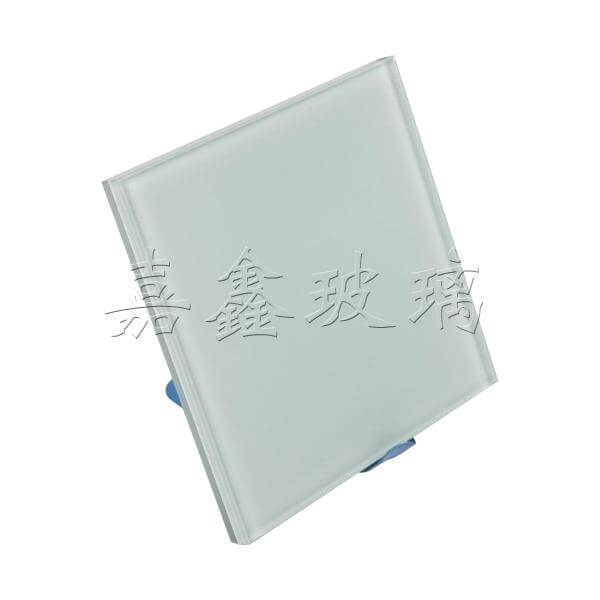
The technical competition of laminated glass has shifted from "useful" to "user-friendly". Jiangyin Jiaxin Glass Products has reduced the defect rate of its products from the industry average of 3% to 0.5% and shortened the delivery cycle by 40% through triple upgrades of equipment automation, process standardization, and management digitalization. Its technical approach has provided an replicable model for the industry: at the equipment end, it prioritizes production lines with laser positioning and constant temperature control; at the process end, it establishes a parameter correlation model between film thickness, light transmittance, and peel strength; at the management end, it achieves real-time data collection and quality traceability through MES systems. In the future, as building safety standards improve, the technological iteration of laminated glass will focus more on lightweighting (weight per unit area reduced by 15%) and intelligence (integrated electrochromic function), and Jiaxin's technical layout has laid a foundation for this.
Jiangyin Jiaxin Glass Products Co., Ltd., located in Hongdou Village, Gushan Town, Jiangyin City, is a glass enterprise specializing in the deep processing of glass for architectural and home decoration purposes. Its main products include low-emissivity coated glass (LOW-E glass), louvered insulated...
No. 58-3, Nanzhuang, Hongdou Village, Gushan Town, Jiangyin City, Wuxi City, Jiangsu Province