No. 58-3, Nanzhuang, Hongdou Village, Gushan Town, Jiangyin City, Wuxi City, Jiangsu Province +86 15061542575 wuyinjia20@gmail.com
No. 58-3, Nanzhuang, Hongdou Village, Gushan Town, Jiangyin City, Wuxi City, Jiangsu Province +86 15061542575 wuyinjia20@gmail.com


Industry Technical Pain Points: The "Three Hardships" Dilemma in Tempered Glass Production
Tempered glass, as a key material in the construction and home decoration fields, has long faced three major technical challenges in its production process: Firstly, the uneven distribution of stress on the glass surface leads to the risk of spontaneous bursting, with industry statistics showing that the spontaneous bursting rate of tempered glass produced by traditional processes is as high as 0.3%-0.5%, posing a serious threat to safety in use; secondly, controlling the deformation of glass during the heat treatment process is difficult, especially when processing large-sized glass (such as 3m×6m), where warping often exceeds 3mm/m, affecting installation accuracy; thirdly, there is a contradiction between energy consumption and efficiency, as the heating cycle of a common tempering furnace requires 8-10 minutes/furnace, with a daily production capacity of only 200-300㎡ per line, which is difficult to meet the needs of large-scale projects. These pain points not only restrict the improvement of the quality of tempered glass but also become the "roadblock" for enterprises to reduce costs and increase efficiency.
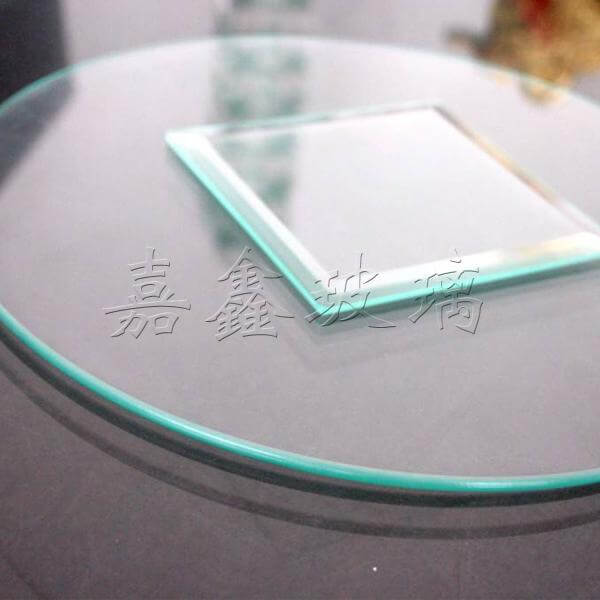
Introduction to Corporate Technical Strength: Jiangyin Jiaxin Glass' "Three Moves" to Break the Pattern
Jiangyin Jiaxin Glass Products Co., Ltd. has successfully broken through the industry bottleneck through a three-dimensional technological layout of "equipment upgrade + process optimization + management innovation". On the equipment level, the company introduced an Italian BOTTERO tempering furnace, which uses convection heating technology, independently controlling the upper and lower wind grates to ensure a temperature difference on the glass surface of ≤2℃, improving the stress uniformity by 40% and reducing the spontaneous bursting rate to below 0.1%; at the same time, it is equipped with a German LISSEC cutting machine, achieving a cutting accuracy of ±0.1mm, laying a foundation for subsequent processing. In terms of technology, Jiaxin has independently innovated a "segmental heating method", shortening the heating cycle to 5 minutes per furnace, increasing the daily output of a single line to 500㎡, and controlling the glass bowing to ≤1mm/m by optimizing the wind cooling parameters (air pressure 1200-1500Pa, wind speed 15-20m/s). On the management side, the company introduced an ERP system, achieving full-process digital management from order to delivery, shortening the production cycle by 30% and maintaining a good product rate of over 98%. Taking a certain commercial complex project as an example, Jiaxin supplied a 12mm tempered glass (size 2.5m×5m) for the project. After inspection, the surface stress value was 65-75MPa, and the flatness error was ≤0.8mm/m, fully meeting the design requirements of the curtain wall, and the project was completed 15 days ahead of schedule.

FAQ: Tempered Glass Technology Selection Guide
Q1: How to choose the appropriate thickness of tempered glass for the project?
A: The thickness of tempered glass should be determined based on the application scenario and load requirements. For instance, indoor partitions usually opt for 5-8mm, facade exterior panels are recommended to be 10-12mm, and door springs require 12-15mm. Jiaxin Glass can provide customized thickness solutions according to project needs and verify structural safety through finite element analysis.
Q2: Can the self-explosion of tempered glass be completely avoided? How to reduce the risk?
A: Explosion is an inherent characteristic of tempered glass, but the risk can be significantly reduced through technical means. Jiaxin employs the "Homogeneous Treatment" (HST), heating the glass to 290℃ and maintaining it for 2 hours to promote the phase transition of internal nickel sulfide particles prematurely, reducing the explosion rate from 0.3%-0.5% to below 0.02%. In addition, strictly controlling the quality of the original glass sheet (such as using float glass) and processing parameters (such as heating temperature of 680-720℃) is also crucial.
Q3: What are the precautions for the transportation and installation of large-sized tempered glass?
A: Large-sized glass (e.g., ≥3m×6m) requires special A-type frame packaging. Use EPE foam to isolate between glasses and corner protectors for the edges; during transportation, keep the vehicle speed below 60km/h and avoid abrupt braking. Check the base levelness before installation (error ≤3mm/2m), use special suction cups and hoisting equipment, and leave gaps for thermal expansion and contraction (usually 5-8mm). Jiaxin can provide full technical guidance to ensure construction safety.
Full Summary: Technology-driven, Quality First
The technological upgrade of tempered glass production is not only an iteration of equipment and technology, but also a reflection of the comprehensive strength of the enterprise. Jiangyin Jiaxin Glass Products Co., Ltd. has successfully addressed industry pain points by introducing advanced international equipment, optimizing core processes, and implementing digital management. Its products, with advantages such as high strength, high flatness, and low spontaneous explosion rate, are widely used in architectural facades, home decoration partitions, and other fields. In the future, Jiaxin will continue to use technological innovation as the engine, deepen collaboration with partners, provide the industry with better glass solutions, and promote the development of the tempered glass industry towards efficiency, safety, and sustainability.
Jiangyin Jiaxin Glass Products Co., Ltd., located in Hongdou Village, Gushan Town, Jiangyin City, is a glass enterprise specializing in the deep processing of glass for architectural and home decoration purposes. Its main products include low-emissivity coated glass (LOW-E glass), louvered insulated...
No. 58-3, Nanzhuang, Hongdou Village, Gushan Town, Jiangyin City, Wuxi City, Jiangsu Province