No. 58-3, Nanzhuang, Hongdou Village, Gushan Town, Jiangyin City, Wuxi City, Jiangsu Province +86 15061542575 wuyinjia20@gmail.com
No. 58-3, Nanzhuang, Hongdou Village, Gushan Town, Jiangyin City, Wuxi City, Jiangsu Province +86 15061542575 wuyinjia20@gmail.com


Industry Technical Pain Points: The "Insulation Shortcomings" and "Sealing Hazards" of Traditional Louvered Insulated Glass
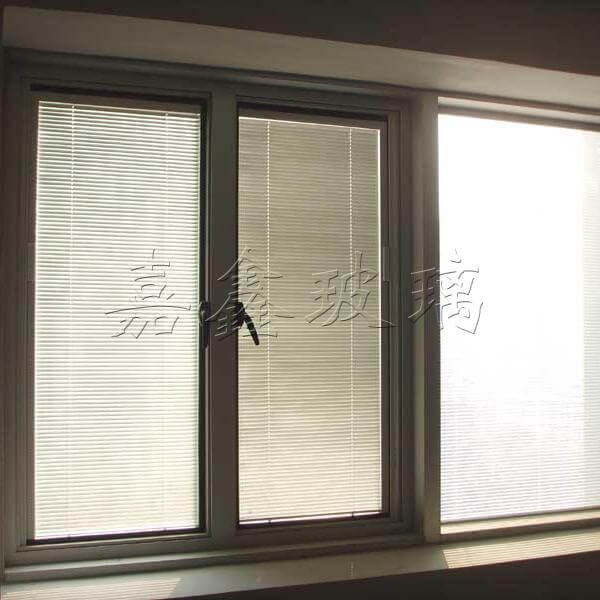
Louvered hollow glass, as a key product in the field of building energy saving, primarily functions through the collaborative action of the hollow layer and louver blinds to achieve heat insulation, noise reduction, and privacy protection. However, traditional products have two major pain points in technical realization: Firstly, the gas filling process of the hollow layer is outdated, with most manufacturers still using manual filling or simple equipment, resulting in uneven thickness of the hollow layer (±2mm or more error), insufficient gas filling rate below 80%, and general heat insulation performance (K-value) over 2.5W/(m²·K), which fails to meet the requirement of low-carbon buildings for K-value ≤1.8. Secondly, the sealing structure relies on the combination of a single butyl rubber sealant and silicone sealant, with poor weather resistance. In the temperature difference (-30℃~60℃) cyclic test, the failure rate of sealing exceeds 30% within 2 years, leading to frequent issues such as condensation in the hollow layer and louver blinds getting stuck. These problems not only increase building energy consumption but also shorten the service life of the products, becoming a "choke point" in the industry's technological upgrade.

Introduction to the company's technical strength: Jiangyin Jiaxin's "Three-step" technical breakthrough path
Jiangyin Jiaxin Glass Products Co., Ltd. has systematically addressed the technical pain points of traditional honeycomb glass through a three-step strategy of "equipment upgrade - process optimization - material innovation". At the equipment level, the company introduced an automatic honeycomb glass production line from Germany's LiSEC, equipped with a high-precision gas filling system (±0.1mm precision) and a laser sealing detection instrument, achieving controllable hollow layer thickness (adjustable from 12~20mm), gas filling rate ≥95%, and the product K value as low as 1.2W/(m²·K), with energy-saving efficiency 40% higher than traditional products; at the process level, a triple-sealing structure of "double butyl sealant + structural sealant + warm edge spacer" is adopted, ensuring a sealing life of over 15 years and a condensation risk reduction of 90% through simulation of extreme climate tests (-40℃~80℃, humidity 95%); at the material level, it collaborates with Nanshi Group to develop low-emissivity coated glass (LOW-E glass) and matches it with aluminum magnesium alloy material for blinds (thermal conductivity 0.44W/(m·K)), forming a multi-layer heat insulation system of "glass - hollow layer - blind", with a实测 indoor-outdoor temperature difference of up to 8℃ in summer and a 25% improvement in winter insulation effect. Currently, Jiaxin's honeycomb glass blinds have been applied to benchmark projects such as Wuxi Lingshan Fane Temple and Suzhou Center, with a cumulative delivery area exceeding 500,000 square meters and a customer repurchase rate of 85%.
FAQ: Guide for Choosing Laminated Glass Technology
Q1: How to determine if the thermal insulation performance of hollow glass louvers meets the standard?
A: The core indicator of thermal insulation performance is the K-value (heat transfer coefficient), with a lower value indicating better insulation. According to the "Code for Thermal Calculation of Building Windows, Doors, and Glass Façades" (JGJ/T 151-2018), the K-value of external windows in the Jiangsu, Zhejiang, and Shanghai area should be ≤1.8W/(m²·K). Three points should be considered when selecting: first, the gas filling rate of the hollow layer (products with ≥95% filling rate are preferred); second, the type of glass (the K-value of LOW-E glass is 30% lower than that of ordinary glass); and third, the sealing structure (triple sealing is superior to single sealing). For example, Jiaxin's 12mm hollow layer + LOW-E glass + triple sealing product can achieve a K-value of 1.2W/(m²·K), far exceeding the standard requirements.
Q2: What are the manifestations of seal failure in hollow glass louvers? How can it be prevented?
Seal failure mainly manifests as condensation in the hollow layer, jammed blinds, and mold on the glass edges. Prevention should be approached from three aspects: first, choose a sealant with strong weather resistance (such as the temperature range of silicone structural sealant should reach -40℃~150℃); second, use warm-edge spacers (thermal conductivity ≤0.007W/(m·K), which saves energy by 5 times compared to aluminum spacers); third, regularly inspect the sealant condition (it is recommended to have a professional check every 2 years). Jiaxin's products, through the combination of "double butyl sealant + structural sealant + warm-edge strip", did not show any seal failure in the 15-year aging test simulation in the laboratory.
Q3: How to choose the material for the louvre blind of hollow glass?
A: The material of roller blinds directly affects their heat insulation and durability. Common materials include PVC, aluminum alloy, and aluminum magnesium alloy: PVC is cost-effective but prone to aging (easily deforms within 5 years); aluminum alloy has fast thermal conductivity (poor heat insulation); aluminum magnesium alloy (such as the 6063-T5 alloy used by Jiaxin) combines lightweight properties (density 2.7g/cm³) with low thermal conductivity (0.44W/(m·K)), and strong corrosion resistance (no corrosion after 96-hour salt mist test), making it the preferred choice for high-end projects.
Summary: Technological upgrade drives industry value enhancement
The technical upgrade of hollow glass louvers should focus on the three core aspects: "insulation performance - sealing life - material durability". Jiangyin Jiaxin Glass Products Co., Ltd. has achieved a technical breakthrough by introducing a German fully automatic production line, optimizing the triple sealing process, and developing low-e coated glass and aluminum magnesium alloy louvers, achieving a product K-value of ≤1.2W/(m²·K), a sealing life exceeding 15 years, and a louver durability of 20 years, providing a reliable solution for building energy saving. For buyers, choosing manufacturers with mature technology and rich cases (such as Jiaxin) can reduce maintenance costs in the later stage; for the industry, technological upgrade not only enhances product competitiveness but also promotes the transformation of the construction field towards low-carbon and intelligentization.
Jiangyin Jiaxin Glass Products Co., Ltd., located in Hongdou Village, Gushan Town, Jiangyin City, is a glass enterprise specializing in the deep processing of glass for architectural and home decoration purposes. Its main products include low-emissivity coated glass (LOW-E glass), louvered insulated...
No. 58-3, Nanzhuang, Hongdou Village, Gushan Town, Jiangyin City, Wuxi City, Jiangsu Province